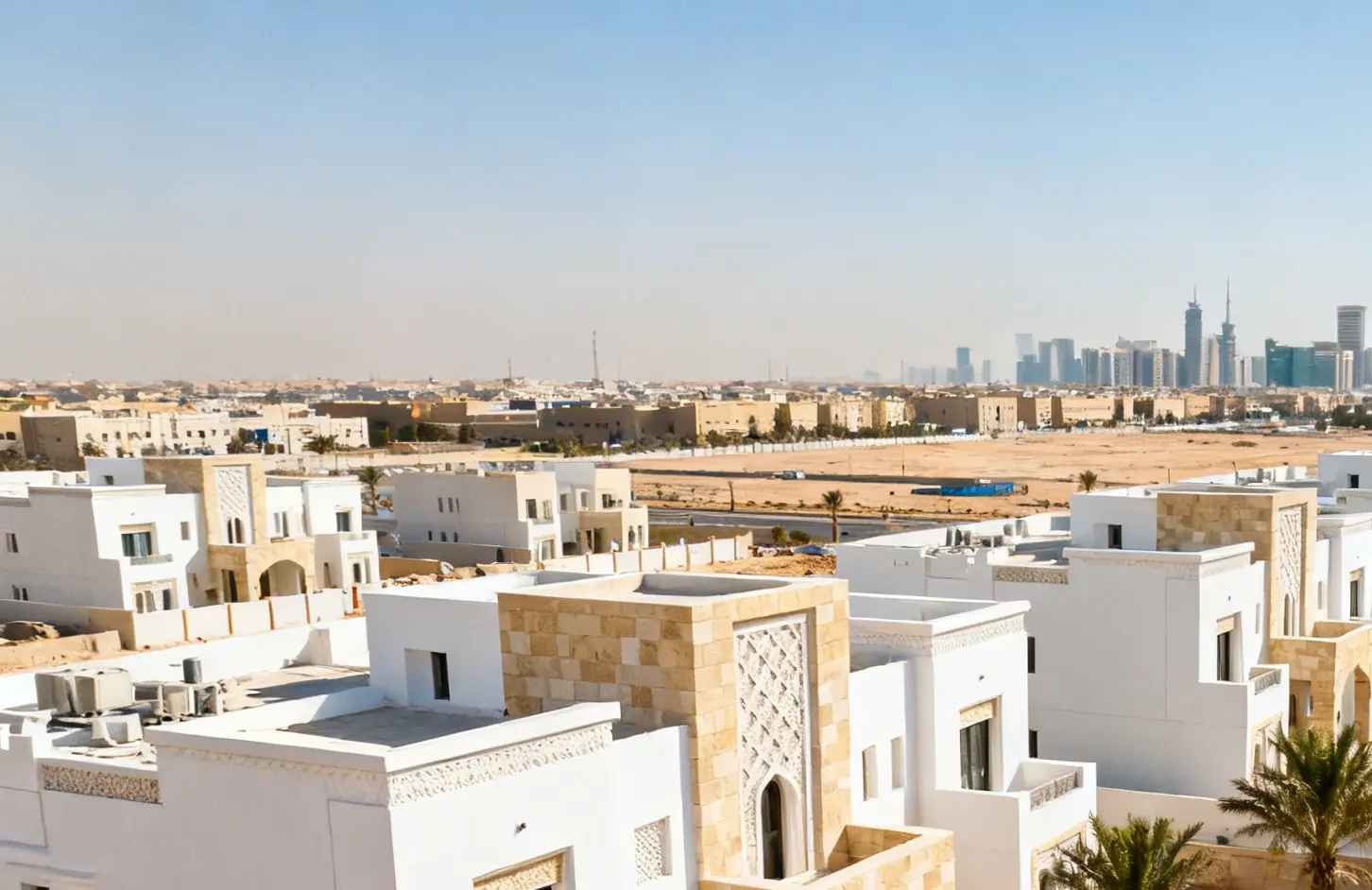
The transformation of Riyadh's residential market under Saudi Arabia's Vision 2030 programme represents a compelling new frontier for UK institutional investors seeking portfolio diversification beyond traditional European and North American markets. The Saudi capital's property sector has emerged as a primary beneficiary of the Kingdom's £400 billion economic modernisation drive, with residential developments spanning ultra-prime villa communities commanding prices exceeding £2 million and expansive master-planned communities targeting Saudi Arabia's growing middle class.
This Middle Eastern property renaissance carries particular significance for British pension funds and sovereign wealth managers, who have increasingly sought exposure to high-growth emerging markets amid anaemic yields in domestic markets. Riyadh's residential sector offers compelling fundamentals: a rapidly expanding population projected to reach 8.5 million by 2030, substantial government infrastructure investment exceeding £60 billion annually, and regulatory reforms that have opened previously restricted sectors to foreign capital. The contrast with London's constrained development pipeline and Manchester's cooling buy-to-let yields could hardly be starker.
The Saudi market's structural dynamics present opportunities that UK developers and investment managers are beginning to recognise. Vision 2030's emphasis on creating liveable, sustainable communities has generated demand for British expertise in master planning, sustainable construction, and property management. Several London-based real estate consultancies have established Riyadh offices to service this growing market, whilst UK pension funds have allocated approximately £2.8 billion to Middle Eastern real estate over the past 18 months, with Saudi Arabia capturing the largest share.
For UK property investors, Riyadh's residential expansion offers diversification benefits that address several domestic market challenges. Whilst British regional cities like Birmingham and Leeds grapple with oversupply in certain residential segments, Riyadh faces acute housing shortages that government projections suggest will require 1.2 million new units by 2030. The regulatory environment has also improved markedly, with the Saudi Real Estate General Authority implementing transparent ownership structures and dispute resolution mechanisms that meet international standards.
The implications extend beyond direct investment opportunities to broader strategic considerations for UK property firms. Saudi Arabia's Vision 2030 programme has created a template for large-scale urban transformation that other Gulf states are beginning to emulate, suggesting this represents the opening phase of a broader regional property cycle. British institutional investors with early exposure to Riyadh's residential market will be positioned advantageously as similar programmes launch across the UAE, Qatar, and Kuwait over the coming decade.
The timing dynamics favour UK capital deployment over the next 12 months, as Saudi developers seek international partners to accelerate project delivery ahead of key Vision 2030 milestones. Current market conditions in Riyadh - with residential price appreciation of 12% annually and rental yields exceeding 7% - compare favourably to London's 3% price growth and Manchester's 5% yields. Moreover, the Saudi government's commitment to infrastructure spending provides downside protection that purely private-sector driven markets cannot match.
Riyadh's residential transformation represents a paradigm shift that UK institutional investors can ill afford to ignore. The convergence of substantial government backing, regulatory modernisation, and acute housing demand creates investment conditions rarely seen in developed markets. British capital's early engagement with Saudi Arabia's Vision 2030 property boom will likely prove a defining strategic decision for portfolio performance over the next decade.
Key Takeaways
- Riyadh residential prices rising 12% annually with rental yields exceeding 7%, outperforming major UK regional markets
- Vision 2030's £400 billion investment programme creates government-backed infrastructure support reducing investment downside risk
- UK pension funds have deployed £2.8 billion to Middle Eastern real estate, with Saudi Arabia capturing the largest allocation
- Acute housing shortage requiring 1.2 million new units by 2030 provides sustained demand foundation unlike UK oversupply concerns


