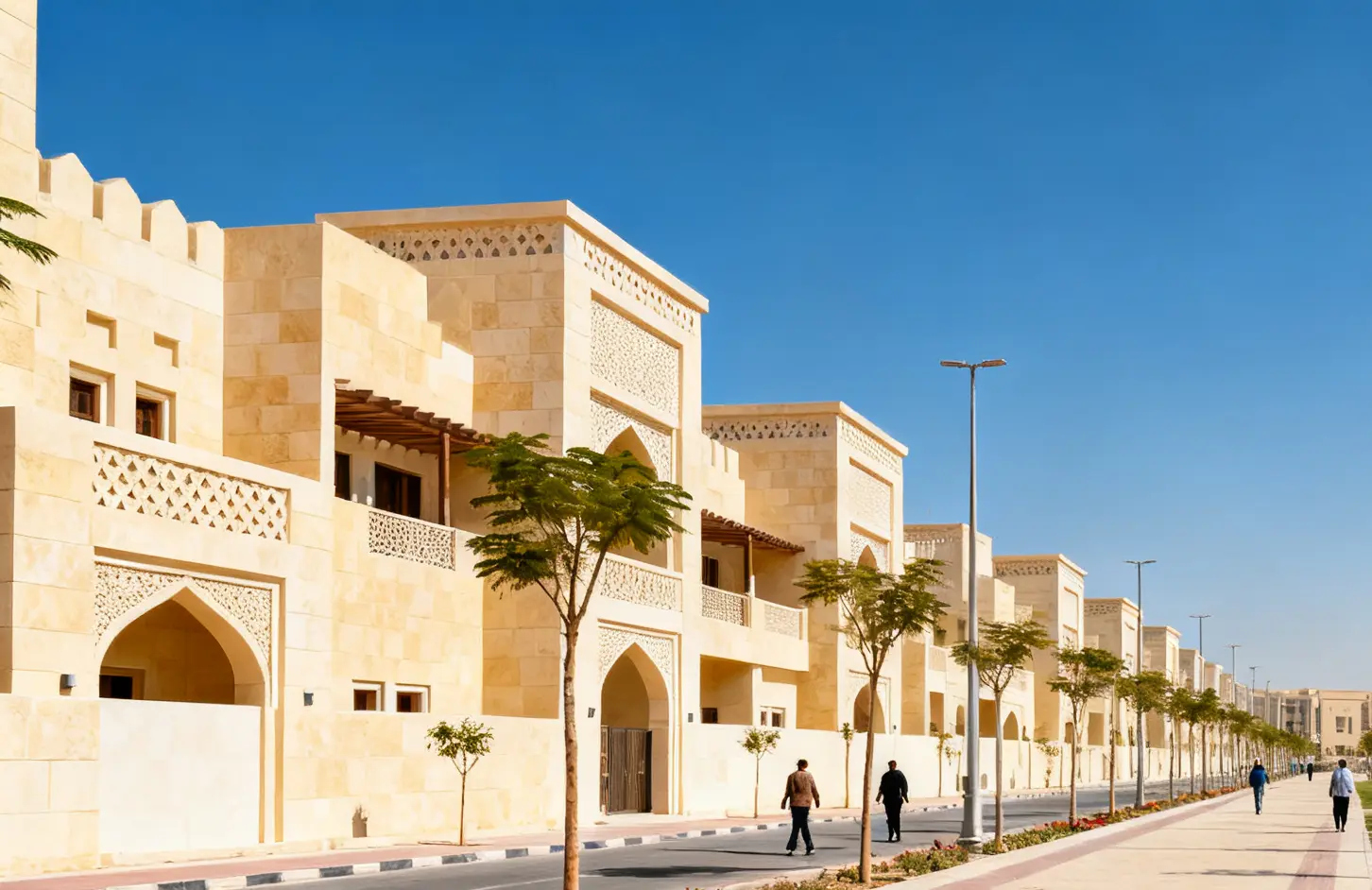
Saudi Arabia's Vision 2030 programme has triggered a fundamental realignment of Gulf property investment flows that presents significant opportunities for UK-based developers and institutional investors. The kingdom's commitment to diversify its economy away from oil dependency has unleashed unprecedented capital into Riyadh's residential sector, with master-planned family communities emerging as the primary beneficiaries of this £500 billion transformation programme.
The scale of infrastructure investment flowing into projects like Sedra and ultra-prime developments such as Wadi Safar represents a paradigm shift that UK property professionals cannot ignore. International businesses relocating to Riyadh are driving demand for Western-standard family housing, creating a market dynamic that closely mirrors the premium residential developments British firms have successfully delivered in Dubai and Qatar over the past decade. This demand surge comes as UK developers face increasing regulatory pressures and margin compression in domestic markets, making Gulf diversification increasingly attractive.
For British institutional investors, particularly pension funds and sovereign wealth vehicles, Riyadh's residential transformation offers exposure to a government-backed growth story with demographics that contrast sharply with the UK's aging population. Saudi Arabia's median age of 32 years, combined with Crown Prince Mohammed bin Salman's drive to attract 100 million annual visitors by 2030, creates sustained residential demand that UK investors have historically accessed through London's prime markets but can now capture at earlier development stages.
The strategic implications extend beyond direct investment opportunities. UK construction firms and project management specialists are positioning themselves to capture contracts from the estimated $1.3 trillion in planned Saudi infrastructure spending. Companies like Mace and Turner & Townsend have already established significant Saudi operations, whilst smaller British residential specialists are forming joint ventures with local developers to access the family housing boom. This trend mirrors the successful expansion strategies deployed by UK firms during Dubai's infrastructure boom between 2010-2020.
Regional UK markets stand to benefit indirectly from this Gulf capital reallocation. Manchester, Birmingham, and Leeds have historically attracted Middle Eastern investment during periods of regional uncertainty, but the current Saudi focus on domestic development may redirect this capital towards infrastructure and hospitality assets that support the kingdom's tourism ambitions. Liverpool's UNESCO waterfront regeneration and Newcastle's Saudi-backed sporting investments already demonstrate how Gulf capital seeks UK assets that complement broader strategic objectives.
The timing of Saudi Arabia's residential expansion coincides with significant challenges facing UK buy-to-let investors, who have endured tax changes, regulatory tightening, and yield compression since 2015. For these investors, Saudi Arabia's emerging rental market - driven by international corporate relocations and a growing expatriate professional class - offers yields that UK residential markets have not delivered since the immediate post-financial crisis period. Early entrants are reporting gross rental returns exceeding 8% in prime Riyadh locations, compared to London's sub-3% yields.
This Gulf pivot represents more than opportunistic diversification; it signals a structural shift in how UK property capital views emerging markets. Saudi Arabia's legal reforms, including new foreign ownership rights and international arbitration frameworks, address the governance concerns that previously limited British institutional participation. The kingdom's commitment to environmental sustainability within Vision 2030 also aligns with the ESG mandates now driving UK pension fund investment strategies, creating a convergence of capital that will accelerate cross-border property investment flows over the coming decade.
Key Takeaways
- Saudi Vision 2030 creates £500bn infrastructure opportunity for UK developers seeking Gulf diversification beyond traditional Dubai exposure
- Riyadh's family housing demand surge offers UK institutional investors 8%+ rental yields unavailable in domestic markets
- British construction specialists positioned to capture significant contracts from Saudi's $1.3 trillion planned infrastructure spending
- Regional UK markets may benefit from indirect Gulf capital flows as Saudi investment strategies expand internationally


