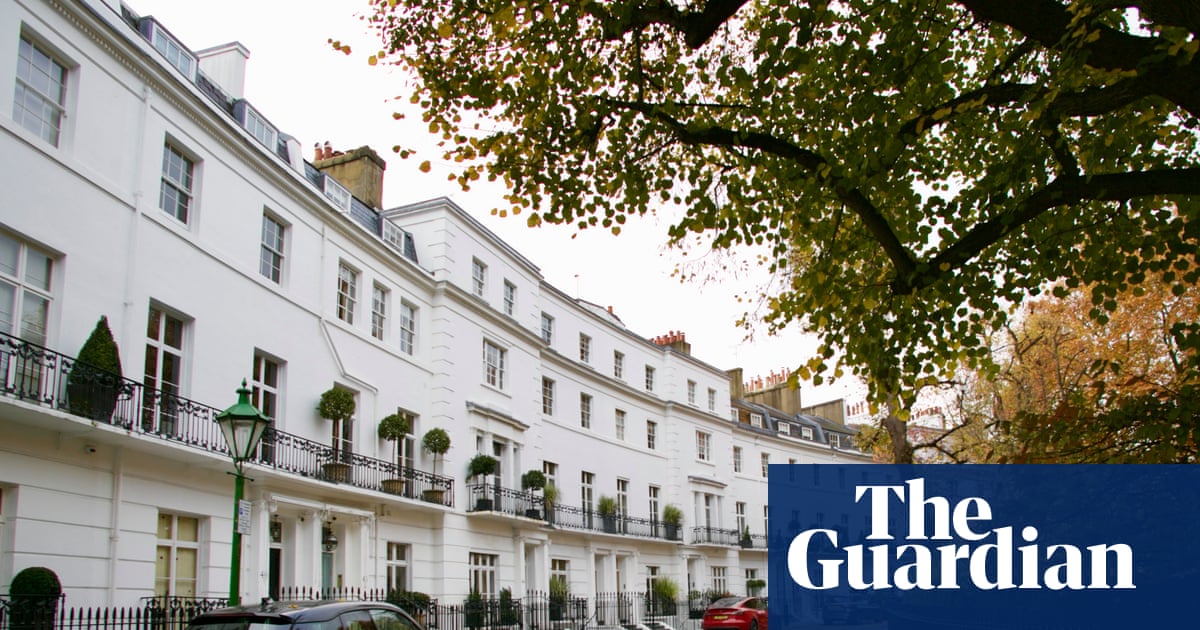
News that one Merseyside postcode recorded average house sales of £444,000 last year has turned heads in a region more commonly associated with affordability than with price tags that rival the outer reaches of the London commuter belt. As reported via Facebook, the figure sits starkly apart from the broader reputation of Merseyside's housing market, which has long been a magnet for first-time buyers and buy-to-let investors priced out of the South East. The headline number, however, is not simply a curiosity — it is a signal of a structural shift playing out across many UK regional markets, where pockets of exceptional demand are pulling away from the mainstream even as the wider local average remains comparatively restrained.
For investors, this matters because it complicates the simple regional narrative that has driven much of the capital flowing into the North West over the past decade. Merseyside, and Liverpool in particular, has been pitched relentlessly to landlords and developers as an undervalued alternative to Manchester, offering higher yields and lower entry prices. A postcode trading at £444,000 on average demonstrates that within even the most 'affordable' regional markets, there exist micro-locations commanding prices that would not look out of place in parts of Surrey or outer London. That bifurcation — a handful of premium streets or villages skewing upward while the surrounding borough remains modestly priced — is becoming a defining feature of UK property in 2024, and Merseyside is no exception.
The implications differ sharply depending on who is looking at the market. Buy-to-let landlords chasing yield will largely continue to look past such postcodes; £444,000 average sale prices imply rental yields that are unlikely to compete with the double-digit returns still achievable in Liverpool's more modestly priced terraced streets, which remain the backbone of the region's private rental sector. First-time buyers, meanwhile, will read this news as confirmation that even in a region sold nationally as an affordability haven, certain pockets are now entirely out of reach without substantial deposits or household incomes well above the regional average. That dynamic mirrors what has already happened in parts of Manchester and Leeds, where city-centre regeneration and sought-after suburbs have decoupled from the broader metropolitan price trend.
Commercial investors and developers should take a different lesson from this. A postcode achieving average sales approaching half a million pounds signals genuine, sustained demand from buyers with significant purchasing power — the kind of demand that supports premium new-build schemes, high-specification refurbishments, and targeted luxury development rather than the volume housebuilding that typically characterises Merseyside's development pipeline. Developers who have historically concentrated on affordable and mid-market stock in the region may find a case for diversifying into higher-value schemes in and around whichever postcode is driving this average, provided they can verify sustained buyer appetite rather than a handful of outlier transactions skewing the figure.
It is worth noting, too, that averages of this kind can be misleading in smaller postcode areas, where a limited number of high-value sales can distort the overall figure considerably. PropertyNews analysis suggests that before investors draw firm conclusions about a genuine shift in Merseyside's premium market, they should examine the volume and consistency of transactions behind the headline average, rather than treating a single year's figure as proof of a durable trend. That caveat does not diminish the broader point, however: regional averages increasingly obscure as much as they reveal, and sophisticated investors need postcode-level, even street-level, data to make sound decisions.
Looking ahead to the next six to twelve months, expect this kind of localised premium to become more visible across comparable regional cities — Newcastle, Birmingham and Leeds all have equivalent pockets where demand has outstripped the surrounding market. For landlords and developers active in the North West, the sensible response is not to chase headline postcode averages but to use them as a prompt for sharper due diligence, distinguishing between genuinely appreciating micro-markets and statistical anomalies. Merseyside's reputation as an affordable, high-yield region remains broadly intact, but this £444,000 postcode is a reminder that no regional market today can be treated as uniform, and that the investors who profit will be those who understand the granular detail behind the average.
Key Takeaways
- A Merseyside postcode recorded average house sales of £444,000 last year, far above the region's typical reputation for affordability.
- Buy-to-let landlords should not assume this premium pocket offers competitive rental yields compared with Merseyside's traditional terraced-street stock.
- First-time buyers face a widening gap between affordable Merseyside streets and increasingly out-of-reach premium postcodes.
- Investors and developers should scrutinise transaction volumes behind any postcode average before treating it as evidence of a durable market trend.