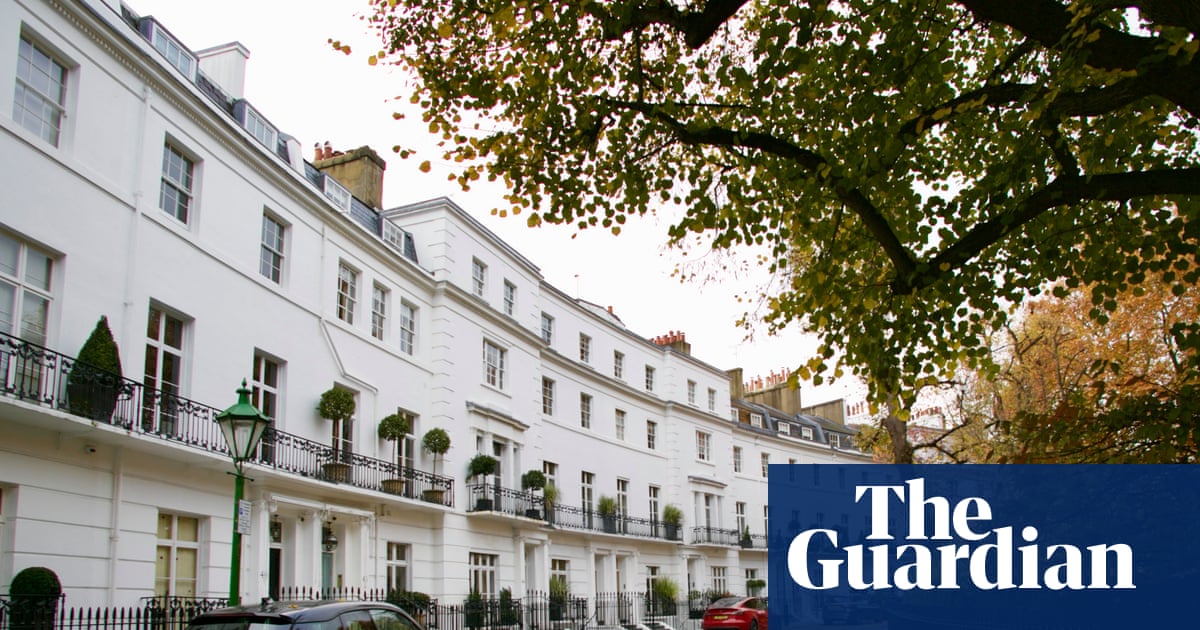
For the first time in a generation, London's most prestigious addresses are no longer commanding the premiums that defined the capital's prime property market for decades. As the Guardian reported, a Georgian-fronted flat at Queen's Gate Gardens in South Kensington — complete with a full-width balcony and a stone's throw from the Natural History Museum and the V&A — has seen its asking price cut by nearly £1m in a year, down to £4.4m. A nearby house originally marketed at £20m has been slashed to £14m this year, according to a local estate agent cited in the report, while in Notting Hill a stucco-fronted property that first came to market two years ago at £16m is now being offered for less than £14m.
This matters far beyond the postcodes in question. For decades, prime central London acted as the bellwether for the UK's entire housing market, with price growth in boroughs such as Kensington and Chelsea routinely outpacing the national average and setting the tone for investor sentiment nationwide. A reversal of that trend — multimillion-pound reductions on trophy assets in the most sought-after streets in the country — signals a structural shift in how global capital views London property, not merely a seasonal dip. When mansions in South Kensington and Notting Hill are being repriced by six and seven figures, it raises hard questions about demand, taxation, and London's standing as a safe haven for international wealth.
PropertyNews analysis suggests this cooling at the very top of the market reflects a broader recalibration rather than an isolated correction. Prime central London has long depended on overseas buyers using the capital as a store of value, and any softening in that appetite inevitably filters downward through the chain, affecting agents, lenders, and ancillary services built around high-value transactions. While this report focuses specifically on South Kensington and Notting Hill, the implications extend to how international capital allocates itself across the UK more broadly, with regional cities potentially benefiting as investors reassess where value and yield can still be found.
For buy-to-let landlords and commercial investors, the retreat from trophy London assets could prove instructive rather than alarming. Capital that once gravitated reflexively towards Mayfair, Kensington, and Chelsea may increasingly look towards Manchester, Birmingham, Leeds, Liverpool and Newcastle, where rental yields have historically been more attractive and entry prices remain a fraction of prime London equivalents. Surrey's commuter-belt market, which has often served as an overflow for London money, may also see renewed interest as buyers priced out of — or disillusioned with — the capital's premium streets look for alternatives within reach of the city.
First-time buyers, meanwhile, remain largely insulated from this particular story, since the mansions in question operate in a rarefied tier of the market disconnected from typical first-rung purchases. But the broader signal — that even the most exclusive London addresses are not immune to price corrections — may temper expectations that property values only move in one direction. Developers eyeing prime central London schemes will need to reassess underwriting assumptions, particularly where business plans were built around continued premium pricing for high-specification refurbishments of period properties.
Looking ahead six to twelve months, PropertyNews expects further repricing activity concentrated in the £10m-plus bracket, as sellers who have held out against the Guardian-reported trend eventually adjust expectations to match buyer reality. Agents operating in these postcodes will likely see more stock come to market at reduced guide prices rather than withdrawn entirely, as vendors prioritise completing sales over holding firm on valuations set during the previous cycle. Investors with patient capital may find opportunities emerging in prime central London precisely because sentiment has turned negative, while those chasing yield and growth are more likely to find it in the regional cities where London's loss of momentum has not been mirrored.
The mansions of South Kensington and Notting Hill were never meant to be bargains, but the price cuts now being reported mark a genuine inflection point for prime London property. Investors who treat the capital's most expensive postcodes as a permanent one-way bet are being forced to recognise that even trophy assets are subject to market forces — and that the rest of the UK may now represent the more rational place to deploy capital.