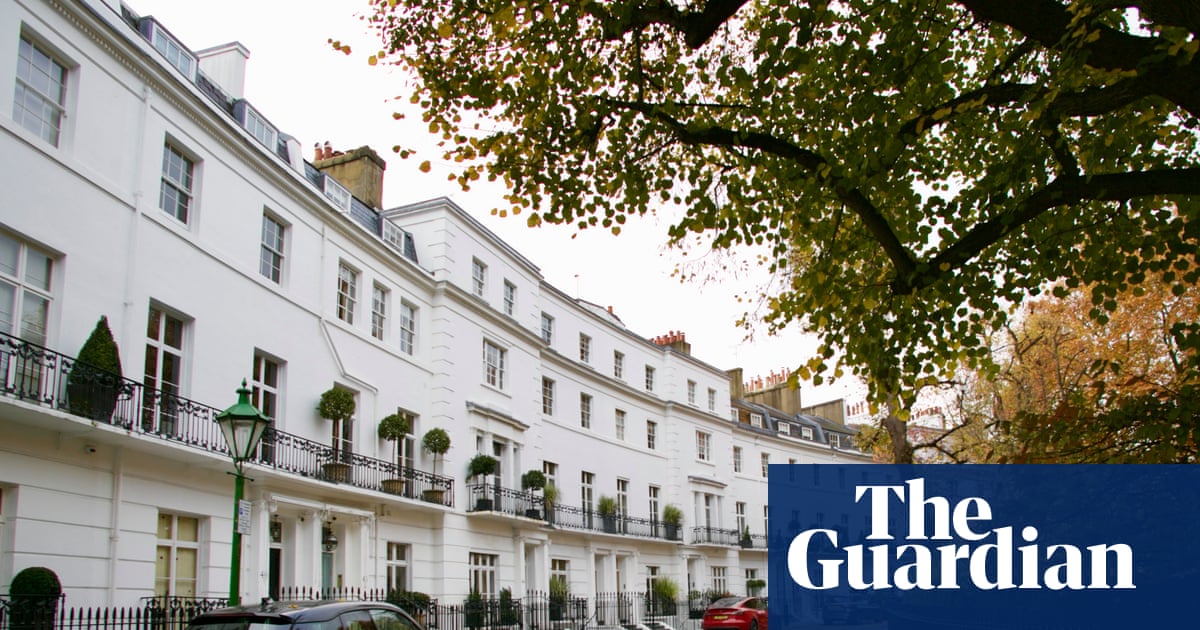
Prime central London property prices have fallen sharply from their previous peaks, with some neighbourhoods now sitting more than 25% below their highs, according to figures reported by PropertyWire. Inner London boroughs recorded an 8.3% price decrease in the year to June, while Westminster suffered the steepest annual decline of any area tracked, down 25.4% year-on-year. For a segment of the market long regarded as the UK's most resilient store of value, this is a correction of genuine significance.
For professional investors, the scale of the Westminster decline matters far beyond the borough's postcode. Prime central London has historically functioned as a bellwether for international capital flows into UK real estate, and its performance shapes sentiment across the wider market, from institutional funds to overseas family offices to domestic developers pricing new schemes. When an area synonymous with stability posts a quarter-century decline from peak, it signals that the froth built up over a decade of ultra-low interest rates, stamp duty arbitrage and global wealth parking is being squeezed out in earnest, not merely cooling at the margins.
The drivers are not mysterious. Higher borrowing costs have eroded affordability even for cash-rich buyers who previously treated finance as a secondary consideration, while successive rounds of stamp duty surcharges on higher-value and overseas-owned property have steadily dented the economics of prime acquisitions. Currency volatility and tighter scrutiny of foreign ownership have further thinned the pool of international buyers who once underpinned Westminster, Knightsbridge and Mayfair pricing almost irrespective of domestic conditions. Inner London's broader 8.3% fall suggests this is not confined to a handful of trophy postcodes but reflects a genuine repricing across the capital's most expensive quarters.
The regional implications are instructive precisely because they cut against the London narrative. Manchester, Birmingham, Leeds and Liverpool have continued to attract investor capital partly because prime London's premium has made regional yields and growth prospects look comparatively attractive, and this latest data will reinforce that rotation rather than reverse it. Newcastle and other northern markets, less exposed to international capital and stamp duty surcharges, are largely insulated from the forces driving Westminster's decline. Surrey and the wider commuter belt, which benefited from pandemic-era outflows from central London, may see renewed interest if prime London's weakness persists, as domestic buyers recalibrate where value now sits relative to the capital.
PropertyNews analysis suggests the coming six to twelve months will test whether this is a genuine floor-finding process or a longer structural reset. Buy-to-let landlords with exposure to prime central London face a harder calculation: rental yields in these postcodes have always been thin relative to capital value, and a falling asset base without compensating yield improvement makes the investment case considerably weaker unless prices stabilise soon. First-time buyers gain nothing directly from Westminster's correction, since prime central London was never their market, but the broader signal of softening London values may slow price growth in adjacent, more accessible boroughs over time. Commercial investors eyeing mixed-use or residential-led schemes in central London should treat current pricing as a potential entry point, provided they can underwrite further near-term softness rather than assume an immediate rebound.
Developers active in the prime segment face the most acute pressure. Schemes conceived and land-banked during the previous cycle were underwritten against values that have since eroded by a quarter in the worst-affected areas, squeezing margins and, in some cases, threatening viability without repricing or renegotiation with funders. Expect slower launch schedules, more aggressive discounting on unsold prime stock, and a continued shift in development pipelines toward build-to-rent and mid-market product where demand has proven sturdier. The direction of travel is clear: prime central London's long-standing premium is compressing, and buyers, lenders and developers who continue to price risk as though 2014-style conditions will return are likely to be caught out.