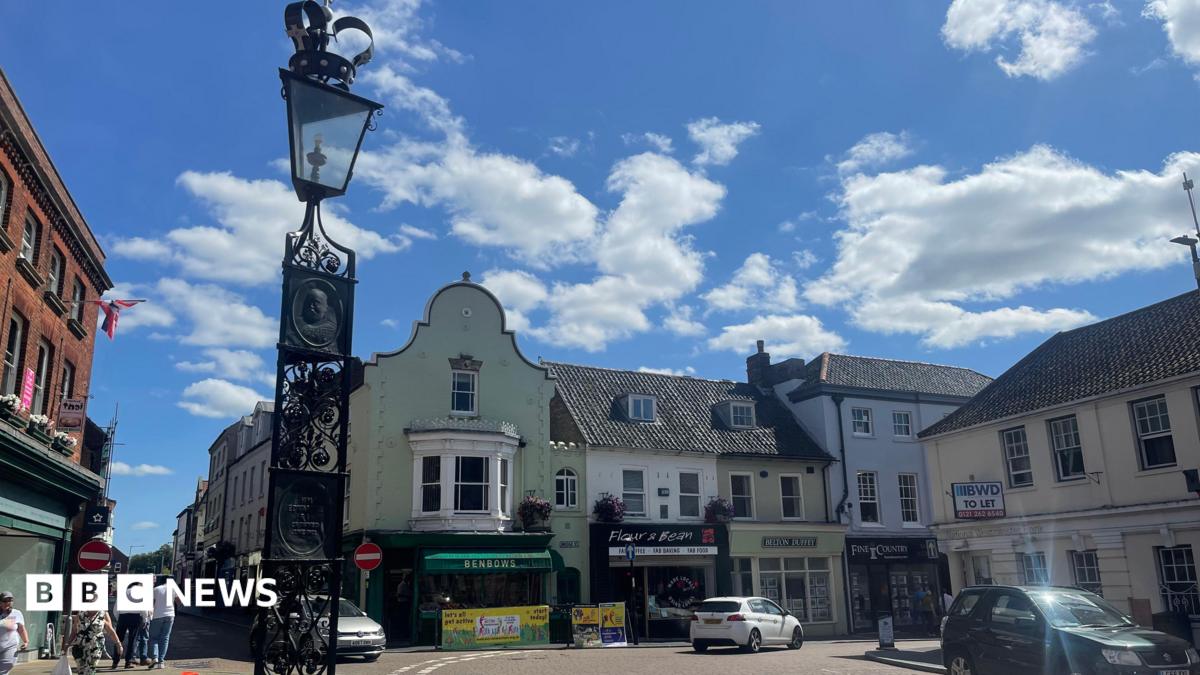
North Norfolk District Council has formally urged LINK, the body that assesses and recommends locations for shared banking hubs, to reconsider Fakenham after the market town was passed over despite losing its last bank branches. The council argues that a population of roughly 8,000, coupled with an ageing demographic and a trading area drawing custom from surrounding villages, meets the threshold LINK typically applies elsewhere. On the surface this reads as a parochial planning dispute. In practice, it is a case study in a structural shift reshaping the value and viability of secondary retail property across the UK.
Banking hubs, introduced under the Cash Access UK scheme and operated in partnership with LINK, exist precisely because high street banks have withdrawn from the smaller markets that once anchored their footprint. Over 6,000 branches have closed nationally since 2015, according to consumer group Which?, with rural and market towns disproportionately affected. For property investors, each closure is not merely a lost tenant but a signal about the underlying commercial value of a location. A vacant former NatWest or Barclays unit on a prime high street corner in a town of Fakenham's size typically commands far less interest than equivalent space in Norwich, Cambridge or King's Lynn, precisely because footfall-dependent occupiers — cafés, opticians, mobile phone retailers — increasingly favour locations with guaranteed daily transactional traffic, which a banking hub reliably provides.
This matters well beyond Norfolk. Manchester, Leeds and Birmingham have all seen bank branch consolidation in recent years, but their scale and density of alternative financial infrastructure — ATMs, digital banking lounges, high-volume retail cores — cushions the commercial property impact. Smaller satellite towns around these cities, and equivalents such as Newcastle's commuter belt or Surrey's affluent but sparsely served villages, face the same dynamic as Fakenham: lose the last bank, and the anchor tenant that once justified premium ground-floor rents disappears with it. Commercial property investors holding secondary high street assets in towns with populations under 15,000 should treat banking access as a genuine due diligence factor, not a footnote, when underwriting yield assumptions.
The economics of banking hubs themselves are instructive. Each hub typically costs in the region of £100,000 to £150,000 annually to operate, funded collectively by the major banks through Cash Access UK, and LINK's assessment criteria weigh factors including branch closure history, population, deprivation indices and the nearest alternative facility. Fakenham's exclusion despite apparently satisfying several of these markers suggests either a methodological gap or a capacity constraint in the rollout — LINK has approved over 200 hubs nationally since 2021 but faces mounting pressure from dozens of towns making similar representations. For landlords and developers with exposure to town-centre retail parades, the pace and geographic spread of hub approvals is now a material variable in forecasting rental demand and vacancy risk over the next two to three years.
Looking ahead six to twelve months, expect the campaign dynamics seen in Fakenham to intensify rather than fade. Local authorities are becoming more assertive in lobbying LINK directly, partly because councils recognise that banking access underpins broader town centre regeneration funding bids, including Levelling Up and high street heritage schemes. Investors eyeing opportunistic acquisitions of vacant bank premises in market towns should factor in a two-tier scenario: towns that secure a hub are likely to see modest but real uplift in adjacent retail rental resilience, while those that do not risk accelerating drift toward charity shops, vape retailers and vacancy — the now-familiar hollowing pattern seen in parts of the East Midlands and coastal England. First-time buyers and residential landlords in these towns should also note that local amenity provision, including banking access, increasingly features in valuation surveys and mortgage lender risk assessments for town-centre flats above retail units.
The Fakenham case ultimately illustrates a broader repricing of rural and market-town commercial property that has been underway since the pandemic accelerated bank branch rationalisation. Investors who treat banking hub status as a genuine locational fundamental — akin to transport links or planning zoning — will price risk more accurately than those relying on historic footfall data that no longer reflects post-closure reality. Councils fighting these battles are, in effect, doing unpaid due diligence for the commercial property market; astute investors would do well to watch which towns win.
Key Takeaways
- North Norfolk Council's appeal to LINK highlights a growing trend of market towns lobbying for banking hubs after losing all bank branches, with over 6,000 branches closed nationally since 2015.
- Commercial property investors in towns under 15,000 population should treat banking hub status as a material due diligence factor affecting footfall-dependent tenant demand.
- Towns securing hubs are likely to see relative rental resilience on high streets, while those refused risk accelerated vacancy and value decline over the next 12 months.
- Residential landlords and buyers in town-centre properties above retail units should note that local amenity provision is increasingly factored into lender valuations.