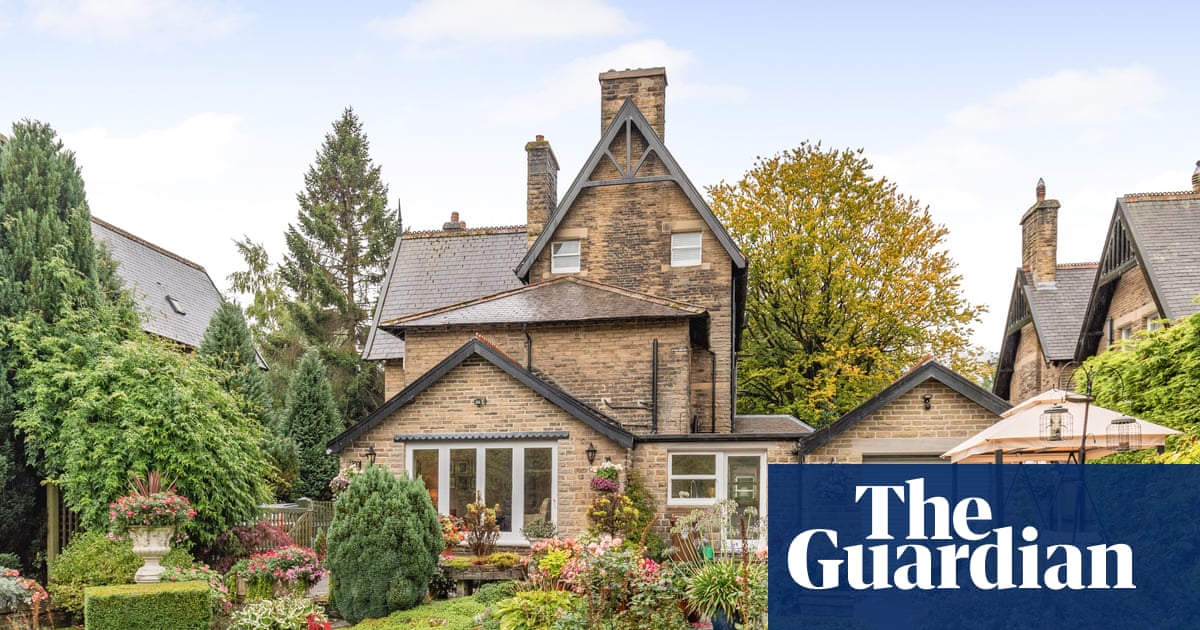
A new selection of homes for sale across England, from the limestone villages of the Peak District to the orchards of the Kent Downs, has thrown a spotlight on a feature that continues to command a measurable premium in the UK housing market: the family garden. While the properties themselves range from Victorian terraces to converted farmhouses, the common thread is space beyond the front door — and that space is increasingly a decisive factor in what buyers are prepared to pay, and where they are prepared to compromise.
For UK property investors and developers, this matters far more than it might first appear. Research from estate agents including Savills and Knight Frank has repeatedly shown that gardens can add between 5% and 20% to a property's value depending on location, size and quality, with the premium rising sharply in dense urban markets where private outdoor space is scarce. In London, where the average garden size has shrunk by nearly a third over the past two decades according to the Greater London Authority, homes with even modest 15-20 square metre plots are fetching six-figure premiums over flatted equivalents in the same postcode. This is not a fleeting pandemic-era preference — it has hardened into a structural expectation among family buyers, and it is reshaping how developers approach design briefs across the country.
Regionally, the picture varies considerably. In Manchester and Leeds, where city-centre apartment building has dominated the last decade, suburban houses with gardens in areas such as Chorlton, Didsbury and Roundhay are outperforming flats on both price growth and time-to-sell, with Rightmove data suggesting garden properties in these cities sold roughly 15% faster than comparable flats in the year to mid-2025. Birmingham tells a similar story, with family homes in Harborne and Moseley commanding sustained buyer interest as young professionals priced out of the capital relocate for space. Liverpool and Newcastle, both markets historically strong on terraced housing stock, are seeing renewed demand for the rarer Victorian and Edwardian bay-fronted homes with rear gardens, often trading at a 10-15% premium to their gardenless neighbours. In Surrey and the wider commuter belt, meanwhile, garden size has become almost a proxy for lifestyle upgrade, with agents reporting that plots exceeding a quarter of an acre now attract bidding competition even in a broader market that has otherwise cooled.
This trend carries direct implications for buy-to-let landlords and portfolio investors. Houses with gardens, particularly three- and four-bedroom family homes, have consistently outperformed flats on rental yield stability and tenant retention, according to Hamptons lettings data, because family tenants tend to stay longer and treat outdoor space as a decisive factor in renewal decisions. Landlords holding garden-equipped stock in secondary cities such as Sheffield, Nottingham and Sunderland are reporting void periods roughly a third shorter than for comparable flats. For investors assembling portfolios in 2026, this suggests that houses with even compact but usable outdoor space should be prioritised over city-centre flats purely on total return, factoring in both capital appreciation and rental resilience.
For developers, the message is equally clear and increasingly baked into planning strategy. Housebuilders including Barratt Redrow and Vistry have shifted product mix towards more family houses with private gardens in response to buyer surveys showing garden access as a top-three purchase criterion, ahead of even off-street parking in many regions. Where land values allow, schemes are being redesigned to sacrifice density for garden size, a trend likely to accelerate as local authorities in the North West and Midlands push back against high-density flatted schemes lacking green infrastructure. First-time buyers, squeezed by mortgage affordability constraints even as base rates ease, are increasingly targeting ex-local authority houses with gardens in outer boroughs and secondary towns rather than new-build flats, a shift that is quietly reshaping demand curves in places like Dartford, Wakefield and Stockport.
Looking ahead to the next six to twelve months, expect the garden premium to hold and, in several regional markets, to widen further. Mortgage affordability improvements from anticipated base rate cuts will disproportionately benefit family house purchases over flats, because larger loan sizes become marginally more accessible while service charges and cladding-related costs continue to depress flat valuations in many cities. Commercial investors eyeing build-to-rent opportunities should note that family house BTR schemes, still a minority of the sector's pipeline, are likely to command rental premiums as institutional capital chases the same tenant demand driving the owner-occupier market. The clearest strategic takeaway for anyone active in UK residential property is that outdoor space is no longer a soft preference but a hard pricing variable, and portfolios, planning applications and acquisition strategies that ignore it will increasingly underperform those that do not.