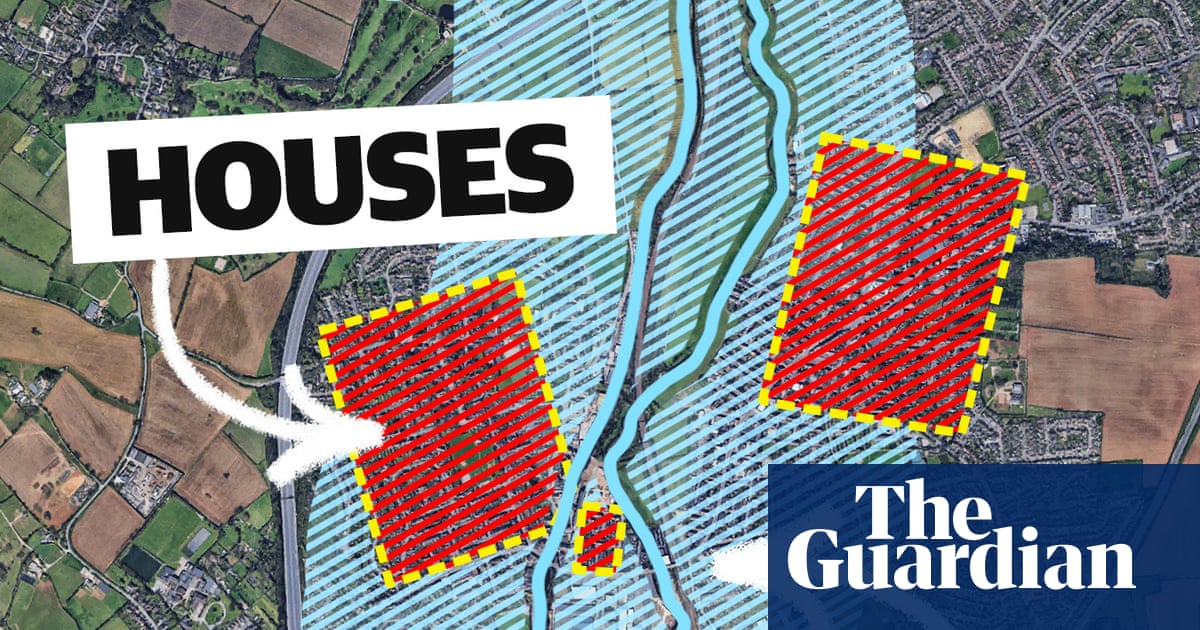
A damning new study from insurance giant Aviva reveals that 11% of new homes constructed across England are being built on flood-risk land, exposing a fundamental flaw in the planning system that socialises environmental risks while privatising development profits. The research underscores how current planning regulations systematically favour housebuilders over long-term homeowner security, creating a pipeline of potentially uninsurable assets that will burden buyers for decades to come. This practice represents a ticking time bomb for property values, particularly as climate change intensifies flood risks and insurers retreat from covering high-risk areas.
The problem is most acute in rapidly expanding urban centres where development pressure intersects with historical flood plains. Manchester's extensive residential developments along the Irwell corridor exemplify this trend, with thousands of new-build flats marketed to first-time buyers who remain largely unaware of their flood exposure. Similarly, Leeds has witnessed substantial residential construction in previously industrial areas along the Aire valley, where Victorian flood defences were never designed to protect dense housing stock. Birmingham's eastern suburbs have seen comparable development patterns, with former agricultural land converted to housing estates despite sitting within Environment Agency flood risk zones 2 and 3.
The regulatory framework actively enables this problematic development through a combination of weak enforcement and misaligned incentives. Local planning authorities, desperate for housing delivery numbers and council tax revenue, routinely approve developments with flood mitigation measures that transfer long-term costs to residents through service charges and insurance premiums. Developers can satisfy planning requirements through sustainable drainage systems and flood barriers that meet technical standards but leave homeowners exposed to insurance market volatility. The Environment Agency's consultation role lacks teeth, with its objections frequently overruled by planning inspectors prioritising housing supply over environmental resilience.
Commercial property investors have already begun pricing flood risk into their acquisition strategies, with institutional buyers increasingly demanding comprehensive flood assessments and excluding properties in high-risk postcodes from their portfolios. This sophisticated approach contrasts sharply with the residential market, where first-time buyers often lack the resources or expertise to conduct proper due diligence. The insurance implications are becoming stark: properties in flood-risk areas face premiums that can exceed £2,000 annually, while some locations are becoming entirely uninsurable outside government-backed schemes. Buy-to-let investors are particularly vulnerable, as flood damage can trigger void periods exceeding six months while repairs are completed.
Regional variations in flood risk exposure create distinct investment challenges across England's major property markets. Liverpool's waterfront regeneration, while transforming the city centre, has concentrated thousands of high-value apartments within tidal surge risk zones that climate projections suggest will worsen significantly by 2040. Newcastle's Quayside developments face similar vulnerabilities, with luxury residential towers commanding premium prices despite sitting metres from the Tyne's flood plain. Conversely, Surrey's elevated geography offers relative protection, but even here, developments in river valleys around Guildford and Woking are encountering insurance difficulties as extreme weather events become more frequent.
The financial implications extend far beyond individual property values to systemic market stability. Mortgage lenders are beginning to incorporate flood risk into lending criteria, with some institutions quietly restricting loan-to-value ratios for properties in high-risk postcodes. This trend will accelerate as regulatory pressure increases and climate risk reporting becomes mandatory for financial institutions. Properties built on flood-prone land today will face significant marketability challenges within five years, as insurance costs and lending restrictions create a two-tier housing market that disadvantages flood-risk locations.
The current trajectory demands immediate policy intervention to prevent a generational transfer of climate risk from developers to homeowners. Without mandatory flood risk disclosure at point of sale and strengthened planning guidance that prioritises long-term resilience over short-term housing numbers, England risks creating thousands of stranded assets that will become unmarketable within a decade. The insurance industry's retreat from flood-risk coverage is already underway, and property investors who fail to factor this structural shift into their strategies will face severe capital losses as the market reprices flood-exposed assets.
Key Takeaways
- 11% of new English homes are built on flood-risk land, creating uninsurable assets that burden buyers rather than developers
- Manchester, Leeds, Birmingham, and Liverpool face particular exposure through riverside developments marketed to first-time buyers
- Commercial investors are already excluding flood-risk properties while residential buyers lack proper due diligence resources
- Mortgage lenders will restrict lending on flood-prone properties within five years, creating a two-tier housing market


