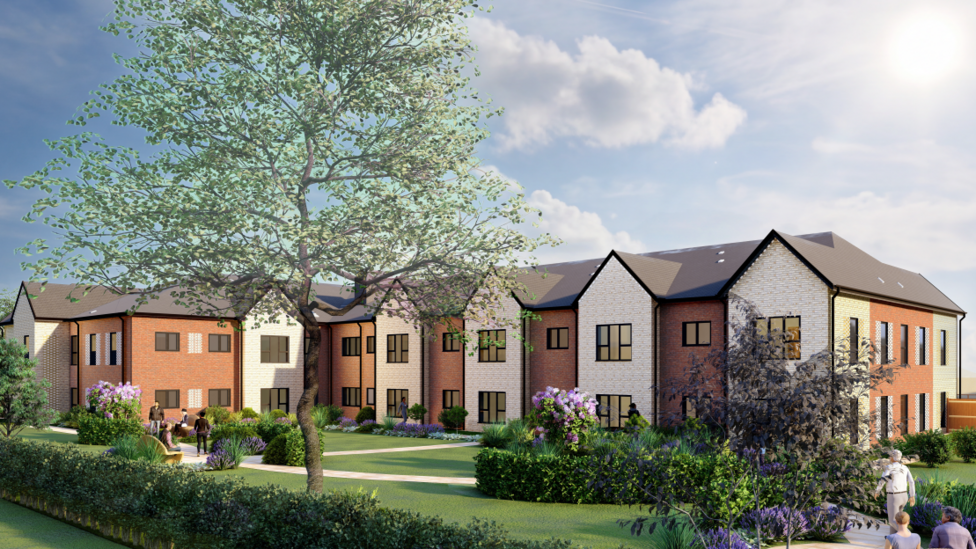
Leeds City Council has received plans for 25 affordable homes in Farsley, a scheme its authors say is designed specifically to address a shortage of smaller properties in the West Yorkshire suburb. On the surface, this is a small, local planning story. Look closer, however, and it is a useful case study in one of the most persistent structural failures of the UK housing market: the chronic undersupply of compact, affordable stock in commuter towns that sit within easy reach of major regional cities.
Farsley, roughly six miles from Leeds city centre and well served by rail links into the city and onward to Bradford, has become an increasingly attractive option for buyers priced out of Leeds proper. Average house prices in Leeds city centre now sit comfortably above £220,000, with three- and four-bedroom family homes in desirable suburbs regularly exceeding £350,000. Smaller towns like Farsley have historically offered a release valve, but that valve has been narrowing. New-build supply across Leeds and its surrounding boroughs has skewed heavily towards larger executive homes, which carry fatter margins for volume housebuilders, leaving one- and two-bedroom units chronically undersupplied relative to demand from first-time buyers, downsizers and single-occupier households.
This matters enormously for investors and market-watchers because household composition in the UK has shifted faster than housing stock has adapted. Single-person households now account for around 30% of all UK households, according to ONS projections, and that share is forecast to keep climbing. Yet the national housebuilding pipeline remains dominated by three-bed-plus family homes. Leeds is far from alone in this mismatch - Manchester, Birmingham and Newcastle all report similar imbalances in their local plans, with councils increasingly using Section 106 affordable housing quotas and direct planning interventions to force smaller units into the mix rather than relying on developers to self-correct.
The Farsley scheme, if approved, will be watched closely as a template. Twenty-five units is a modest number in the context of Leeds' annual housing target of roughly 3,000 net additional dwellings, but its significance lies in composition rather than volume. Affordable housing delivered at this scale, tailored to genuine local need rather than generic tenure mix requirements, tends to let quickly and hold value well, making it an attractive proposition for institutional build-to-rent investors and housing associations alike. For buy-to-let landlords operating in the West Yorkshire commuter belt, schemes like this are worth monitoring closely: smaller, affordable units in well-connected suburbs consistently outperform larger family homes on rental yield, often returning 6-7% gross in areas like Farsley, Pudsey and Horsforth compared with 4-5% for equivalent family houses closer to central Leeds.
For first-time buyers, the calculus is more complicated. Affordable housing quotas typically direct a portion of units towards shared ownership or discounted market sale, which can offer a genuine route onto the ladder in a region where average first-time buyer deposits now exceed £30,000. But the scale of delivery - 25 homes against a backlog that housing charities estimate runs into the thousands across Leeds alone - underscores how far individual planning applications are from solving the underlying supply problem. Developers, meanwhile, face an increasingly assertive planning environment in which local authorities are less willing to accept generic housing mixes and more inclined to specify unit sizes tied to demonstrated local need, a trend likely to accelerate as councils update local plans ahead of expected reforms to the National Planning Policy Framework.
Looking ahead six to twelve months, expect more of this pattern across Yorkshire and the wider North: smaller, targeted affordable schemes in commuter towns rather than large-scale greenfield developments, as councils prioritise sites that can move through planning quickly and address specific local shortages. Investors should treat this as a signal to reassess regional acquisition strategies - commuter towns around Leeds, Liverpool and Newcastle that combine rail connectivity with active council intervention on smaller housing typologies are likely to see steadier rental demand and more resilient capital values than city-centre apartment stock, which in several Northern cities is already showing signs of oversupply. The Farsley application is unremarkable in isolation, but it is a precise illustration of where the next phase of regional housing demand - and investment opportunity - is likely to concentrate.
Key Takeaways
- The 25-home Farsley scheme highlights a structural undersupply of smaller, affordable homes across Leeds and comparable Northern commuter towns.
- Smaller units in well-connected suburbs like Farsley typically yield 6-7% gross for landlords, outperforming larger family homes closer to city centres.
- Councils including Leeds are increasingly specifying unit sizes in planning approvals rather than accepting generic housing mixes, a trend developers should factor into site appraisals.
- Investors should watch commuter towns around Leeds, Manchester and Newcastle for similar targeted affordable schemes, which offer more resilient demand than oversupplied city-centre apartment markets.


