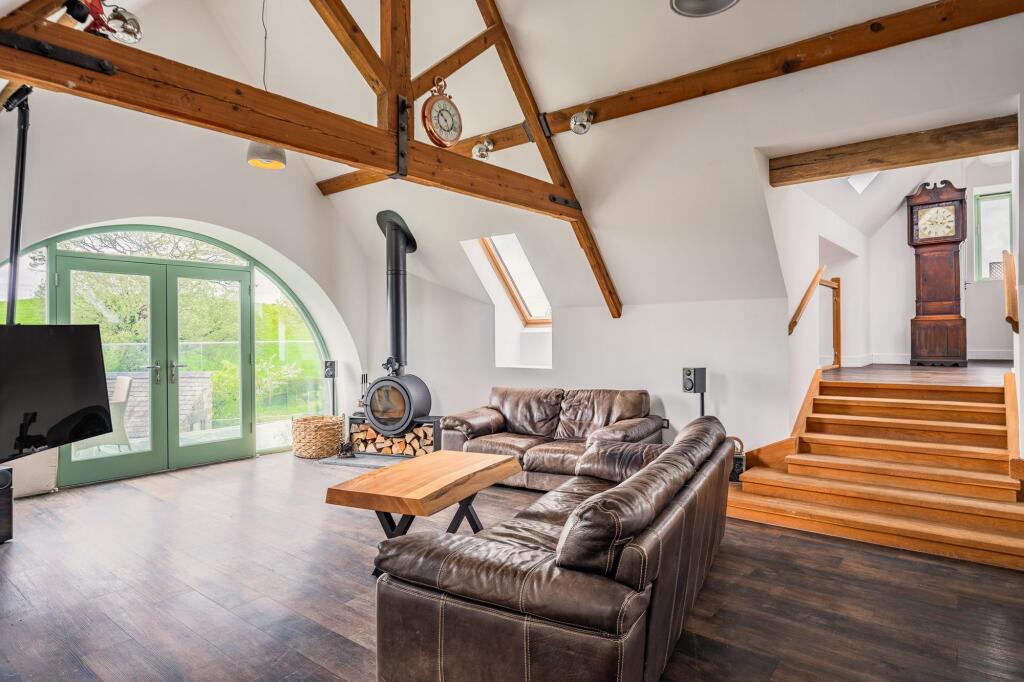
A clutch of five converted schoolhouses, ranging from a £250,000 apartment in a former village school to substantial family homes carved out of Victorian board schools, has put a spotlight on one of the property market's more unusual growth niches: the adaptive reuse of redundant educational buildings. These are not speculative new-builds but character-rich conversions, typically retaining soaring ceilings, arched windows, exposed brickwork and bell towers, features that command a premium over standard housing stock while still entering the market at accessible price points for the space and specification on offer.
For UK property investors, this matters more than the quirky headline suggests. School conversions sit at the intersection of three forces currently shaping the market: a chronic shortage of family-sized homes in commuter towns, a planning system that increasingly favours conversion over demolition-and-rebuild, and a growing appetite among buyers for architecturally distinctive properties that resist the identikit feel of volume housebuilder estates. Local authorities disposing of surplus educational assets, driven by falling pupil numbers in some rural and suburban catchments and school mergers in urban areas, have created a modest but steady pipeline of stock for developers willing to navigate listed building consent and change-of-use planning applications.
Geographically, the opportunity is uneven but instructive. In Surrey and the wider commuter belt, former village schools are being converted into two- and three-bedroom apartments priced from £250,000 to £450,000, attracting downsizers and professional couples who want period character within striking distance of London but cannot stomach current new-build pricing, which in parts of Surrey now exceeds £550 per square foot. In Manchester and Leeds, larger Victorian and Edwardian school buildings are increasingly being repurposed into multi-unit residential schemes by developers targeting the city-fringe rental market, where average gross yields of 6.5% to 7.2% remain well above the sub-4% typically seen in prime central London. Liverpool and Newcastle, both cities with strong stock of solid, red-brick Victorian civic architecture, offer similar conversion potential at even lower entry prices, often £180,000 to £280,000 for a completed one- or two-bedroom unit, making them attractive to buy-to-let landlords seeking cash-flow-positive assets rather than pure capital growth plays.
The economics for developers are worth unpacking. Converting a listed or locally significant school building is rarely cheaper than new-build construction on a comparable footprint, once the costs of structural surveys, asbestos removal, heritage consultancy fees and bespoke joinery to match original features are factored in. Industry estimates put conversion costs at £180 to £240 per square foot against £150 to £190 for standard new-build, a premium of roughly 20-25%. However, this is frequently offset by two factors: planning authorities are markedly more willing to grant permission for sensitive conversions of existing buildings than for greenfield or backland development, shortening timelines that can otherwise stretch to three or four years; and the finished units command a resale premium, often 10-15% above comparable new-build stock in the same postcode, precisely because of the character buyers are willing to pay for.
For first-time buyers, the appeal is straightforward but comes with caveats. A £250,000 entry price for a converted schoolhouse apartment in the South East represents genuine value against a national first-time buyer average of around £237,000, but purchasers need to budget for the realities of period conversion living: higher service charges where communal grounds, boilers or roofs are shared, potential leasehold structures rather than freehold, and mortgage lenders occasionally applying more conservative loan-to-value ratios on non-standard construction or converted listed buildings. Buy-to-let landlords, meanwhile, should note that converted schools in university cities and family commuter towns tend to let quickly precisely because tenants value the same distinctive features that attract owner-occupiers, supporting occupancy rates above 95% in several conversion schemes tracked across the North West over the past two years.
Looking ahead six to twelve months, expect the school conversion niche to expand modestly rather than explode, constrained by the finite supply of suitable buildings coming to market from local authorities and academy trusts. But the direction of travel is clear: with the government's continued emphasis on brownfield and existing-building reuse over greenfield release, and with pupil number projections from the Department for Education pointing to further primary school consolidations in several regions through 2026, more redundant educational stock will filter through to developers. Investors who move early into these opportunities, particularly in the Midlands and North where entry costs remain low relative to yield, stand to capture both the heritage premium on exit and healthy rental returns in the interim. The lesson from this small but telling slice of the market is that character and scarcity, not just location, are increasingly what commands a premium in a UK housing market otherwise starved of genuine differentiation.
Key Takeaways
- Converted school properties are entering the market from £250,000, offering a heritage premium of 10-15% over comparable new-build stock in the same postcode.
- Manchester, Leeds, Liverpool and Newcastle offer the strongest yield potential, with gross rental returns of 6.5%-7.2% against sub-4% in prime London.
- Conversion costs run 20-25% above standard new-build due to heritage consultancy, structural surveys and asbestos removal, but faster planning approval often offsets this.
- Buyers should check leasehold structures, service charges and lender attitudes to non-standard construction before committing, particularly on listed conversions.



