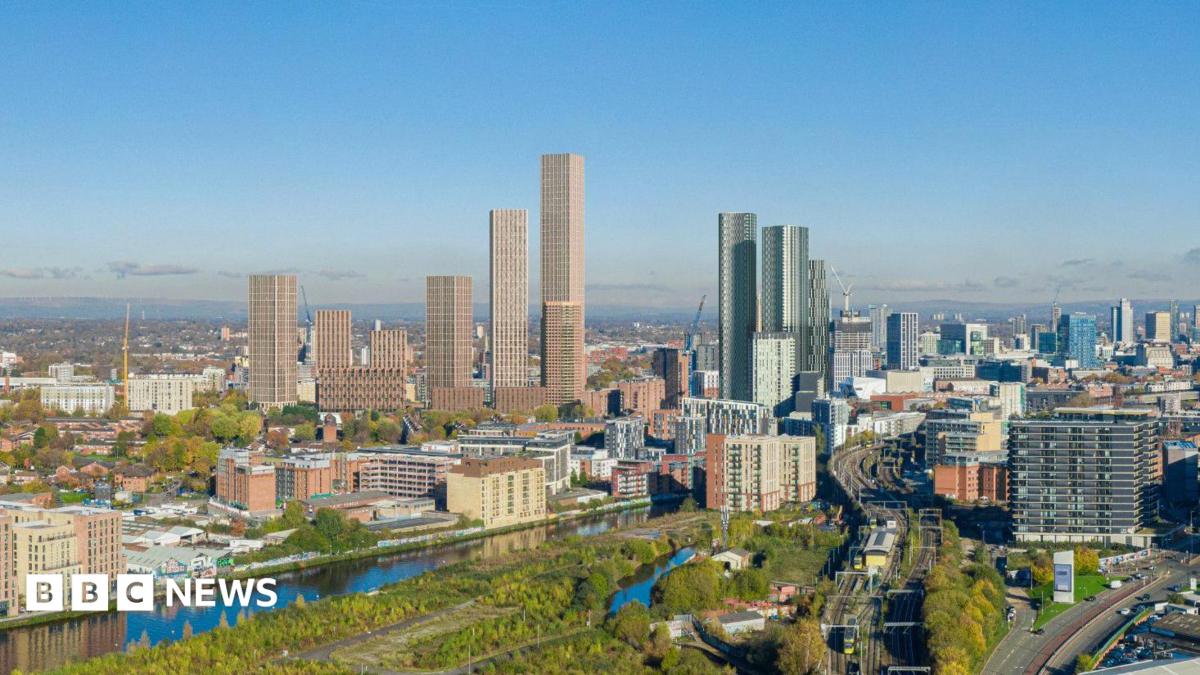
Plans for what would become the tallest skyscraper outside London have hit a significant procedural obstacle after a ruling found a conflict of interest tainted the original planning decision. The 78-storey tower, designed to redraw the skyline of a major UK city, must now return to a planning panel for fresh consideration, adding months of delay to a scheme that developers had hoped to break ground on within the next year.
The setback matters far beyond the immediate site. Tall tower schemes of this scale typically represent hundreds of millions of pounds in committed capital, pre-sold residential units, and forward-funded commercial space. When a conflict-of-interest finding forces a planning decision back to committee, it does not merely reset a clock — it reopens the entire deliberation to renewed scrutiny, objections, and potentially different conditions or refusal. For investors who had underwritten returns on the assumption that consent was secure, this is a material risk event, not a technicality.
Governance failures of this kind have become an increasingly visible feature of UK planning in recent years, as local authorities lean heavily on individual committee members and officers to wave through complex, high-value regeneration projects under pressure to deliver housing numbers. Manchester, Birmingham, Leeds and Liverpool have all pushed ambitious tall-building pipelines as councils compete to attract institutional capital into build-to-rent and mixed-use towers. Manchester alone has seen more than a dozen towers above 40 storeys approved or under construction in the past five years, with schemes such as Trinity Islands and Renaker's Elizabeth Tower cluster illustrating how central this typology has become to the city's growth strategy. A ruling of this nature in any one of these pipelines sends a clear signal to other authorities: due diligence on committee members' declarations of interest is not optional box-ticking, but a legal exposure point that can unravel years of planning work.
For buy-to-let landlords and residential investors who had reserved units off-plan, the practical implication is straightforward — completion timelines slip, and in the worst case, the scheme's viability could be reassessed if the panel imposes new conditions on affordable housing contributions, height, or design. Commercial investors backing the ground-floor retail or office component face similar uncertainty, since anchor tenants often sign agreements for lease conditional on a firm delivery date. Developers, meanwhile, must now weigh the cost of re-running consultation and technical evidence against the political risk of appearing to steamroll a governance failure, particularly with local elections and planning reform under intense public scrutiny.
The broader market context makes this delay more consequential than it might have been five years ago. Construction finance for tall residential towers has tightened considerably since 2023, with lenders demanding tighter pre-sale thresholds — often 50-60% of units under reservation — before releasing senior debt. Every month of planning delay increases holding costs on land and professional fees, and in a market where build costs have risen by roughly 20-25% since 2021 according to industry cost consultants, viability margins on ultra-tall towers are thinner than headline gross development values suggest. A scheme that was marginally viable at approval stage twelve months ago may need re-underwriting entirely if it re-emerges from committee with amended conditions.
Over the next six to twelve months, expect other local authorities running similarly ambitious tall-building programmes to quietly audit committee declarations and legal advice on past approvals, particularly in Birmingham and Leeds where several 50-plus storey schemes are working through planning. Investors should treat any skyscraper scheme still reliant on a single committee vote, rather than full council or mayoral development corporation sign-off, as carrying elevated governance risk. The lesson from this ruling is not that tall towers are becoming less viable in UK regional cities — demand for high-density urban living remains robust — but that the planning process underpinning them needs far more institutional rigour than it has received. Capital will continue to flow towards cities with credible skylines, but only towards schemes whose consents can withstand legal challenge.
Key Takeaways
- A conflict-of-interest finding has forced a 78-storey tower scheme back to planning committee, delaying delivery and reopening the decision to fresh objections.
- Investors with off-plan reservations or forward-funded commercial space should expect timeline slippage and possible renegotiation of terms.
- Rising build costs and tighter development finance mean planning delays now carry sharper viability implications than in previous cycles.
- Other cities pursuing ambitious tall-building pipelines, including Birmingham and Leeds, are likely to review governance around committee approvals to avoid similar exposure.


