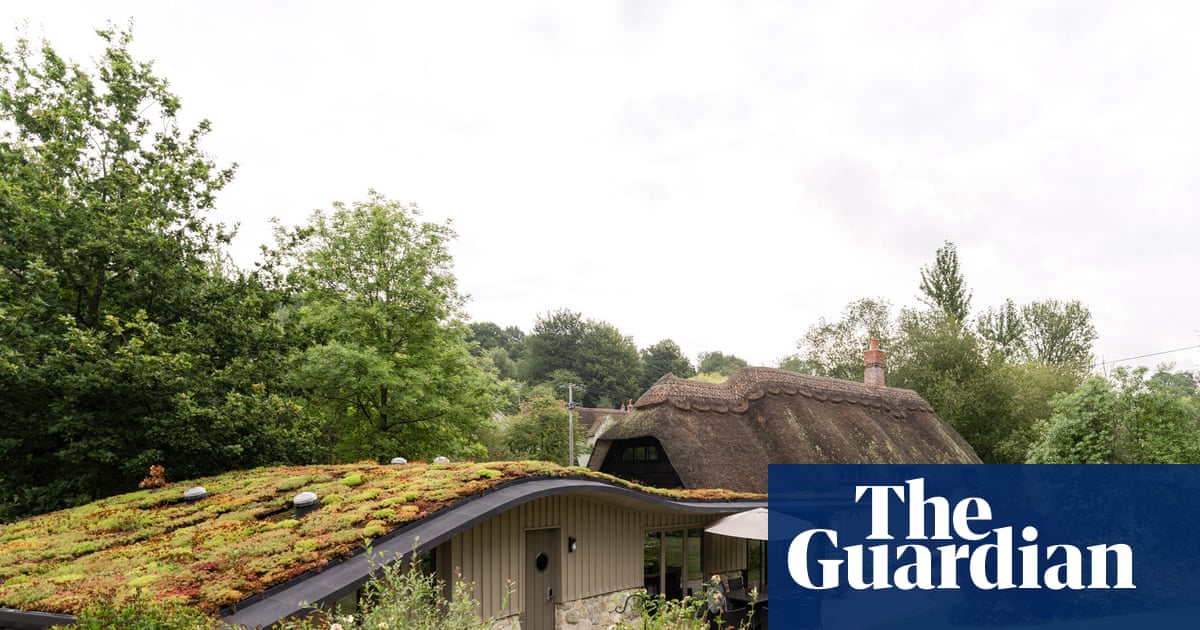
The Guardian has published a photo gallery showcasing homes for sale in England, Scotland and Wales located near foraging hotspots—areas prized for wild food, hedgerow produce and countryside abundance. The selection ranges from a thatched cottage with a distinctive green-topped sweeping extension to a lodge-style property in a town celebrated among foodies. On the surface, this reads as lifestyle content rather than hard market news. But for those tracking the direction of UK residential demand, it is a useful marker of a segment that has been quietly gaining traction: property valued not for commuter convenience or urban proximity, but for its relationship to land, food provenance and rural self-sufficiency.
This matters for investors because it reflects a broader repositioning of what buyers—and increasingly renters—regard as premium. The traditional property hierarchy in the UK has long privileged transport links, school catchments and city-centre access. Locations associated with foraging, wild food and countryside living occupy a different niche altogether, appealing to buyers prioritising lifestyle, wellbeing and a tangible connection to the natural environment. As PropertyNews analysis, this is consistent with a slow but persistent post-pandemic recalibration in which rural and semi-rural markets have retained appeal even as some urban centres have seen renewed demand return. The Guardian's gallery, in featuring specific architectural character—thatch, lodge-style construction—also underscores that buyers in this segment are often drawn to heritage and distinctiveness rather than new-build uniformity.
For buy-to-let landlords, the implications are more nuanced than in mainstream urban rental markets. Properties in foraging-adjacent and food-tourism towns rarely offer the yield profile of city-centre flats aimed at young professionals, but they can command strong short-let and staycation premiums, particularly where a property's character—thatched roofs, lodge aesthetics, proximity to woodland or coastline—can be marketed as part of the guest experience. Landlords considering diversification away from saturated city rental markets in Manchester, Birmingham or Leeds may find this segment offers a differentiated proposition, provided they understand it operates on tourism and lifestyle demand cycles rather than the steady churn of urban tenancy markets.
First-time buyers face a different calculus. Rural and semi-rural properties of the type featured in this gallery often carry a premium precisely because of their character and setting, and typically lack the transport infrastructure that makes commuting to major employment centres straightforward. For buyers priced out of London or Surrey's competitive markets, these areas may appear more accessible on paper, but PropertyNews analysis suggests that affordability in such locations should be judged holistically—factoring in commuting costs, local employment availability and the practicalities of rural living—rather than purely on headline price comparisons with cities such as Liverpool or Newcastle.
Commercial investors and developers should read this trend as a signal about ancillary opportunity rather than core residential strategy. Towns with strong foraging or food-tourism identities tend to support complementary commercial activity: farm shops, cookery schools, boutique hospitality and food-led retail. Developers active in rural and semi-rural markets may find scope to integrate lifestyle-led amenity into schemes aimed at this buyer profile, particularly where heritage building stock—thatched cottages, converted lodges—can be sensitively extended rather than demolished and replaced. This is a market where planning sensitivity and architectural character carry more weight than density or unit yield.
Looking ahead six to twelve months, PropertyNews analysis expects this niche to remain a steady but minority strand of UK housing demand rather than a mainstream driver of price growth. It will not move national indices, but it offers a useful barometer of buyer psychology: an enduring appetite for authenticity, provenance and connection to place that has persisted well beyond the initial post-pandemic rural exodus. Investors positioning portfolios around lifestyle-led rural assets should expect resilience in demand from a specific, affluent buyer cohort, even as broader rural markets face the same mortgage rate and affordability pressures affecting the rest of the country.
The clearest conclusion is that Britain's property market is fragmenting into increasingly specific micro-markets, and lifestyle identity—whether built around foraging, food culture or heritage architecture—is now a legitimate driver of premium value in its own right. Those who understand and target these micro-markets, rather than treating rural property as an undifferentiated alternative to urban investment, stand to capture a segment of demand that mainstream housing analysis routinely overlooks.


