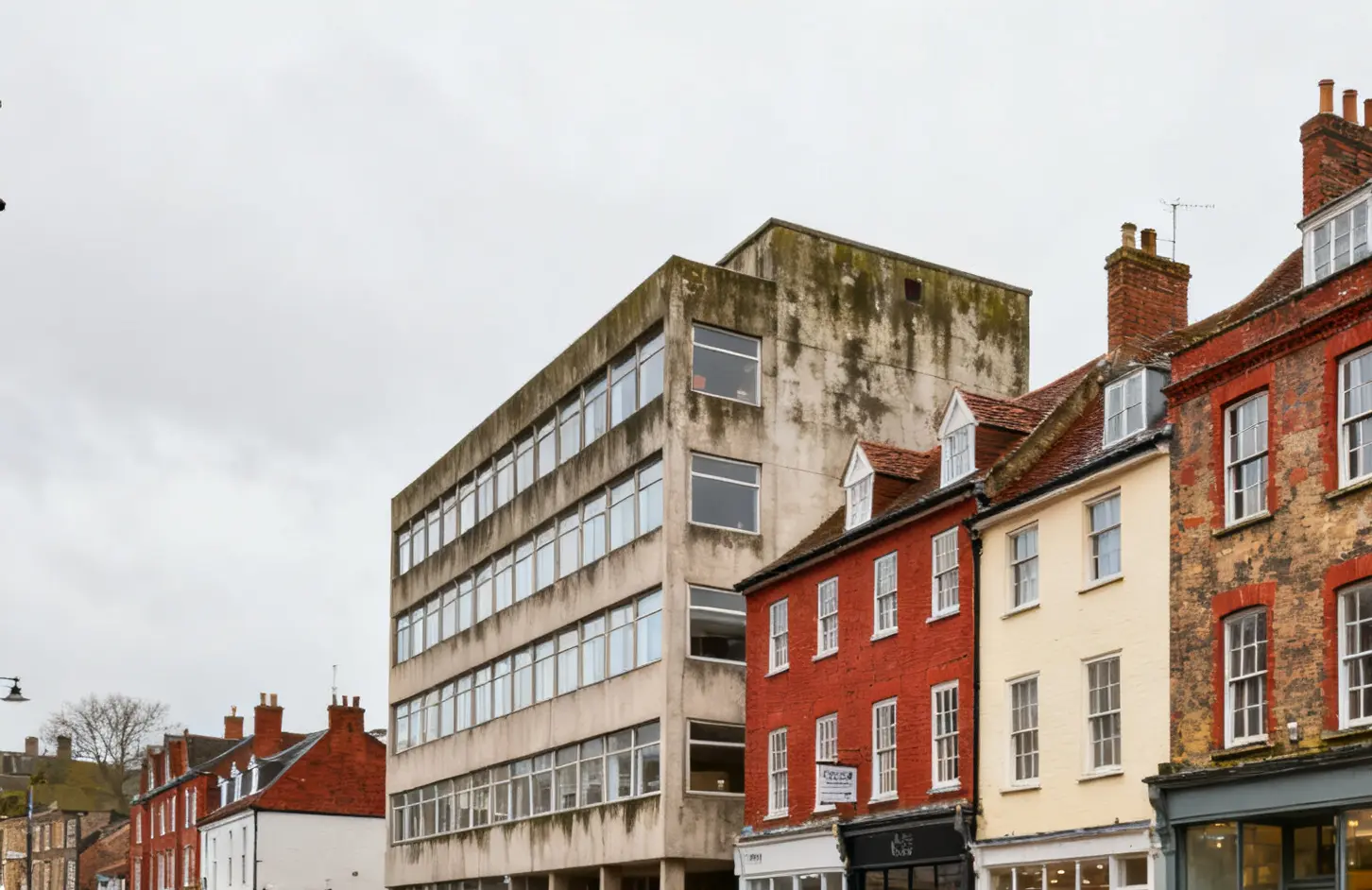
Recognise Bank's £1.5 million bridging facility for a multi-building commercial property in Canterbury represents more than an isolated transaction - it signals a broader shift towards commercial-to-residential conversions in secondary cities where permitted development rights and rental yields are creating compelling investment opportunities. The 15-month loan structure specifically supports the acquisition and conversion of upper floors to residential use whilst optimising the ground-floor commercial tenant mix, a strategy that has gained significant traction across Kent's cathedral city where residential demand consistently outstrips supply.
Canterbury's commercial property market presents particularly attractive fundamentals for mixed-use development. The city's proximity to London, combined with its status as a university town hosting over 40,000 students across multiple institutions, creates robust demand for both commercial space and residential accommodation. Current residential rental yields in Canterbury average 6.2% according to recent market data, whilst commercial ground-floor spaces command premium rents from retailers seeking to capitalise on both student spending and tourist footfall. This dual income stream approach has become increasingly attractive to investors seeking to hedge against sector-specific volatility.
The transaction reflects broader lending appetite for commercial conversion projects across secondary cities throughout the South East. Recognise Bank's willingness to provide substantial bridging finance for mixed-use developments mirrors similar funding patterns emerging in Maidstone, Royal Tunbridge Wells, and other Kent towns where commercial property values remain below London levels whilst residential demand remains strong. Typical bridging rates for such projects currently range between 0.65% and 1.2% monthly, with loan-to-value ratios reaching 75% for experienced developers with proven track records in commercial conversions.
The strategic focus on improving commercial tenant mix alongside residential conversion demonstrates sophisticated asset management thinking. Ground-floor commercial spaces in Canterbury's core areas command rents of £25-35 per square foot, with food and beverage operators, independent retailers, and professional services firms showing particular interest in well-located premises. By enhancing the commercial offering whilst adding residential units above, investors can achieve total rental yields approaching 8-9% whilst benefiting from capital appreciation as the mixed-use model becomes increasingly recognised by valuers.
Regional commercial-to-residential conversion activity is accelerating across similar university and tourist destinations, with Manchester's Northern Quarter, York's historic centre, and Bath's commercial districts all witnessing comparable investment strategies. However, Canterbury's specific advantages - including its UNESCO World Heritage status, excellent transport links to London, and established rental market - position it favourably within this trend. The city's commercial vacancy rates have declined 18% over the past 24 months, whilst residential rental demand has increased 23% according to local letting agents.
Looking ahead, the Canterbury deal establishes a template for similar mixed-use investments across secondary cities where commercial property prices remain attractive relative to potential residential conversion values. The 15-month timeframe suggests confidence in planning processes and conversion execution, whilst the substantial loan amount indicates serious institutional backing for this strategy. Investors should expect increased competition for suitable commercial properties in university towns and tourist destinations where similar fundamentals apply, particularly those offering clear residential conversion potential under permitted development rights.
The transaction ultimately demonstrates how specialist lenders are supporting innovative property strategies that respond to changing urban demographics and space usage patterns. Canterbury's combination of commercial heritage, educational institutions, and residential demand pressures creates an ideal testing ground for mixed-use development models that could be replicated across dozens of similar UK cities. This approach offers property investors a compelling alternative to traditional single-use commercial or residential strategies, providing diversified income streams whilst capitalising on urban densification trends.
Key Takeaways
- Mixed-use commercial conversions in secondary cities are attracting substantial specialist lending with total yields reaching 8-9%
- Canterbury's fundamentals - university population, tourist demand, transport links - create ideal conditions for commercial-to-residential projects
- Bridging finance availability for conversion projects signals lender confidence in permitted development rights and planning processes
- Similar opportunities exist across university towns and heritage cities where commercial vacancy rates are declining whilst residential demand strengthens


