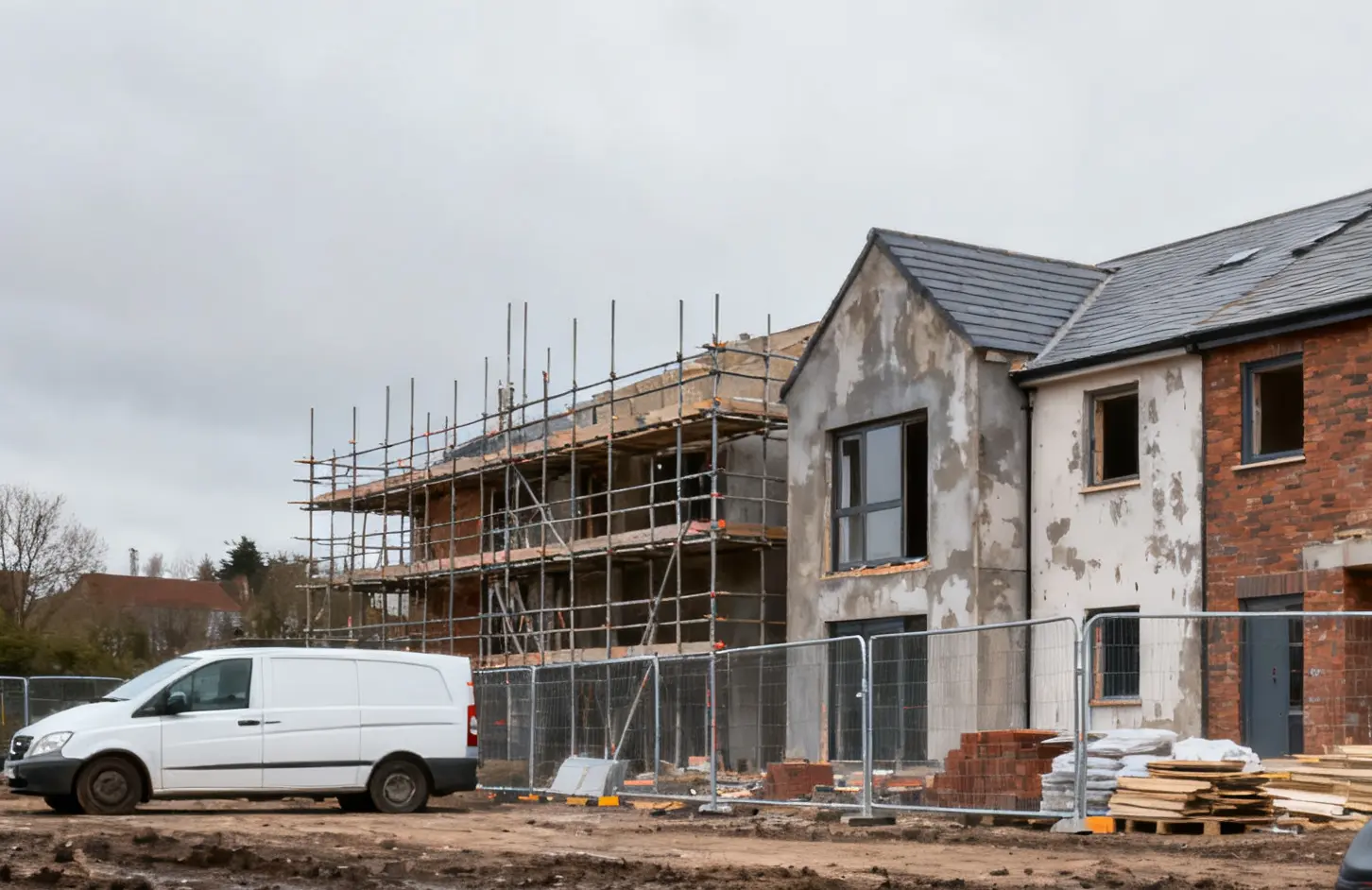
Avamore Capital's completion of a £1.47 million development finance facility for a substantially advanced residential project underscores the critical role specialist lenders are playing in rescuing stalled developments across the UK. The transaction, which required complex assessment of partially completed work and remaining cost projections, reflects a broader trend of developers finding themselves financially stranded mid-construction as traditional funding sources retreat from the sector.
The surge in part-complete financing reflects the harsh realities facing UK developers in 2024. Construction costs have escalated by approximately 15-20% over the past 18 months, while interest rates have tripled from their pandemic lows, leaving many projects that appeared viable at inception now struggling with funding gaps. Regional markets including Manchester, Birmingham, and Leeds have been particularly affected, with smaller developers often lacking the financial reserves to weather unexpected cost overruns or delays in securing pre-sales.
For specialist lenders like Avamore, part-complete deals represent both opportunity and elevated risk. These transactions typically command interest rates 200-400 basis points above standard development finance, reflecting the complexity of valuing partially finished work and the heightened probability that projects requiring mid-stream refinancing face underlying viability challenges. The lender's due diligence process becomes significantly more intensive, requiring detailed technical assessments of completed work quality and realistic projections for outstanding construction phases.
The implications for buy-to-let investors are particularly significant, as many smaller residential developments targeting the rental market are among those most vulnerable to funding shortfalls. Properties delayed by financing issues often miss optimal marketing windows, while extended development timelines can fundamentally alter the investment returns that landlords had projected. In high-demand rental markets such as central Manchester and Birmingham's emerging quarters, even short delays can mean the difference between securing premium rents and competing in an oversupplied segment.
From a market-wide perspective, the proliferation of part-complete financing deals signals underlying stress in the development pipeline that will likely constrain new housing supply through 2025. Developers who successfully secure rescue funding face significantly higher finance costs that must ultimately be reflected in sales prices or rental yields. This dynamic is particularly pronounced in London's outer boroughs and emerging growth areas like Newcastle, where marginal viability means even modest cost increases can render schemes uneconomical.
The forward trajectory suggests that specialist lenders focusing on distressed development finance will continue expanding their market share as traditional banks maintain conservative lending criteria. This shift toward more expensive, flexible capital sources will inevitably translate into higher costs for end-users, whether first-time buyers or rental tenants. Regional markets with strong underlying demand fundamentals - including Leeds, Liverpool, and Surrey's commuter belt - are likely to absorb these increased costs more readily than secondary locations where price sensitivity remains acute.
The Avamore transaction exemplifies how the UK development finance landscape is bifurcating into standard bank lending for well-capitalised, straightforward projects and a growing specialist sector serving more complex, higher-risk deals. This evolution will fundamentally reshape how residential development is financed, with successful developers increasingly requiring relationships across multiple funding sources to navigate projects from inception to completion in an environment where mid-course corrections have become the norm rather than the exception.
Key Takeaways
- Part-complete development finance is commanding premium rates 200-400 basis points above standard facilities as rescue funding becomes commonplace
- Regional markets in Manchester, Birmingham, and Leeds face particular pressure from stalled developments missing optimal marketing windows
- Buy-to-let investors should expect delayed delivery timelines and higher acquisition costs as development finance stress filters through to end prices
- Traditional banks' retreat from complex development lending is creating opportunities for specialist lenders but increasing overall funding costs across the sector


