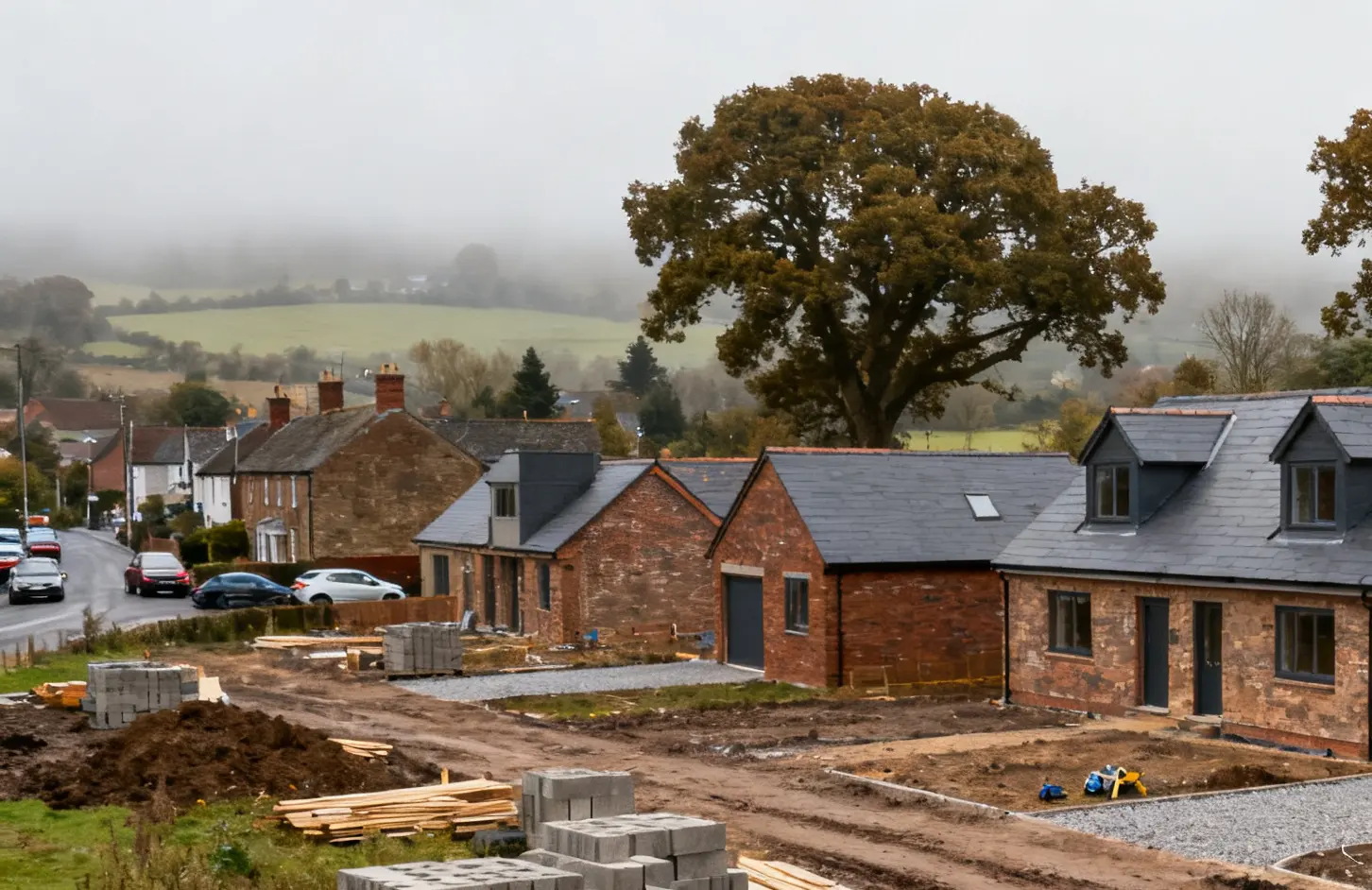
Assetz Capital's deployment of a £2.3 million emergency development facility in Herefordshire signals a broader recalibration in development finance markets, where alternative lenders increasingly serve as the industry's safety net. The specialist lender's intervention to rescue Marches Homes' six-unit eco-dormer bungalow scheme in Leintwardine - after the original financier withdrew on completion day - exemplifies how traditional bank reticence is creating lucrative opportunities for non-bank capital providers whilst exposing developers to heightened funding volatility.
The 16-month facility structure reflects current market realities where development timelines extend beyond pre-pandemic norms, driven by planning delays, material supply chains, and labour shortages. Alternative lenders typically charge 8-12% annually for rescue facilities compared to 4-6% for standard development finance, creating a two-tier market where distressed projects face significantly higher capital costs. This pricing differential particularly impacts smaller regional developers like Marches Homes, who lack the financial reserves of major housebuilders to weather funding disruptions without immediate refinancing.
Herefordshire's rural development landscape mirrors challenges across similar counties including Shropshire, Worcestershire, and parts of Wales, where ecological considerations and planning constraints favour smaller-scale, sustainable housing schemes. The eco-dormer bungalow format addresses acute demand from downsizing homeowners and reflects local planning preferences for environmentally conscious development. Property values in Leintwardine and surrounding villages have appreciated 15-20% since 2020, driven by urban-to-rural migration patterns that accelerated during the pandemic, making such developments increasingly viable despite higher construction costs.
The original lender's last-minute withdrawal indicates tightening risk appetites among mainstream institutions, particularly for projects under £5 million where due diligence costs represent higher proportional overheads. Regional banks and building societies have systematically reduced exposure to speculative development since 2022, prioritising established relationships and larger schemes with pre-sales commitments. This retreat creates market gaps that alternative lenders exploit, though their higher pricing and shorter terms can pressure project viability for marginal developments.
Forward market dynamics suggest alternative lending will capture increasing market share as traditional institutions maintain conservative stances through 2024. Interest rate volatility and economic uncertainty discourage long-term development commitments from mainstream lenders, whilst alternative providers demonstrate greater flexibility in structuring deals around specific project challenges. However, this trend concentrates development risk among a smaller pool of specialist lenders, potentially creating systemic vulnerabilities if market conditions deteriorate rapidly.
The broader implications extend beyond individual transactions to regional housing supply dynamics. Areas like Herefordshire, where local planning policies favour smaller developments over strategic sites, depend heavily on SME developers who lack access to corporate finance facilities. Alternative lending therefore becomes critical infrastructure for maintaining housing delivery in rural and semi-rural markets, though at cost premiums that ultimately impact affordability for end purchasers.
Assetz Capital's intervention demonstrates how specialist lenders now function as essential market stabilisers, preventing project collapses that would eliminate housing supply and destroy developer equity. This evolving ecosystem suggests development finance is permanently bifurcating between low-risk mainstream lending and higher-yield alternative provision, with projects increasingly designed around funding source characteristics rather than pure market demand. The sustainability of this model depends on alternative lenders' ability to maintain capital access whilst traditional institutions remain risk-averse, creating a delicate balance that will determine development activity levels across secondary markets nationwide.
Key Takeaways
- Alternative lenders charging 8-12% annually are replacing mainstream banks on distressed developments, creating higher project costs
- Rural counties face particular vulnerability as smaller developers lack financial reserves to weather funding disruptions
- Development finance is bifurcating permanently between low-risk bank lending and higher-yield specialist provision
- Housing supply in secondary markets increasingly depends on alternative lender appetite and capital availability


