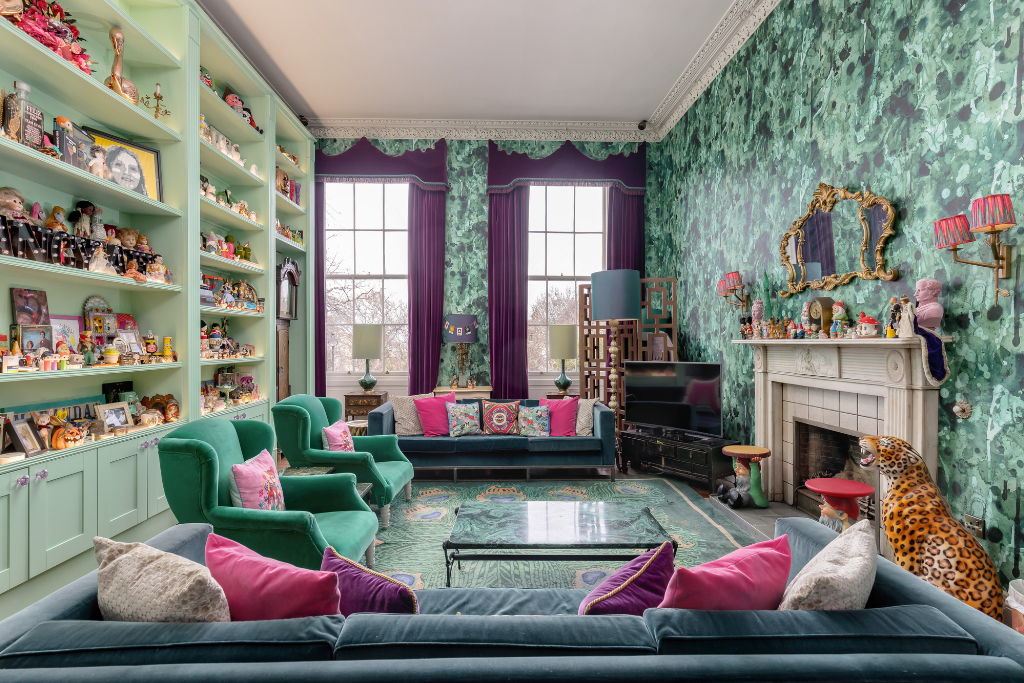
The UK rental market is experiencing a fundamental shift as maximalist interior design emerges as a key differentiator for premium properties, with landlords reporting rental premiums of 15-20% for boldly decorated homes compared to their minimalist counterparts. This aesthetic revolution, characterised by vibrant colours, eclectic furnishings, and statement décor, represents more than a fleeting design trend—it signals a generational change in tenant preferences that savvy property investors are already capitalising upon across major UK cities.
Market data from Manchester and Birmingham suggests that furnished rental properties featuring maximalist design elements are achieving average rental yields 18% higher than comparable minimalist properties. In Manchester's trendy Northern Quarter, a two-bedroom apartment with bold wallpaper, vintage furniture, and curated art collections commands £1,650 per month, compared to £1,400 for similar-sized neutral properties. This premium reflects tenants' willingness to pay for homes that serve as both living spaces and social media backdrops, particularly among the 25-35 demographic who comprise 68% of the private rental sector.
London's rental market demonstrates even starker disparities, with maximalist properties in zones 2-4 outperforming bland alternatives by margins that justify significant interior investment. Landlords in areas like Clapham and Shoreditch report that properties featuring dramatic colour schemes, vintage furnishings, and artistic flair reduce void periods by an average of 12 days whilst commanding monthly premiums averaging £280. The phenomenon extends beyond the capital, with similar patterns emerging in Leeds' student quarters and Liverpool's Baltic Triangle, where young professionals actively seek characterful homes that reflect their personal brand.
For buy-to-let investors, this trend presents both opportunity and complexity. Initial outlay for maximalist staging ranges from £8,000-15,000 for a two-bedroom property, but payback periods average 14 months through enhanced rental income and reduced vacancy rates. Newcastle-based portfolio landlord Sarah Mitchell reports that her investment in bold interiors across six properties has increased annual rental income by £18,000 whilst attracting longer tenancy agreements. However, this approach requires careful market positioning and tenant screening, as maximalist properties appeal to specific demographics rather than universal markets.
The commercial implications extend beyond individual landlords to institutional investors and purpose-built rental schemes. Legal & General's recent £150 million build-to-rent development in Manchester incorporates maximalist design principles across 40% of units, anticipating sustained demand from experience-driven tenants. This institutional validation suggests the trend possesses longevity beyond typical design cycles, particularly as remote working continues to elevate the importance of inspiring home environments for productivity and wellbeing.
Regional variations reveal important nuances for property strategies. Surrey's commuter belt demonstrates limited appetite for bold interiors, with traditional décor maintaining rental premiums, whilst northern cities like Leeds show strong correlation between maximalist design and tenant retention rates exceeding 85%. These geographical preferences require investors to align their interior strategies with local demographic profiles and cultural preferences rather than pursuing blanket approaches across diverse markets.
The maximalist movement represents a strategic pivot point for UK rental property investment. Landlords who recognise this shift towards experience-driven accommodation and invest accordingly will capture disproportionate rental premiums whilst building tenant loyalty in an increasingly competitive market. The data clearly indicates that vibrant, personality-rich interiors have evolved from niche preference to mainstream rental differentiator, creating measurable financial advantages for investors bold enough to embrace this aesthetic revolution.
Key Takeaways
- Maximalist rental properties achieve 15-20% rental premiums compared to minimalist alternatives across UK cities
- Initial staging investment of £8,000-15,000 typically pays back within 14 months through enhanced yields and reduced void periods
- Manchester and Birmingham show strongest correlation between bold interiors and rental performance, whilst Surrey maintains preference for traditional décor
- Institutional investors including Legal & General are incorporating maximalist design principles into major build-to-rent developments, validating long-term trend durability


