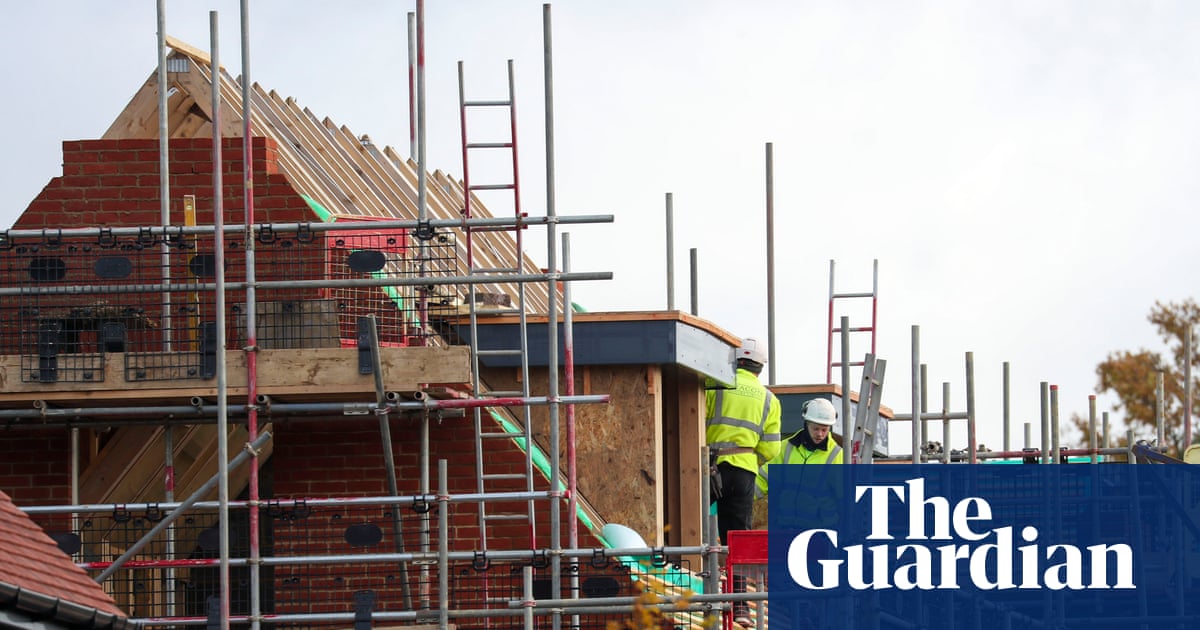
A housing committee has confirmed it is examining plans to penalise developers who sit on land with planning permission rather than building on it, with undeveloped plots potentially facing heavy taxation. The move targets a long-standing grievance in housing policy circles: that permissions are granted, sites are banked, and homes that communities desperately need remain unbuilt for years.
For UK property investors, landlords and developers, this proposal lands squarely within a debate that has simmered across the country for over a decade. Local authorities routinely grant planning consent only to watch sites stall, often blamed on market timing, construction costs, or deliberate strategic land management by volume housebuilders. Wherever such measures are tested, from Westminster to the Channel Islands, they tend to set precedent that other jurisdictions watch closely. A tax on dormant permissioned land, if proven workable, becomes a template that housing ministers in London, Cardiff and Edinburgh could eventually be pressed to replicate.
The logic behind the housing committee's approach is straightforward: planning permission is a scarce public asset, granted on the understanding that it will translate into delivered homes within a reasonable timeframe. When developers instead treat permissioned land as a speculative holding, appreciating in value simply by virtue of its consented status, the public interest in addressing housing shortages is undermined. A tax penalty changes the economics, making it costlier to hold land than to build on it, and in theory accelerates delivery.
The practical effects would ripple unevenly across the market. Volume housebuilders and larger development companies, who typically hold the deepest land banks as a matter of corporate strategy, would face the greatest exposure and the strongest incentive to bring forward build-out programmes. Smaller developers and SME builders, who often lack the balance sheet to land bank in the first place, could find themselves relatively advantaged, though they may also face tighter competition for sites as larger players release land onto the market to avoid the charge. Commercial investors holding land purely for capital appreciation would need to reassess whether consented but undeveloped sites remain an attractive asset class once a holding cost is attached.
For buy-to-let landlords and first-time buyers, the implications are more indirect but potentially significant. If the policy succeeds in its stated aim of converting dormant permissions into completed homes, it could ease supply pressure in markets where planning backlogs have long been blamed for constrained stock. Cities such as Manchester, Birmingham, Leeds, Liverpool and Newcastle, where demand has consistently outstripped delivery in recent cycles, would stand to benefit most from any acceleration in build-out rates. London and the wider South East, including commuter markets like Surrey, where land values and holding incentives are highest, represent the toughest test case: these are precisely the markets where speculative land holding has historically been most financially rational, and where a tax penalty would need to be calibrated carefully to avoid simply being absorbed as a cost of doing business rather than triggering genuine behavioural change.
Over the next six to twelve months, developers with substantial land banks should expect closer scrutiny of their build-out timetables, whether or not this specific measure proceeds to legislation. The direction of travel in housing policy, both in this jurisdiction and more broadly across the UK, is unmistakably towards treating land banking as a political liability rather than a neutral commercial practice. Investors should treat consented but undeveloped land as a less passive holding than it once was, and developers would be wise to accelerate planning for delivery rather than wait for taxation to force their hand. The committee's proposal may still be at an early stage, but it signals that the era of unchallenged land banking is drawing to a close, and market participants who adapt early will be better positioned than those who wait for the legislation to bite.
Key Takeaways
- A housing committee is considering heavy taxation on land that holds planning permission but remains undeveloped, aiming to force faster build-out.
- Volume housebuilders with large land banks face the greatest financial exposure, while SME developers may see relatively improved competitive positioning.
- Cities with persistent housing supply shortages, including Manchester, Birmingham, Leeds, Liverpool and Newcastle, stand to benefit most if the policy accelerates delivery.
- Developers and commercial land investors should reassess land-holding strategies now, as taxation of dormant permissions is likely to gain traction more broadly across UK housing policy.