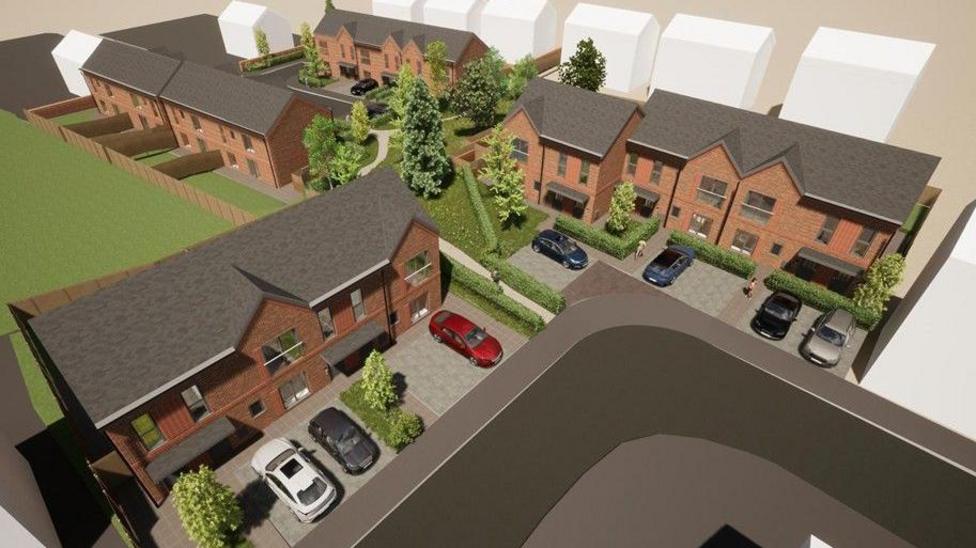
Wigan Council has confirmed that construction will begin in September on a new development of one-bedroom council homes in Leigh, with allocation restricted to applicants who can demonstrate a local connection to the area. While modest in scale, the scheme is emblematic of a broader shift taking place across English local authorities as they re-enter direct housebuilding after decades of relying almost entirely on private developers and housing associations to meet demand.
For property investors, this matters far more than the unit count suggests. Local authority housebuilding fell to near zero after the 1980s Right to Buy reforms gutted council housing stock, and for most of the past thirty years councils have functioned as planning gatekeepers rather than developers. Wigan's move, alongside similar initiatives in Manchester, Birmingham, and Leeds, indicates councils are increasingly using their own balance sheets, land assets and borrowing powers to deliver housing directly — a trend accelerated by the Public Works Loan Board's more competitive rates for housing revenue account borrowing since 2020. Investors who have assumed local authorities remain passive planning bodies need to recalibrate that assumption quickly.
The local connection criteria attached to the Leigh scheme is significant in its own right. Such policies, increasingly common in high-demand rural and semi-rural markets across Surrey, Cornwall and parts of Greater Manchester, restrict eligibility to applicants with existing residency, family ties or employment in the immediate area. This directly limits the pool of open-market buyers and renters who might otherwise compete for stock, effectively ring-fencing supply for local demand rather than allowing it to be absorbed into wider regional housing pressure. For build-to-rent investors and portfolio landlords eyeing satellite towns around Manchester such as Leigh, Wigan and Atherton, this is a clear signal that local authorities are prepared to use allocation policy as a tool to blunt speculative demand rather than simply relying on price mechanisms.
The wider context is a national shortfall that remains stark: England has consistently delivered fewer than half the roughly 300,000 net additional homes per year that government targets require, with the shortfall in one-bedroom and smaller units particularly acute in northern towns experiencing single-person household growth. Greater Manchester's own housing strategy has flagged demand for smaller units among older residents downsizing and young people forming first households, a demographic pattern mirrored in Newcastle, Liverpool and Leeds. Council-led schemes targeting this segment directly compete with — and in some cases substitute for — private rented sector supply that buy-to-let landlords have traditionally filled, particularly in northern town centres where yields have remained attractive at 6-8% gross.
Over the next six to twelve months, expect more local authorities to announce similar direct-build schemes, particularly as councils look to diversify housing revenue account income and reduce temporary accommodation costs, which have surged nationally amid a 12% year-on-year rise in homelessness placements according to recent local government data. This has two clear implications for market participants. First-time buyers and renters in areas with local connection schemes will find a widening two-tier market: open-market stock priced at full commercial rates alongside a growing shadow supply of below-market council housing unavailable to them unless they meet residency criteria. Developers, meanwhile, should anticipate more councils acting as direct competitors for construction contracts and land, potentially compressing margins on smaller regional schemes where councils can build more cheaply using public borrowing rates unavailable to private developers.
Commercial and institutional investors should read Wigan's announcement as an early indicator of policy direction rather than an isolated local story. As councils rebuild in-house development capacity — Wigan itself has expanded its housing delivery team over the past two years — the balance of housing supply in secondary UK markets is shifting away from pure market mechanisms towards managed, criteria-based allocation. Investors targeting Greater Manchester's satellite towns, or comparable markets in West Yorkshire and the North East, should factor local authority housing strategy into due diligence with the same rigour traditionally reserved for planning policy and infrastructure investment, because it is increasingly determining who can access housing stock at all.
Key Takeaways
- Wigan Council's Leigh scheme reflects a wider national trend of local authorities directly building homes again, reversing decades of reliance on private developers.
- Local connection eligibility criteria are increasingly being used to ring-fence housing supply from open-market and buy-to-let demand in high-pressure regional markets.
- Investors and developers should expect more council-led schemes over the next 6-12 months, particularly in Greater Manchester, West Yorkshire and the North East, as councils leverage cheap public borrowing.
- Buy-to-let landlords and first-time buyers face a growing two-tier housing market where below-market council stock is inaccessible without demonstrable local ties.


