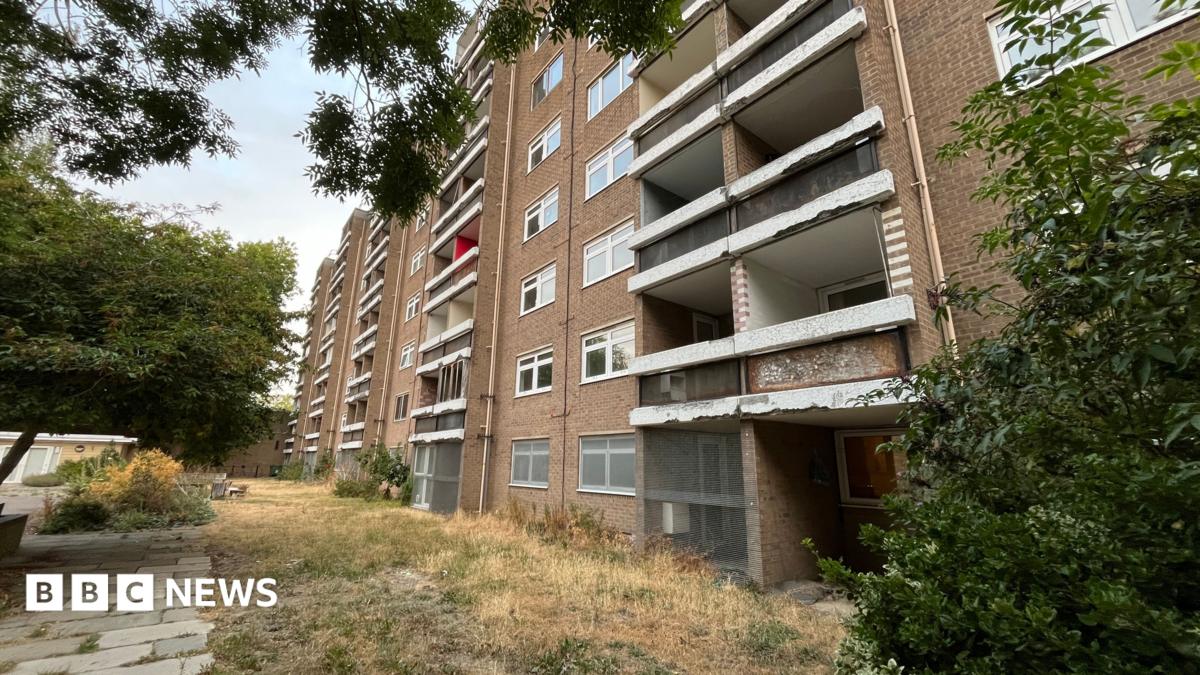
A city council has abandoned plans to fully demolish and privately redevelop one of its housing estates, opting instead to retain and rebuild a proportion of genuine council homes after securing new government funding. The decision follows sustained criticism that the original scheme - reliant on a private-sector-led rebuild with only a fraction of homes returned at social rent - would have displaced long-standing tenants and eroded the borough's social housing stock. It is a small but telling reversal, and one that UK property investors should not dismiss as a local planning footnote.
For much of the past decade, estate regeneration in England has followed a familiar template: councils partner with private developers to demolish ageing stock, replace it with higher-density mixed-tenure schemes, and rely on cross-subsidy from market-rate sales to fund a modest number of "affordable" units - typically affordable rent at up to 80% of market value, rather than genuine social rent. Estates such as the Aylesbury in Southwark and Broadwater Farm in Haringey became flashpoints for exactly this model, with residents and campaigners arguing that regeneration was functioning as a mechanism for social cleansing rather than renewal. This latest reversal suggests that political and reputational risk around that approach has now reached a tipping point that funders and councils can no longer ignore.
The practical driver is money. New funding streams - likely drawing on the government's Affordable Homes Programme or Local Authority Housing Fund allocations - have made it financially viable for the council to retain a meaningful proportion of homes at social rent rather than outsourcing delivery entirely to private capital. This matters because social rent typically sits at around 50-60% of market rent, compared with 80% for so-called "affordable rent", a gap that has fuelled years of debate about whether regeneration schemes genuinely serve existing communities or simply launder public land into private-sector profit. Councils in Manchester, Birmingham, Leeds and Liverpool are all managing similar-vintage estates approaching end-of-life decisions, and each will be watching this outcome closely as a template for renegotiating their own development agreements.
For buy-to-let landlords and commercial investors, the implications are twofold. First, schemes with a higher proportion of retained social and council housing will typically see a smaller footprint of market-rate units available for private sale or rent, tightening supply in already constrained regeneration zones - a dynamic already visible in parts of east London and inner Manchester, where redevelopment has failed to keep pace with population growth. Second, and more importantly, this signals a shift in the risk calculus for private partners bidding on council-led regeneration. Developers who have built financial models around aggressive tenure mix and high market-sale ratios may find councils increasingly reluctant to approve schemes that don't demonstrate a credible social housing offer upfront, particularly in politically sensitive wards.
First-time buyers and shared ownership purchasers should note a subtler effect: as councils retain more homes for social rent rather than selling land outright to volume housebuilders, the pipeline of new-build homes available for open-market purchase in some regeneration areas could contract modestly over the next 12 to 18 months. This is unlikely to move national house price indices, but in localised markets - parts of Newcastle's West End, Liverpool's Ten Streets, or Birmingham's Perry Barr - where regeneration has been a key driver of new supply, investors chasing off-plan opportunities should factor in longer delivery timelines and potentially reduced unit counts as councils renegotiate terms.
Looking ahead, expect more local authorities to revisit stalled or contested estate regeneration schemes over the coming year, particularly where central government funding pots create room to rebalance tenure mix without abandoning viability. Councils in London, Bristol and parts of the North West with ageing 1960s and 1970s stock are the most exposed to this pressure, given both the scale of retrofit need and the political sensitivity around displacement. Investors and developers who adapt early - building genuine social rent provision into scheme viability from the outset rather than treating it as a negotiable add-on - will find themselves better positioned to win council partnerships than those still operating on the old cross-subsidy playbook.
This episode is less about one estate and more about a structural repricing of political risk in regeneration finance. Councils facing legal challenge, reputational damage and resident opposition are increasingly willing to walk back private-led demolition models when funding allows, and central government's willingness to underwrite that shift with fresh capital confirms this is now official policy direction rather than isolated activism. Developers and investors who read this correctly will treat social housing commitments not as a cost to be minimised, but as the price of admission to future regeneration pipelines.
Key Takeaways
- New government funding has enabled a council to reverse a demolition-led regeneration plan and retain genuine social rent council homes instead.
- The move reflects growing political and reputational pressure on cross-subsidy regeneration models used across London, Manchester and other major cities since the 2010s.
- Developers bidding for council regeneration contracts should expect tighter requirements on social rent provision, affecting scheme viability and margins.
- Investors targeting regeneration-zone new-build stock in cities such as Liverpool, Newcastle and Birmingham should anticipate longer timelines and smaller market-sale unit counts over the next 12-18 months.


