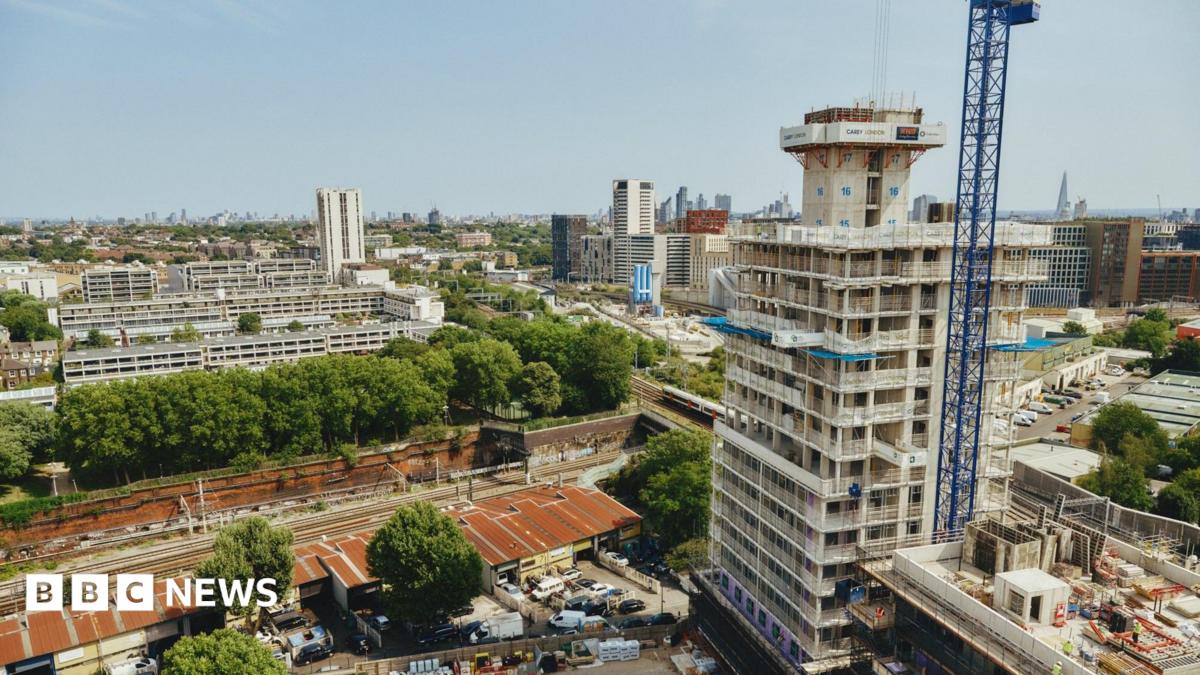
Camden Council has been described as sitting at the "sharp end of the housing crisis", with residents and business owners reporting financial hardship and displacement as regeneration projects reshape parts of the borough. The account from Camden is not an isolated local grievance - it is a case study in the structural pressures now facing inner-London boroughs, and one that carries direct implications for how investors, developers and lenders assess risk in high-density urban regeneration schemes across the country.
Camden's position is instructive precisely because it combines some of the most acute housing demand pressures in the UK with an unusually intense concentration of large-scale regeneration activity, from HS2-related works around Euston to schemes in Kentish Town, King's Cross and West Hampstead. The borough's housing waiting list runs into the thousands of households, and like most London authorities, Camden has seen its temporary accommodation bill balloon in recent years, with councils across the capital collectively spending well over £90 million a month on emergency housing according to London Councils data. When regeneration displaces existing residents and small businesses without adequate transitional support, it adds directly to that fiscal burden, creating a feedback loop that squeezes council budgets already stretched by social care and homelessness duties.
For buy-to-let landlords and small commercial investors, the Camden experience is a warning about the second-order effects of regeneration-led displacement. Businesses forced out during redevelopment phases often relocate to cheaper, less accessible units or close altogether, reducing footfall and rental demand in surrounding streets. Investors holding ground-floor retail or hospitality units near active regeneration zones should expect volatility in occupancy and rent reviews during construction phases lasting several years, not months. This is a pattern already visible in Nine Elms and parts of Croydon, where prolonged development timelines depressed local trading conditions well before new residential stock delivered fresh demand.
The dynamic is not confined to London. Manchester's Ancoats and Ardwick, Birmingham's Smithfield, Leeds South Bank, Liverpool's Waterfront and Newcastle's Pilgrim Street schemes all involve comparable trade-offs between long-term densification and short-term community disruption. What distinguishes Camden - and by extension much of inner London - is the sheer scarcity of affordable relocation options and the compressed timescales imposed by HS2-adjacent works. Regional cities generally retain more slack in secondary commercial stock, giving displaced tenants somewhere to land. In Camden, land values are high enough that temporary or meanwhile-use space is rarely commercially viable, meaning displacement is often permanent rather than transitional. Surrey's commuter towns, by contrast, face a different version of the same tension: planning resistance to densification is pushing development pressure outward, inflating land costs in green belt-adjacent sites and squeezing first-time buyers out of family housing stock.
Over the next six to twelve months, expect greater scrutiny of Section 106 obligations and developer contributions attached to major London regeneration consents, as councils under fiscal strain look to extract more relocation and transition support from scheme viability assessments. This will marginally increase costs for developers pursuing large mixed-use consents in boroughs like Camden, Islington and Hackney, and could slow the pace at which sites reach financial close. First-time buyers should not expect meaningful relief from this pressure in the short term - displacement-driven reductions in local rental and retail supply tend to sustain rather than ease price pressure in surrounding postcodes. Institutional investors eyeing build-to-rent or later-living assets in inner London should factor in longer pre-development consultation periods and reputational risk associated with visible community displacement, which is increasingly a factor in ESG-linked lending covenants.
The clearest lesson from Camden is that regeneration economics can no longer be modelled purely on end-value uplift; the transitional costs borne by councils, residents and small businesses are becoming a material line item in scheme viability, and one that planning committees are increasingly empowered to interrogate. Investors and developers who build credible relocation and business-continuity provisions into scheme design from the outset - rather than treating them as a compliance afterthought - will secure faster consents and lower political risk than those who do not. Camden's experience should be read across the sector as an early signal that the social cost of regeneration is being repriced into the planning process itself.