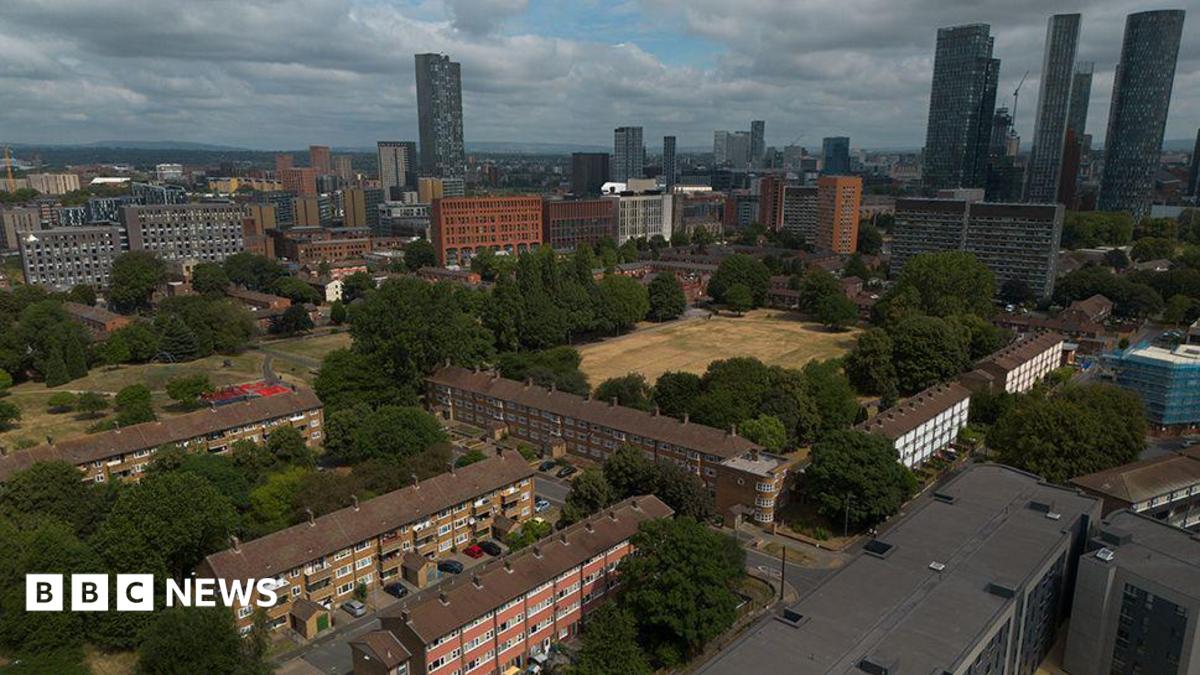
The government has confirmed a £1bn allocation for housing delivery across the North West, forming part of a near-£10bn national settlement directed at councils and housing associations. The funding, expected to be channelled through grant programmes and local authority housing revenue accounts, marks one of the largest regional commitments of its kind in recent years and arrives at a moment when England's housing supply pipeline is under acute strain from higher build costs, tighter lending conditions and a persistent shortfall in social and affordable housing starts.
For investors and developers, the significance of this announcement lies less in the headline figure and more in what it signals about the direction of policy. Grant-funded housing programmes of this scale typically de-risk large regeneration sites by covering infrastructure, remediation and affordable housing components that private capital alone struggles to underwrite. In practice, that means schemes in Manchester's Northern Quarter fringes, Liverpool's Ten Streets and dockside regeneration zones, and stalled brownfield sites across Salford and Bolton could move from feasibility to delivery far more quickly than the current market would otherwise allow. Given that construction cost inflation has averaged around 4-6% annually since 2022 and viability gaps have shelved dozens of mixed-tenure schemes across the North West, public subsidy of this magnitude directly addresses the single biggest blocker to supply: viability.
The regional context matters enormously here. Manchester and Liverpool have led England's rental growth figures over the past two years, with average rents in Greater Manchester rising by roughly 8-9% year-on-year according to recent ONS-linked indices, while build-to-rent completions have lagged demand by a wide margin. A £1bn injection aimed at councils and housing associations will primarily boost affordable and social housing stock rather than open-market units, but it indirectly eases pressure across the entire rental market by reducing competition for the limited private rented stock that currently absorbs demand from households priced out of both ownership and social housing waiting lists. Landlords in Manchester, Liverpool, and satellite towns such as Warrington and Preston should expect this to act as a gradual counterweight to the double-digit rental growth seen in 2023 and 2024, without derailing capital values, which remain supported by strong employment growth in professional services, life sciences and advanced manufacturing across the region.
It is worth placing the North West's £1bn within the national £10bn settlement to understand relative positioning. Historically, London and the South East have commanded a disproportionate share of national housing grant funding given higher land values and acquisition costs - Surrey and outer London boroughs alone often account for a fifth or more of Affordable Homes Programme allocations. A £1bn slice for the North West therefore represents a meaningful rebalancing toward the Government's stated 'levelling up' ambitions, and puts the region roughly on par, proportionally, with allocations expected for the West Midlands around Birmingham and West Yorkshire around Leeds. Investors tracking regional yield spreads should note that grant-supported supply growth in the North West, without a corresponding uplift in the South East, could narrow the yield premium that has made Manchester and Liverpool attractive relative to London over the past five years - although any narrowing is likely to be gradual, playing out over three to five years rather than within the current funding cycle.
For housing associations and local authorities themselves, this funding provides breathing room to rebuild development pipelines that were curtailed following the post-pandemic spike in build costs and the tightening of the Regulator of Social Housing's consumer standards, which diverted association budgets toward existing stock remediation rather than new build. Expect a meaningful uptick in section 106 negotiations and joint venture structures between housing associations and private developers across Greater Manchester and Merseyside over the next 12 months, as associations use grant certainty to re-enter land acquisition. First-time buyers stand to benefit indirectly through shared ownership and discounted market sale products that typically accompany these programmes, though the scale of that benefit depends heavily on how much of the £1bn is earmarked for social rent versus intermediate tenures - a split that has not yet been disclosed and will be the critical detail investors should monitor as delivery plans are published through 2025.
The clearest read on this announcement is that it confirms grant funding, not private capital alone, will remain the primary lever for unlocking stalled regeneration in the North West over the medium term. That has direct implications for commercial investors eyeing land banking strategies around transport corridors such as the Liverpool-Manchester rail line and Salford's Crescent development, where public investment tends to precede - and inflate - private land values within 18 to 24 months. Developers and institutional investors who position ahead of detailed allocation announcements, particularly around confirmed regeneration zones in Liverpool and Manchester, are likely to capture the strongest uplift. Those waiting for scheme-level clarity risk buying in after land values have already re-rated.
Key Takeaways
- The £1bn North West allocation, part of a £10bn national settlement, will primarily fund social and affordable housing via councils and housing associations rather than open-market stock.
- Manchester, Liverpool, Salford and Bolton brownfield and regeneration sites are likely to see accelerated delivery as grant funding closes existing viability gaps.
- Buy-to-let landlords across Greater Manchester and Merseyside should expect gradually softening rental growth over 2-3 years as affordable supply expands, though near-term rents remain supported by strong employment demand.
- Commercial investors and developers should track scheme-level allocation details closely, as land values near confirmed regeneration zones typically re-rate within 18-24 months of public funding confirmation.