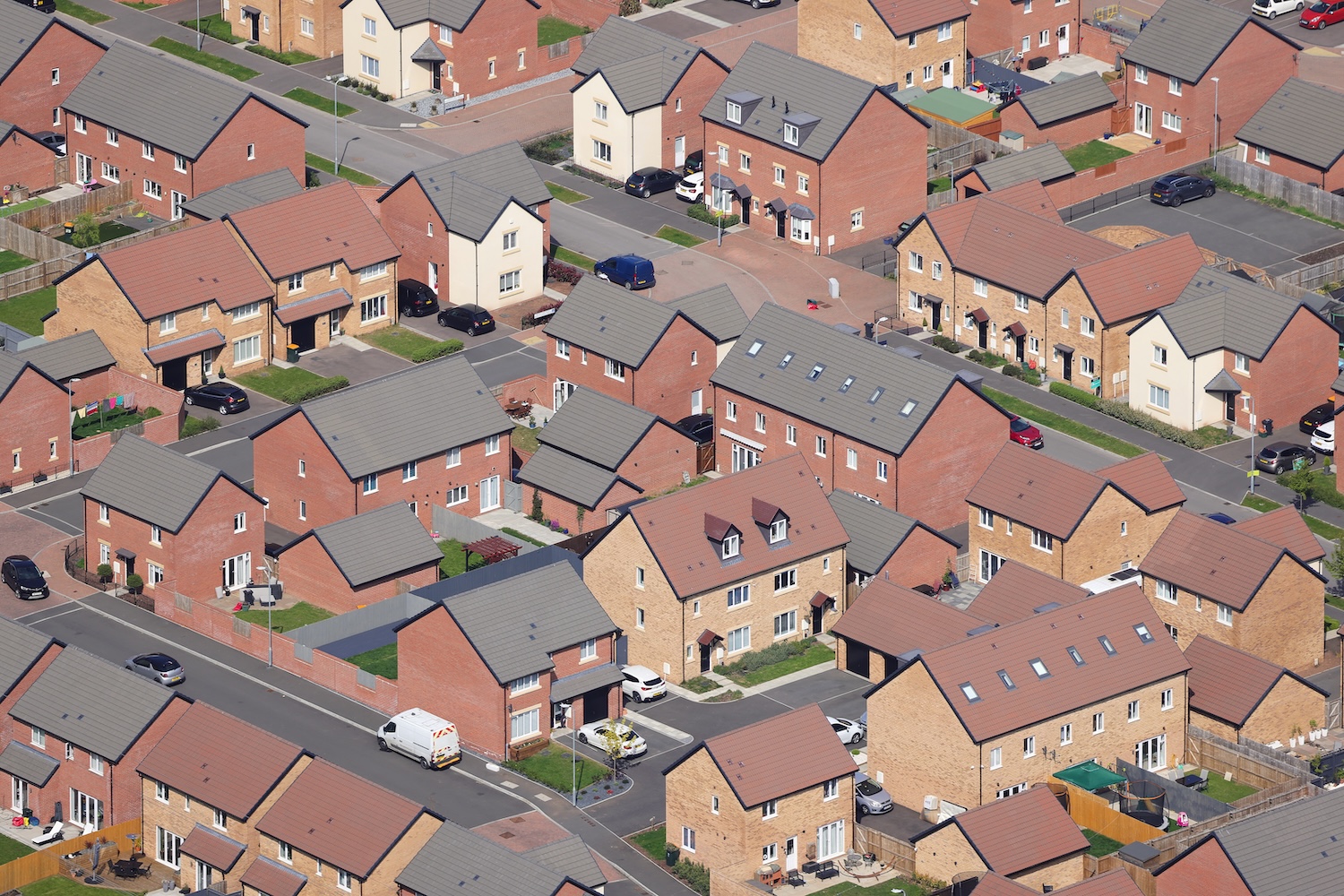
New analysis suggesting that more than 5% of UK homes — roughly 1.5 million properties — are now effectively un-mortgageable represents one of the most significant structural warnings the housing market has received in years. This is not a story about house prices wobbling or interest rates ticking up a quarter point. It is a story about a growing slice of the national housing stock becoming functionally illiquid, unable to be transacted through the conventional mortgage system that underpins roughly 65% of all UK property purchases. For investors, landlords and developers, this should reframe how they think about risk across entire categories of property, not just individual addresses.
The causes are not mysterious to anyone who has followed the post-Grenfell regulatory tightening, the EWS1 cladding saga, and lenders' growing caution around energy performance, flood risk and non-standard construction. Ex-local authority flats above certain storeys, homes with spray foam insulation, properties with unresolved cladding certification, and increasingly, homes with poor EPC ratings in flood-risk zones are all being quietly redlined by high-street lenders. Nationwide, Halifax and NatWest have each tightened underwriting criteria in recent years, and brokers report an increasing number of properties requiring cash buyers or specialist lenders charging rates two to three percentage points above standard mortgage products. What was once a niche problem affecting a handful of ex-council blocks in London has metastasised into a nationwide issue touching flats, ex-authority stock, and even some leasehold houses.
The regional implications are uneven and worth unpacking. London and the South East, with their dense stock of converted flats, high-rise ex-local authority buildings and older leasehold properties, are disproportionately exposed — estate agents in boroughs like Newham and Croydon report cladding-related sale collapses running into the hundreds annually. But the problem is not confined to the capital. Manchester and Birmingham's post-2000 city-centre apartment booms have left thousands of units in blocks now facing remediation uncertainty, while Leeds and Liverpool have pockets of 1960s and 1970s system-built stock that lenders have long treated with suspicion. Newcastle's ex-industrial terraces, some with historic mining subsidence flags, add a different flavour of the same underlying issue: properties that are perfectly liveable but structurally awkward for mainstream underwriting. Surrey's older rural stock, meanwhile, increasingly falls foul of flood-risk exclusions as insurers and lenders align their data more closely.
For buy-to-let landlords, this development cuts two ways. On one hand, un-mortgageable stock trading at steep discounts — typically 15-30% below comparable mortgageable properties — creates opportunities for cash-rich investors willing to hold assets long-term and absorb remediation costs. On the other, portfolio landlords relying on remortgaging to release equity or refinance maturing deals may find a growing number of their assets stuck, unable to be refinanced at competitive rates, forcing them either to sell into a thin cash-buyer market or accept punitive specialist lending terms. This dynamic is likely to accelerate a bifurcation already visible in the private rented sector: professional, well-capitalised landlords consolidating stock, while smaller amateur landlords exit properties they can no longer efficiently finance.
First-time buyers, ironically, are among the most exposed and least equipped to navigate this. Entry-level flats have historically been the affordable rung of the property ladder, but they are precisely the segment most likely to carry cladding uncertainty, short lease terms or non-standard construction flags. A first-time buyer unknowingly making an offer on a flat that later reveals mortgage-blocking issues can lose months and thousands in survey and legal fees, deepening the broader affordability crisis rather than easing it. Developers, meanwhile, face a dual pressure: new-build flats must now be built and certified to standards that satisfy increasingly risk-averse lender panels, while owners of older stock look to developers and management companies to fund remediation works that can run into tens of thousands of pounds per unit.
Over the next 6-12 months, expect three concrete shifts. First, specialist and bridging lenders will expand their footprint, filling the gap left by mainstream banks retreating from riskier stock, though at materially higher cost to borrowers. Second, government schemes addressing cladding remediation — including the Building Safety Fund — will face renewed pressure to widen eligibility as the scale of affected stock becomes harder to ignore politically. Third, valuers and conveyancers will apply far greater scrutiny earlier in transactions, likely lengthening average completion times and increasing fall-through rates, particularly for flats built between 1960 and 2018. The structural message for the market is unambiguous: mortgageability itself is becoming a distinct asset characteristic, as important to underwrite as location or condition, and participants who fail to price this risk into acquisition strategy will find themselves holding stock that looks cheap on paper but is genuinely difficult to exit.
Key Takeaways
- Over 1.5 million UK homes — more than 5% of stock — are now considered un-mortgageable by mainstream lenders, primarily due to cladding, non-standard construction and flood risk.
- London, Manchester and Birmingham's flat-dense markets are most exposed, while Newcastle and Surrey face distinct risks from subsidence and flood exclusions respectively.
- Buy-to-let landlords should expect discounted acquisition opportunities but tighter refinancing conditions on affected stock.
- First-time buyers and developers must conduct earlier, more rigorous due diligence as valuers and lenders apply stricter mortgageability tests over the coming year.