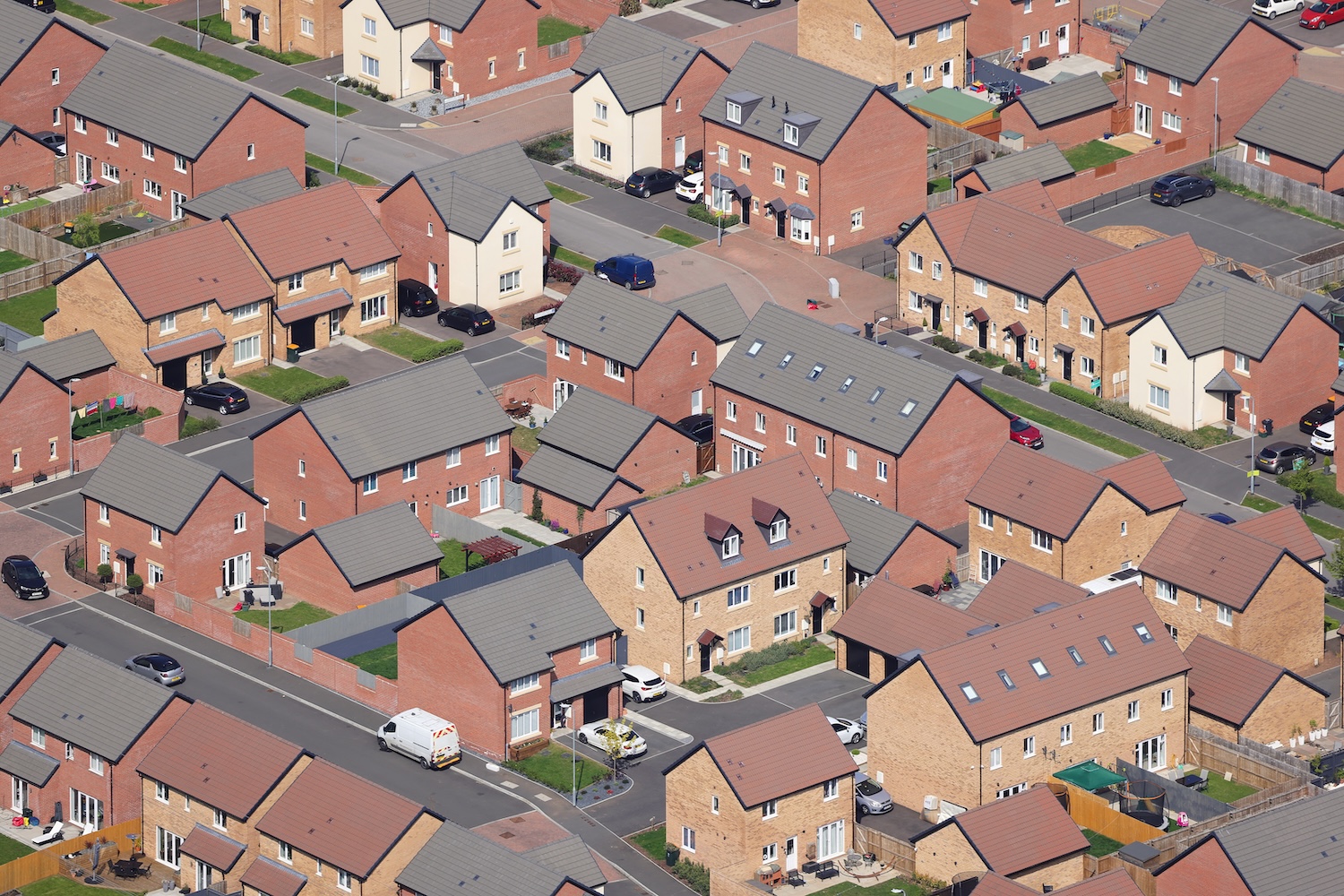
UK house price growth has slowed sharply as the conflict in Iran ripples through global bond markets, pushing up the cost of fixed-rate mortgages and dampening buyer confidence at a critical moment for the housing recovery. Annual price growth has eased to around 2.1%, down from 3.5% earlier in the year, according to the latest lender indices, as swap rates — the wholesale funding costs that underpin fixed mortgage pricing — have climbed by 25 to 30 basis points since hostilities escalated. For an industry that had spent much of 2025 pricing in Bank Rate cuts and a steady descent in mortgage costs, this is an unwelcome and largely unpriced shock.
The mechanism here matters for anyone trying to understand where the market goes next. Oil prices have spiked amid fears over the Strait of Hormuz, a chokepoint for roughly a fifth of global oil supply, reigniting inflation concerns that markets thought had been largely tamed. Gilt yields have risen in response, and lenders — who fund fixed-rate mortgages primarily through swap markets rather than the Bank Rate itself — have repriced accordingly. Average two-year fixed rates have edged back above 5.1%, having briefly dipped below 4.9% in the spring, while five-year fixes are hovering around 4.85%. For a borrower with a £250,000 mortgage, that swing translates into an additional £60–£80 a month, a meaningful dent in affordability calculations that were already stretched by historically elevated house-price-to-income ratios.
The regional picture is where this story becomes genuinely consequential for investors. London and the South East, including commuter-belt markets like Surrey, remain the most exposed to rate sensitivity given higher average loan sizes and tighter affordability headroom; agents in these areas report a noticeable increase in fall-throughs and renegotiated offers over the past fortnight. By contrast, the higher-yielding northern cities — Manchester, Leeds, Liverpool and Newcastle — have shown more resilience, buoyed by lower average price points, stronger rental demand and continued institutional appetite for build-to-rent stock. Manchester in particular has continued to record annual growth above 4%, roughly double the national average, underlining the north-south divergence that has defined this cycle. Birmingham, benefiting from HS2-adjacent regeneration and relative affordability, sits somewhere in between, still expanding but at a more measured pace than twelve months ago.
For buy-to-let landlords, the immediate implication is a further squeeze on already thin margins. Landlords remortgaging this year face materially higher pay rates than those secured in 2020–21, and with section 24 tax changes still eroding net returns, some will conclude that now is the moment to exit rather than absorb another leg of rate pain. Estate agents report a modest uptick in landlord instructions in London postcodes, which — if sustained — could ease rental supply pressure marginally but risks further concentrating buy-to-let activity in higher-yield regional markets where the numbers still work. First-time buyers, meanwhile, face a cruel double bind: mortgage approval rates had been improving as lenders loosened stress-test criteria, but the renewed rise in fixed pricing threatens to claw back much of that improved affordability just as the spring buying season gathers pace.
Commercial property and development finance are not immune either. Housebuilders reliant on forward funding and development loans linked to swap curves will see margins compressed on schemes already in the pipeline, and several mid-cap developers have signalled they may delay land acquisitions until rate volatility settles. This is particularly relevant for schemes in Manchester and Leeds city centres, where build-to-rent and PRS developers had been underwriting deals on the assumption of falling debt costs through 2025 and into 2026. A sustained period of elevated swap rates could push some marginal schemes past viability thresholds, further constraining an already undersupplied new-build pipeline.
The critical question for the next six to twelve months is whether this is a temporary geopolitical shock or the start of a more durable repricing. History offers a useful, if imperfect, guide: previous Middle East-driven oil spikes have typically unwound within three to six months once supply disruption fears ease, and markets are already pricing some retracement in swap rates should a ceasefire or de-escalation materialise. However, if the conflict drags into a prolonged confrontation affecting shipping through Hormuz, inflation could prove stickier than the Bank of England's current forecasts assume, delaying the rate-cutting path well into 2026. Investors should treat the current mortgage repricing as a genuine risk factor rather than noise, stress-testing acquisitions against a scenario where five-year fixed rates settle nearer 5.5% than 4.5%. The UK housing market's underlying fundamentals — chronic undersupply, resilient regional rental demand, and a still-recovering mortgage market — remain intact, but geopolitical risk has reasserted itself as a genuine variable that professional investors can no longer afford to treat as background noise.
Key Takeaways
- Swap rates have risen 25–30 basis points since the Iran conflict escalated, pushing average two-year fixed mortgage rates back above 5.1%
- Annual house price growth has slowed to roughly 2.1%, down from 3.5% earlier in 2025, with London and Surrey most exposed to renegotiations and fall-throughs
- Northern regional markets — Manchester, Leeds, Liverpool, Newcastle — remain more resilient, with Manchester still recording growth above 4%
- Buy-to-let landlords face renewed margin pressure on remortgaging; some developers are delaying land purchases amid higher development finance costs
- Investors should stress-test deals against a scenario of sustained higher rates rather than assume a swift return to the pre-conflict rate-cutting trajectory