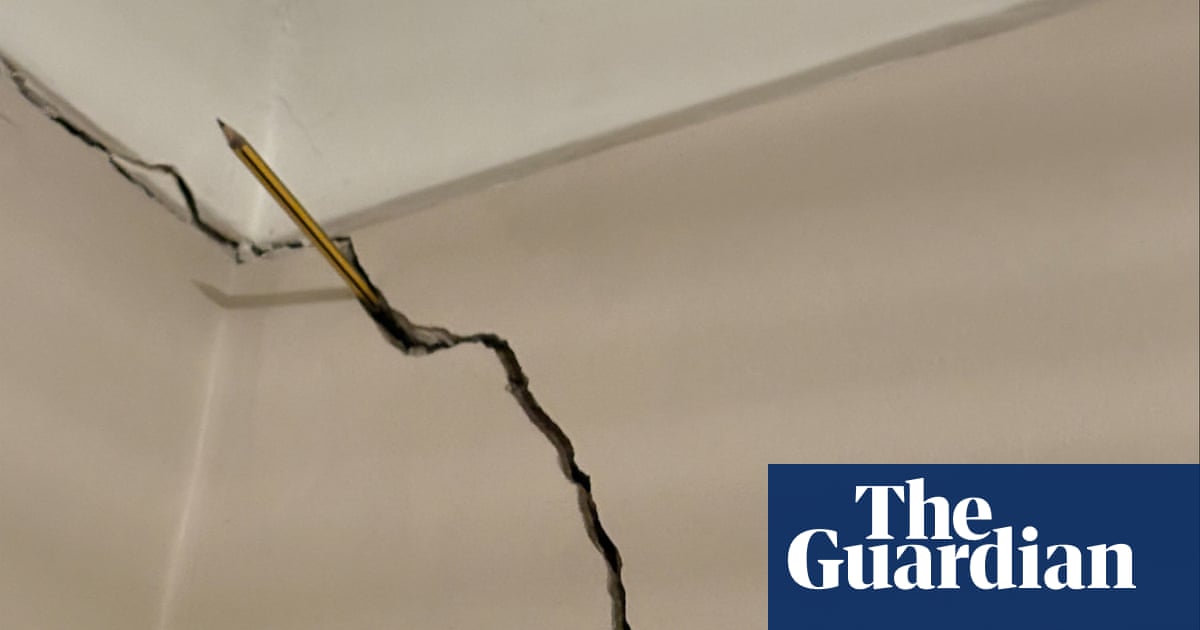
British insurers are bracing for a sharp escalation in subsidence claims following two consecutive record-hot summers, with policyholders such as Henry Biggs of Stroud describing cracks so severe that neighbouring rooms are visible through the walls of their homes. Industry estimates suggest subsidence claims have roughly doubled year-on-year, a trend that should alarm anyone with exposure to residential property, whether as an owner-occupier, landlord or lender. This is not a niche insurance story; it is a structural risk event with direct consequences for property valuations, mortgage underwriting and the cost of holding UK housing stock.
Subsidence occurs when clay-rich soils beneath a property's foundations shrink during prolonged dry spells, causing the ground to contract and the building above to crack and shift. The UK's most vulnerable regions sit on London Clay and similar shrink-swell soils, meaning London, Surrey, and much of the South East face disproportionate exposure. But climate volatility means the risk map is widening. Areas of the Midlands and East Anglia with clay subsoils are seeing claims that would have been unthinkable a decade ago, while historically lower-risk regions such as Manchester, Leeds and Newcastle, built largely on more stable geology, remain comparatively insulated for now. Investors concentrating portfolios in the South East should treat subsidence exposure as a genuine underwriting variable, not a footnote.
The financial mechanics matter enormously for landlords and investors. Subsidence claims are notoriously slow and expensive to resolve; Biggs waited roughly a year merely to have monitoring equipment installed, with repairs still unscheduled. For buy-to-let landlords, this translates into extended void periods, tenant relocation costs, and properties effectively frozen out of the sales market while claims are live, since most buyers and lenders will not touch a subsidence-affected property until underpinning works are certified complete. Industry data on subsidence-affected homes typically shows sale price discounts of 15–20% even after remediation, and mortgage lenders frequently require enhanced surveys or refuse to lend altogether on properties with an open claim. That has real implications for portfolio liquidity and refinancing timelines.
Insurers themselves face a margin squeeze that will inevitably be passed to consumers. Building insurance premiums have already risen sharply over the past three years, and a doubling of subsidence claims volume - historically one of the costliest categories of domestic claim, with average settlements often exceeding £15,000 per property - will push insurers to reprice risk more aggressively in high-exposure postcodes. Landlords with portfolios concentrated in clay-belt areas should expect renewal premiums to rise materially over the next 12 months, and some insurers may begin excluding subsidence cover entirely in the highest-risk postcodes, mirroring patterns already seen in flood-risk underwriting.
For developers and commercial investors, the implications extend beyond existing stock. Foundation specifications for new-build housing in clay-rich zones will come under renewed scrutiny, and planning authorities may increasingly demand geotechnical surveys and deeper foundation designs as standard practice, adding to build costs at a time when margins are already tight. First-time buyers, meanwhile, face a widening information gap: many will be purchasing in a market where subsidence risk is rising but where searches and surveys have not kept pace with the changing climate reality, leaving them exposed to properties that look sound today but sit on soils that will desiccate further in future heatwaves.
Looking ahead, the direction of travel is unambiguous. The Met Office's own projections point to more frequent extreme summers through the remainder of the decade, meaning subsidence should be treated not as a one-off shock but as a recurring structural cost embedded in UK property ownership. Investors and landlords operating in London, Surrey and the wider South East need to factor subsidence risk explicitly into acquisition due diligence, insurance budgeting and exit timelines over the next six to twelve months. Those who fail to do so risk being caught holding illiquid, uninsurable, or heavily discounted assets precisely when the market shifts to price this risk properly.
Key Takeaways
- Subsidence claims have roughly doubled year-on-year, driven by two consecutive record-hot summers desiccating clay soils.
- South East properties, particularly in London and Surrey, face the highest exposure due to shrink-swell clay geology, while Manchester, Leeds and Newcastle remain comparatively lower risk.
- Affected properties can see 15–20% value discounts and become effectively unmortgageable and unsellable until claims are resolved, a process that can take a year or more.
- Landlords and investors should expect rising building insurance premiums and tighter underwriting in high-risk postcodes over the next 12 months.
- Developers building in clay-rich zones should anticipate increased demand for geotechnical surveys and deeper foundations as standard practice.


