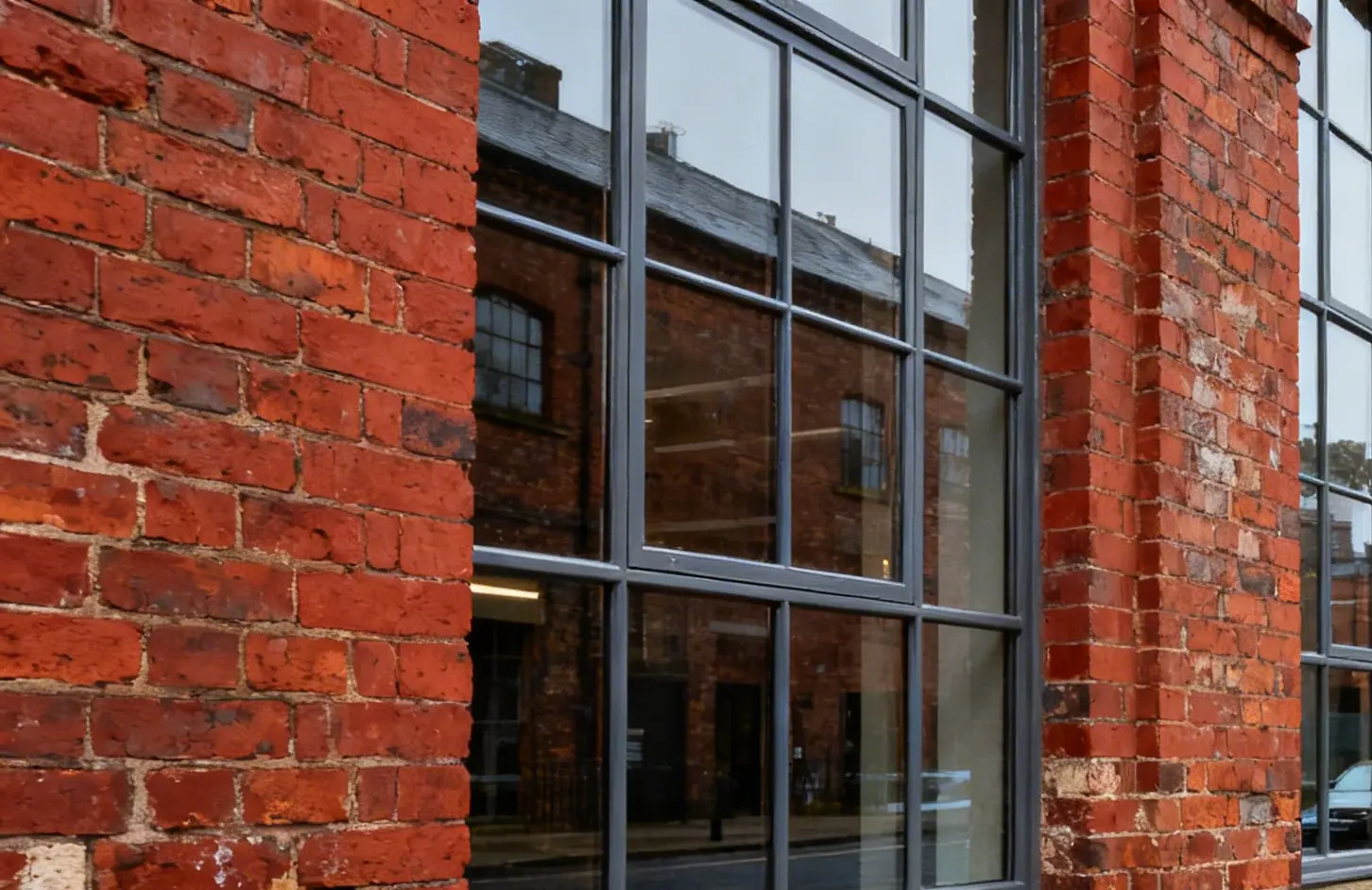
Britain's warehouse conversion market has emerged as a significant value creator across industrial heartlands, with premium properties commanding up to £1.5 million and entry-level conversions starting at £525,000. This price band positions converted industrial stock firmly within the professional investor segment, offering yields that traditional residential developments struggle to match whilst capitalising on the architectural heritage of Britain's manufacturing legacy.
The geographic concentration of this market reveals the enduring economic transformation of former industrial centres. Manchester leads the charge with converted textile mills and warehouses in the Northern Quarter and Ancoats generating substantial premiums over comparable new-build apartments. Birmingham's Jewellery Quarter has seen warehouse conversions appreciate by approximately 15% annually over the past three years, whilst Newcastle's burgeoning tech sector has driven demand for converted industrial space in the Ouseburn Valley. London's established markets in Shoreditch and Bermondsey continue to set pricing benchmarks, with riverside warehouse conversions regularly exceeding £1,200 per square foot.
The emergence of coastal warehouse conversions represents a notable market expansion beyond traditional urban centres. Liverpool's Albert Dock developments have demonstrated that proximity to water can add 20-25% premiums to industrial conversion values, whilst similar projects in Hull, Portsmouth, and Bristol are attracting both domestic and international investment. This coastal pivot reflects broader lifestyle changes accelerated by flexible working arrangements, with buyers prioritising unique architectural features and waterfront access over proximity to traditional business districts.
For buy-to-let investors, warehouse conversions offer compelling fundamentals that distinguish them from standard residential stock. The typical converted unit delivers higher rental yields - often 6-8% gross compared to 4-5% for equivalent new-build apartments - whilst benefiting from lower tenant turnover due to the distinctive living experience. Professional tenants, particularly in creative industries and technology, demonstrate strong preference for converted industrial space, creating stable rental demand even during market downturns. The substantial floor plates and high ceilings characteristic of former industrial buildings also enable flexible sub-letting arrangements that can optimise rental income.
Development finance for warehouse conversions has tightened considerably as lenders become more selective about industrial heritage projects. Specialist development lenders now require pre-conversion valuations showing minimum 25% profit margins, reflecting both the complexity of industrial conversions and the need for substantial contingency funds. Planning consent timelines have extended to 18-24 months in major cities as local authorities scrutinise heritage impact assessments more rigorously, though permitted development rights continue to accelerate certain residential conversions outside conservation areas.
Market dynamics over the next twelve months will be shaped by the intersection of industrial land scarcity and residential demand pressures. With logistics operators competing aggressively for warehouse space near urban centres, the pool of available conversion opportunities is contracting rapidly. Properties suitable for residential conversion now command premiums of 40-60% above standard industrial values, compressing developer margins and pushing conversion activity towards secondary locations. Birmingham, Leeds, and Liverpool present the strongest near-term opportunities, combining relatively affordable acquisition costs with robust rental markets and supportive local planning frameworks.
The warehouse conversion sector has matured from a niche architectural curiosity into a mainstream investment category with predictable returns and clear market fundamentals. Price discovery mechanisms are now well-established, planning pathways are increasingly standardised, and the tenant demographic has proven resilient across economic cycles. Investors who recognise the structural advantages of converted industrial property - scarcity value, distinctive character, and superior yields - will find this market offers genuine diversification benefits within broader residential portfolios whilst capitalising on Britain's industrial heritage as a value-generating asset class.
Key Takeaways
- Warehouse conversions deliver 6-8% gross yields compared to 4-5% for new-build apartments, with lower tenant turnover rates
- Manchester, Birmingham, and Newcastle lead urban conversion activity while coastal locations add 20-25% premiums to industrial conversion values
- Development finance now requires minimum 25% profit margins with planning timelines extending to 18-24 months in major cities
- Industrial land scarcity is driving 40-60% premiums for conversion-suitable properties, pushing activity towards Birmingham, Leeds, and Liverpool


