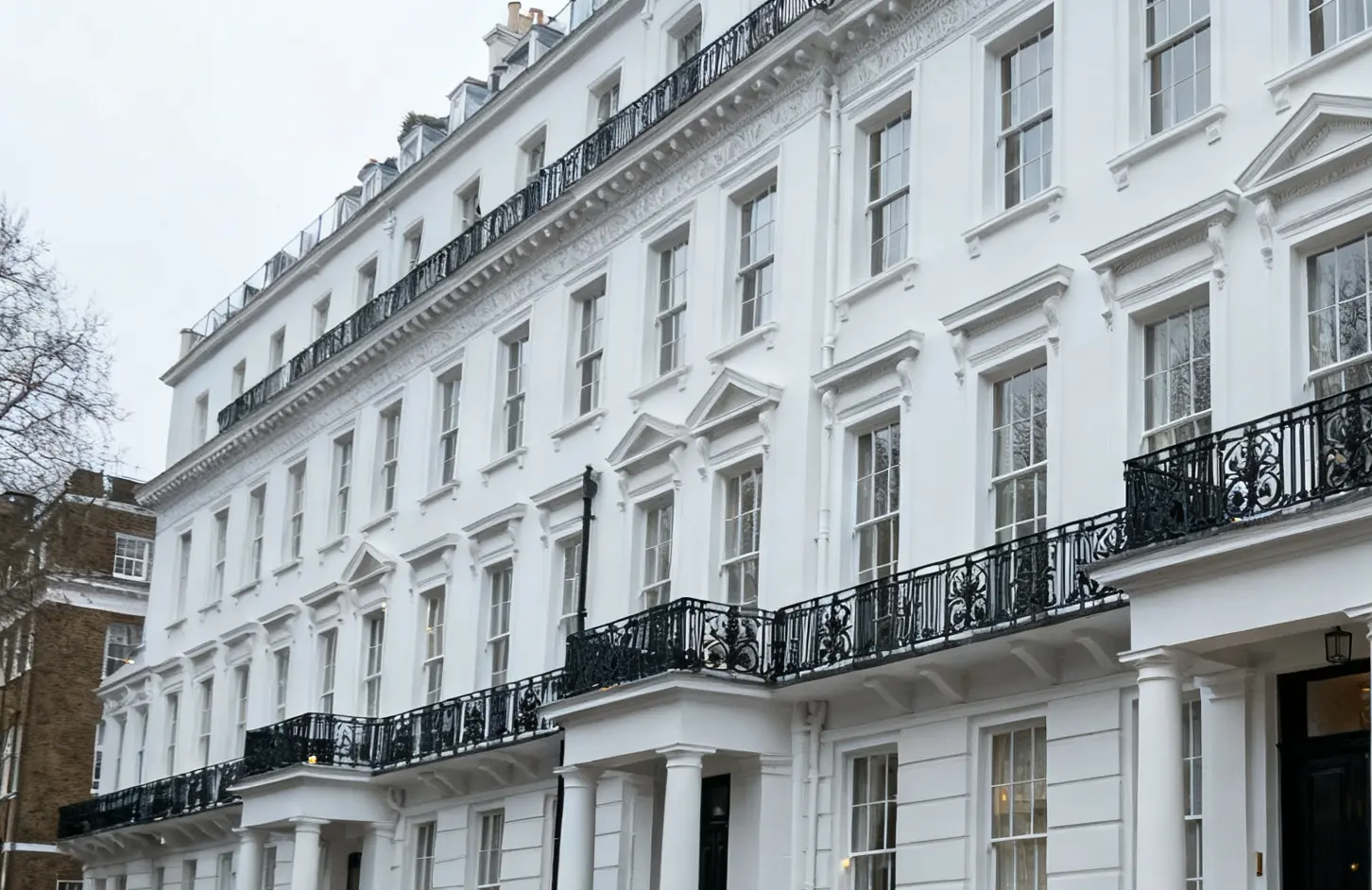
Buyers from the United States and Gulf states accounted for 55% of London's ultra-prime property transactions above £15 million in the first half of 2026, cementing the capital's status as the preferred safe haven for globally mobile capital. The 34 deals recorded totalled £1.24 billion, a dramatic 79% increase from the £694.1 million generated across 27 transactions in the same period of 2025. This is not a marginal uptick - it represents one of the strongest first-half performances in London's top-tier market since the pandemic-era distortions of 2021.
For UK property investors, this data matters far beyond the rarefied postcodes of Mayfair, Belgravia and Knightsbridge. Ultra-prime transaction volumes serve as a leading indicator of international sentiment towards Britain as a whole, and confidence at the very top of the market has historically preceded broader inflows into London's wider prime sector, which in turn filters through to demand in commuter-belt markets like Surrey. When American and Gulf capital returns in force, it typically signals that currency dynamics, political stability, and London's enduring lifestyle appeal are outweighing concerns about stamp duty surcharges and non-dom tax reforms that spooked overseas buyers through 2023 and 2024.
The mechanics behind this surge are worth unpacking. Sterling's relative weakness against the dollar throughout much of 2025 effectively discounted London property for dollar-denominated buyers by 8-10% compared with pre-Brexit exchange rates, even as headline prices ticked upward. Gulf buyers, meanwhile, continue to diversify sovereign and family office wealth away from domestic markets and increasingly away from traditional alternatives like New York and Geneva, where geopolitical and tax pressures have intensified. London's combination of legal transparency, English common law, time-zone convenience between Asian and American trading hours, and a deep pool of trophy assets in the £15-50 million bracket makes it structurally difficult to replace.
The implications ripple unevenly across UK regional markets. This is overwhelmingly a London story - Manchester, Birmingham, Leeds, Liverpool and Newcastle see negligible direct participation from this buyer cohort, whose interest remains fixed on prime central postcodes and select riverside developments. However, the knock-on effect matters: as ultra-prime absorption tightens supply in SW1, SW3 and W1, some domestic UK capital that would otherwise compete in that bracket increasingly redirects towards regional commercial and residential opportunities offering better yields, a trend already visible in institutional build-to-rent allocations across Manchester and Birmingham through 2025. Commercial investors should note that Gulf sovereign wealth funds have historically followed residential trophy purchases with logistics and office acquisitions in regional UK cities within 18 to 24 months, making this data a potential early signal for provincial commercial deal flow.
For buy-to-let landlords and first-time buyers, the direct impact is limited but the indirect consequences deserve attention. Ultra-prime activity does not compete with mainstream housing stock, but sustained foreign capital inflows do influence sterling strength, Bank of England policy calculus, and broader perceptions of UK economic resilience - all factors bearing on mortgage pricing. Developers targeting the £5-15 million bracket, just below true ultra-prime, should treat this data as encouraging: transaction momentum at the very top tends to lift confidence and pricing power in adjacent tiers within two to three quarters, a pattern evident after previous surges in 2014 and 2021.
Looking ahead six to twelve months, expect this momentum to persist rather than reverse. The Gulf's continued oil-revenue-driven wealth accumulation, combined with persistent American interest in London as a geopolitical and lifestyle hedge, suggests full-year 2026 ultra-prime volumes could comfortably exceed £2.4 billion, surpassing 2025's total by a wide margin. The critical risk factor is domestic policy: any further tightening of non-dom rules or introduction of a mansion tax proposal - both actively debated in Westminster - could dampen this trajectory sharply, given how sensitive this buyer segment is to perceived fiscal hostility. Absent such intervention, London's ultra-prime market looks set to outperform, reinforcing the capital's position as a distinct, largely insulated tier within the broader UK property landscape rather than a bellwether for mainstream housing conditions.
Key Takeaways
- US and Gulf buyers drove 55% of London's £15m-plus deals in H1 2026, with total ultra-prime transaction value up 79% year-on-year to £1.24 billion.
- Sterling weakness against the dollar and Gulf wealth diversification away from New York and Geneva are the primary structural drivers behind the inflow.
- Effects are concentrated in prime central London postcodes; regional cities like Manchester and Birmingham see indirect benefits via redirected domestic capital and potential future commercial interest.
- Any tightening of non-dom tax rules or a mansion tax proposal represents the key downside risk to sustained momentum through 2026.


