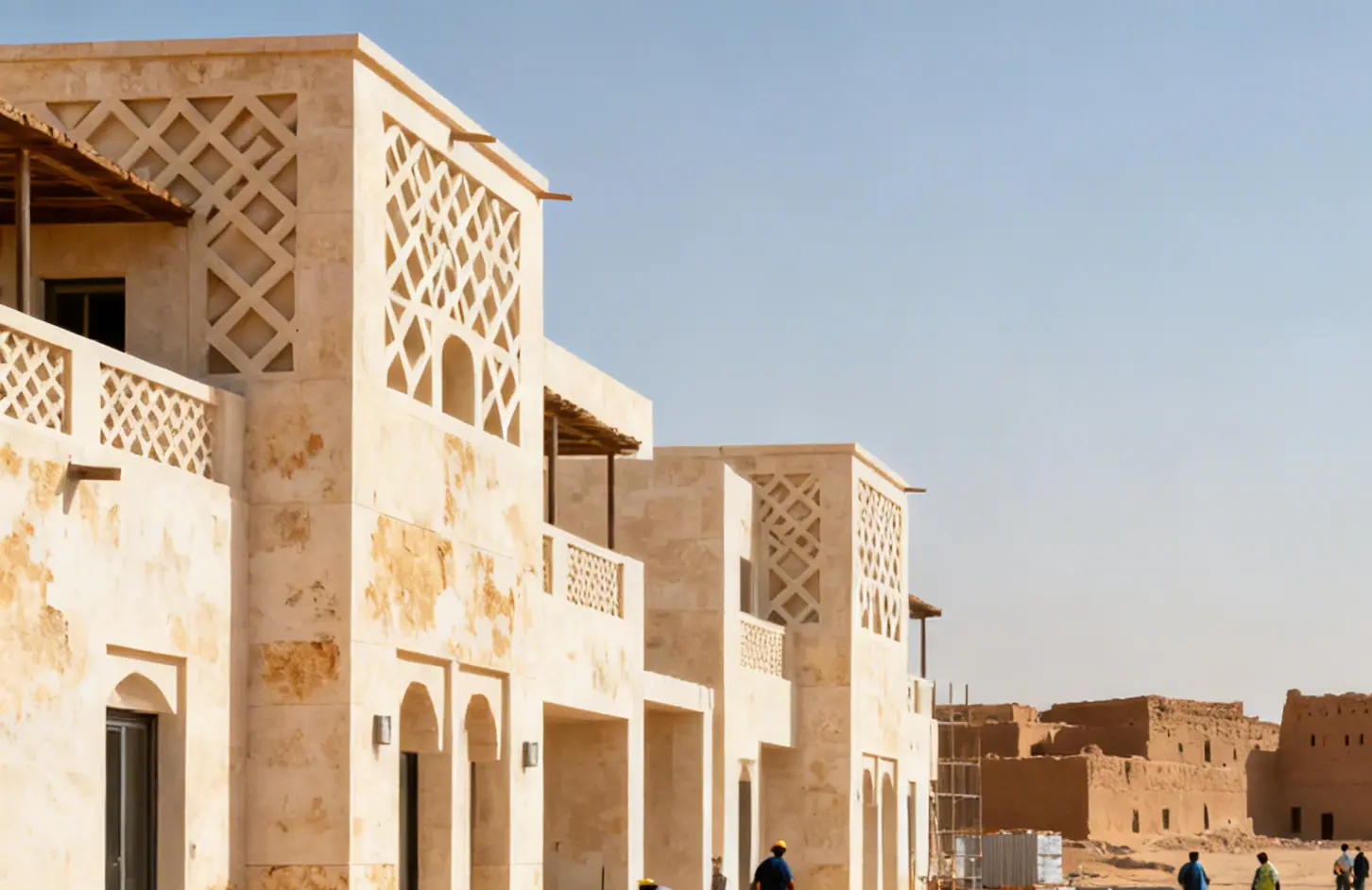
Saudi Arabia's launch of the Rayana luxury villa development in Riyadh's Diriyah district, backed by Dar Global and the Trump Organisation, represents far more than a Middle Eastern property venture. This branded mansion project crystallises the Gulf's strategic pivot towards domestic luxury real estate development, a shift that will fundamentally alter capital flows into the UK's prime residential markets over the next eighteen months. For British property investors and developers, understanding this reallocation represents a critical piece of market intelligence as overseas investment patterns reshape.
The Diriyah project forms part of Saudi Arabia's Vision 2030 economic diversification programme, which has already redirected an estimated £15 billion in Gulf investment away from traditional overseas markets including London's prime boroughs. Dar Global, the international arm of Dubai's Dar Al Arkan, has previously channelled substantial capital into London developments, but this partnership with the Trump Organisation signals a clear prioritisation of regional luxury projects. This trend directly impacts the UK market, where Gulf sovereign wealth funds and high-net-worth individuals have historically provided crucial liquidity for developments in Mayfair, Belgravia, and Knightsbridge.
The implications cascade across Britain's regional luxury markets, where Gulf investment has increasingly moved beyond London's traditional boundaries. Manchester's luxury apartment developments, Birmingham's premium commercial conversions, and Leeds's high-end residential projects have all attracted Middle Eastern capital over the past three years. However, as Saudi Arabia and the UAE focus resources on domestic 'giga-projects' like NEOM and Dubai Creek Harbour, British developers face a structural reduction in this funding stream. Industry analysis suggests Gulf investment in UK residential development has already declined by approximately 35% since 2022, with this trend accelerating as regional projects gain momentum.
For UK buy-to-let investors, this shift creates both challenges and opportunities. The reduced Gulf presence in London's prime rental market - where Middle Eastern buyers have traditionally purchased high-value properties for rental yield - will likely compress rental growth in zones 1 and 2. Conversely, this capital retrenchment opens opportunities for domestic investors to acquire prime assets at more favourable valuations. Properties in Surrey's luxury belt, from Weybridge to Virginia Water, previously competed directly with Gulf investment, but now face reduced overseas bidding pressure.
The broader commercial implications extend to Britain's development finance sector, where Gulf institutions have provided crucial debt and equity financing for major projects. As these institutions prioritise regional developments like the Wadi Safar masterplan encompassing the Rayana project, UK developers will increasingly rely on domestic funding sources and European capital markets. This transition will likely increase development costs by 8-12% across major British cities, as alternative financing carries higher risk premiums than established Gulf investment relationships.
Looking ahead to 2024-25, this capital reallocation will reshape investment strategies across Britain's property markets. First-time buyers in London's outer boroughs may benefit from reduced competition for starter properties previously targeted by Gulf rental investors. However, luxury developers face a more challenging financing environment, whilst established landlords with prime portfolios should expect enhanced capital appreciation as overseas investment scarcity drives up asset values. The Trump-branded Diriyah project thus serves as a bellwether for a fundamental shift in global property capital flows, one that astute UK investors will position themselves to exploit.
British property professionals must recognise that the Gulf's domestic focus represents a permanent strategic realignment rather than a temporary market adjustment. Saudi Arabia's commitment to projects like Rayana demonstrates the kingdom's determination to build world-class domestic real estate markets, reducing reliance on overseas property investment. This creates a more domestically-driven UK property market, where British capital sources and European investment will fill the gap left by Gulf retrenchment, ultimately producing a more resilient but differently structured investment landscape.
Key Takeaways
- Gulf capital redirection to domestic projects like Saudi Arabia's Diriyah development will reduce UK luxury property investment by an estimated 35-40% through 2024
- London prime rental yields face compression as Middle Eastern buy-to-let investment declines, creating opportunities for domestic investors at better valuations
- UK development costs will rise 8-12% as projects lose access to competitive Gulf financing, forcing reliance on higher-cost European capital markets
- Regional luxury markets in Manchester, Birmingham and Surrey will see reduced overseas bidding pressure, benefiting local investors and first-time buyers in adjacent segments


