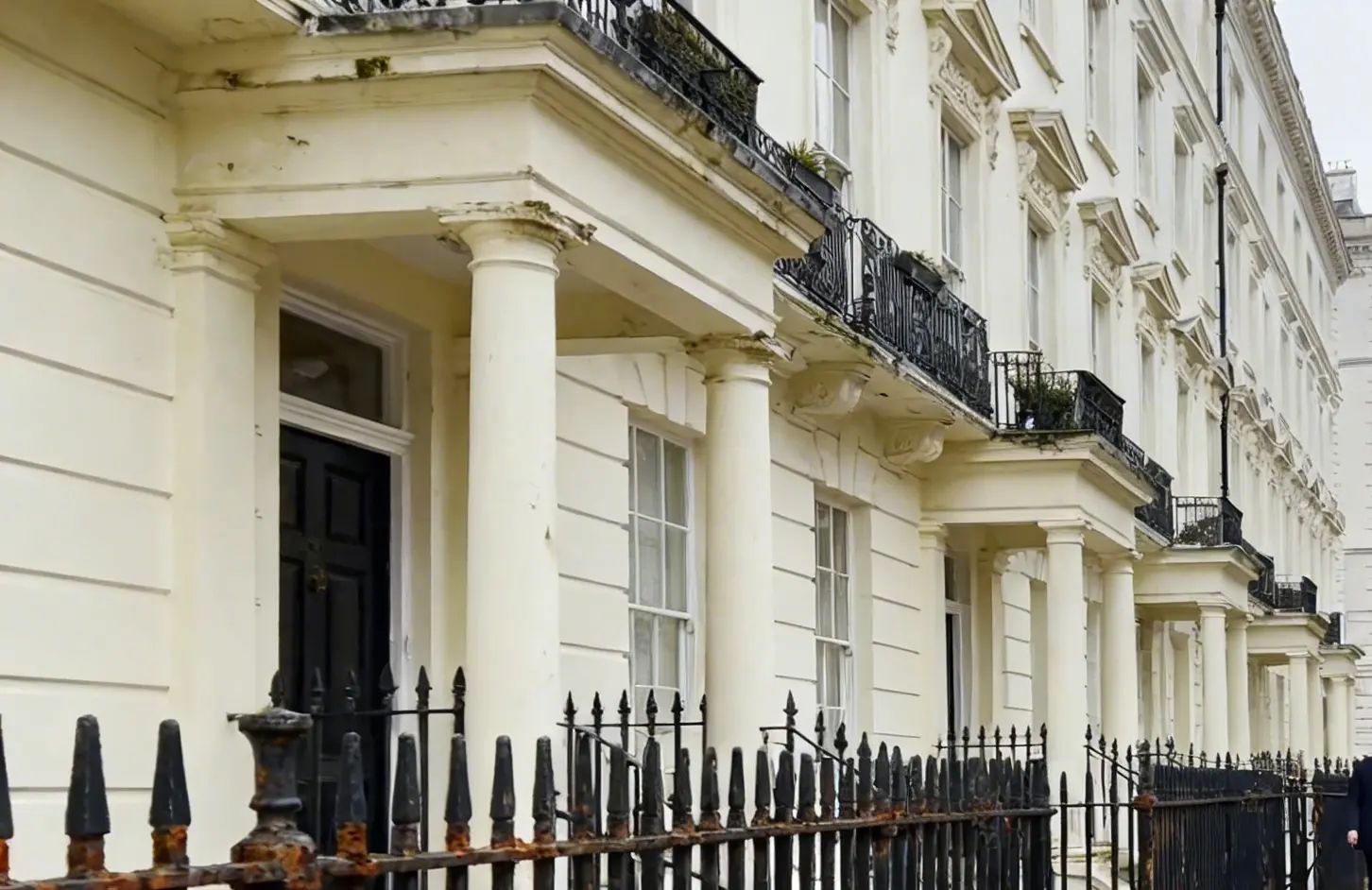
Prime central London property values have plummeted by 25% from recent peaks, marking the deepest correction in the capital's luxury residential market since the 2008 financial crisis. This dramatic repricing reflects not merely cyclical adjustment but a fundamental recalibration of international investor appetite for UK assets amid persistent economic headwinds. The scale of decline now surpasses the Brexit-induced volatility of 2016-2019, positioning London's trophy property market in genuine correction territory that will reshape investment strategies for the coming decade.
Transaction volumes have collapsed to levels not witnessed since the pandemic lockdowns, with Mayfair, Belgravia, and Knightsbridge experiencing acute liquidity shortages. Prime residential sales above £2 million have fallen by approximately 40% year-on-year, whilst properties exceeding £10 million face buyer droughts extending beyond six months. This liquidity crisis stems from the toxic combination of elevated interest rates, non-dom tax reforms, and geopolitical instability that has driven both domestic and international capital toward safer havens. Estate agents report that previously active Middle Eastern and Russian buyers have largely withdrawn, whilst American investors await clearer economic signals before re-entering the market.
The absence of distressed selling distinguishes this correction from previous downturns, creating an unusual dynamic where prices fall without forced liquidation. Ultra-high-net-worth vendors possess sufficient financial resilience to withhold properties from sale rather than accept discounted valuations. This behaviour pattern explains why prime London stock levels remain artificially constrained despite weak demand, preventing the market from reaching natural clearing prices. Consequently, the adjustment process will likely extend over 18-24 months rather than achieving rapid price discovery through volume-driven correction.
Regional implications ripple outward from London's prime market malaise, affecting luxury segments across Manchester's Deansgate, Birmingham's Jewellery Quarter, and Edinburgh's New Town. Secondary cities that previously benefited from London capital flight now face their own headwinds as wealthy investors adopt defensive positioning. However, this creates opportunities for astute investors targeting distressed assets in formerly overheated markets outside the capital. Cities like Leeds and Newcastle, where prime property values remained more reasonable, may benefit from renewed investor attention as London becomes prohibitively expensive to enter.
Buy-to-let investors face contrasting pressures across different market segments. Whilst prime London yields have become more attractive following price declines, financing costs and regulatory burdens continue escalating. The effective rental yields on properties purchased at current discounted prices could reach 4-5% compared to sub-3% returns at previous peaks. However, mortgage rates above 5% substantially erode leveraged returns, forcing investors toward cash purchases or alternative investment strategies. First-time buyers remain largely excluded from prime markets despite price corrections, as absolute values still require substantial deposits beyond typical household reach.
Commercial property implications extend beyond residential markets, as reduced prime residential values signal broader economic weakness affecting office and retail investments. London's status as a global financial centre faces challenges when its trophy residential assets lose international appeal. This correlation suggests commercial property investors should anticipate similar valuation pressures, particularly in sectors dependent on high-net-worth individuals and international businesses.
The trajectory over the next twelve months will depend critically on interest rate stabilisation and geopolitical developments affecting international capital flows. Prime London property historically demonstrates resilience during extended downturns, but recovery requires restoration of investor confidence and economic stability. Current fundamentals suggest prices may decline another 10-15% before finding sustainable support levels, creating entry opportunities for patient capital whilst testing the resolve of existing property owners. This correction represents a generational reset in London's luxury property market rather than temporary volatility.
Key Takeaways
- Prime central London values down 25% with transaction volumes collapsed 40% year-on-year above £2m
- Absence of distressed selling prolongs correction timeline to 18-24 months as wealthy vendors withhold stock
- Rental yields improving to 4-5% on discounted purchases, but mortgage costs above 5% erode leveraged returns
- Further 10-15% price declines likely before market stabilisation, creating entry opportunities for cash buyers


