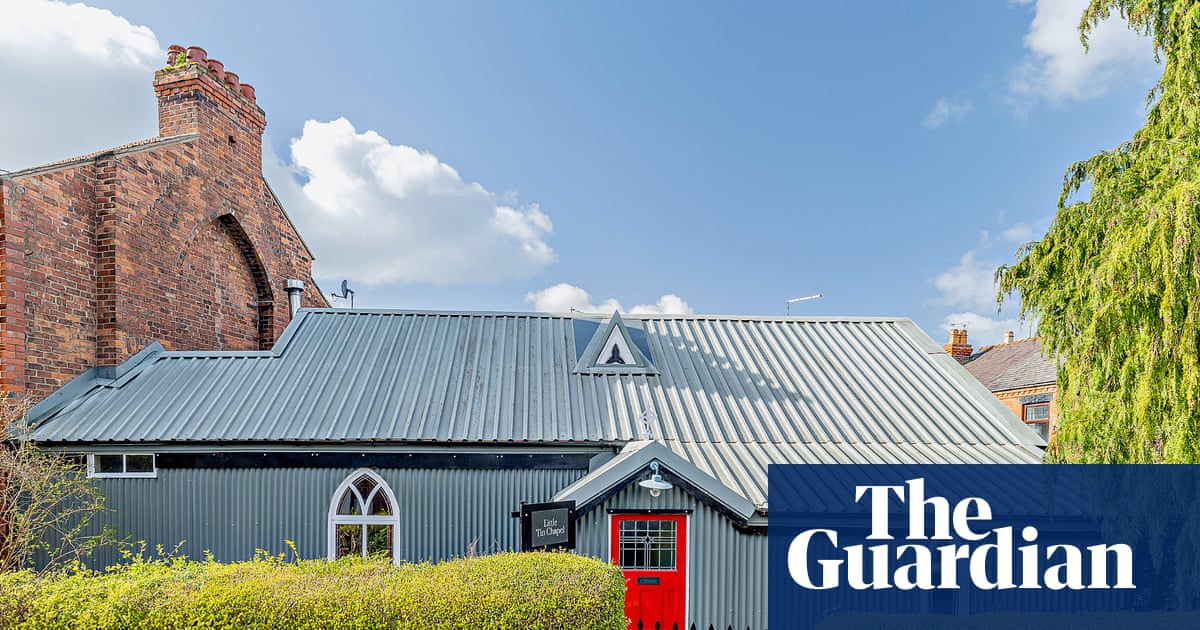
A new gallery of England's most visually striking homes for sale — including a blue-grey converted iron chapel in Cheshire and a sleek black infill townhouse in London — has surfaced at a moment when architectural distinctiveness is becoming a measurable driver of value in the UK housing market. What might once have been dismissed as a lifestyle curiosity is, in fact, a useful lens into a growing segment of the market where character, conversion pedigree and design confidence are translating directly into asking prices and, crucially, into resilience against the broader slowdown affecting more generic stock.
For professional investors, the significance lies in the data behind the anecdotes. Savills and Knight Frank research over the past two years has consistently shown that period conversions — chapels, mills, schoolhouses, warehouses — achieve premiums of 8-15% over comparable new-build or standard Victorian terrace stock in the same postcode, provided the conversion has been executed to a high specification. Cheshire, with its stock of former agricultural and ecclesiastical buildings, has become something of a hotspot for this niche, with converted properties in areas like Nantwich and Knutsford regularly outperforming the regional average price growth of 2.1% recorded across the North West in the year to July 2025.
London's black townhouse, meanwhile, speaks to a different but equally instructive trend: the rise of the architect-led infill development. Narrow plots in boroughs such as Islington, Hackney and Camden have become a battleground for developers willing to commission bold, contemporary facades rather than pastiche replicas, betting that design distinctiveness will command a premium from buyers who increasingly view a home's exterior as a statement asset. Anecdotal evidence from estate agents in these boroughs suggests such properties can achieve 10-20% above street-average pricing per square foot, though buyers should be aware that unconventional designs can also narrow the pool of prospective purchasers on resale, lengthening time on market in a cooling capital where overall transaction volumes fell by roughly 6% year-on-year in the second quarter of 2025.
The regional contrast matters here. In cities like Manchester, Leeds and Liverpool, where city-centre apartment supply has been dominated by fairly homogenous glass-and-steel schemes over the past decade, architecturally distinctive conversions of industrial heritage buildings — former mills, warehouses and civic buildings — have become a genuine point of differentiation for developers seeking to justify premium pricing to increasingly discerning buy-to-let investors. Liverpool's Ropewalks and Baltic Triangle districts, and Leeds' Holbeck Urban Village, are cases in point, where converted heritage stock now regularly lets at 5-10% above comparable new-build rents, reflecting tenant demand for character alongside modern specification. Newcastle and Birmingham are following a similar trajectory, albeit at an earlier stage, as regeneration schemes increasingly incorporate retained facades rather than demolition-and-rebuild approaches.
For buy-to-let landlords, the implications are nuanced. Distinctive properties tend to attract higher-quality, longer-tenure tenants — particularly professionals seeking a home that reflects lifestyle aspiration — but they also come with higher maintenance costs, more complex insurance arrangements (especially for listed or part-listed conversions), and planning constraints that can limit future extension or alteration. First-time buyers, by contrast, are increasingly priced out of this segment entirely, pushed instead towards standardised new-build stock in outer boroughs and commuter towns such as Surrey's Woking and Guildford corridors, where architectural conformity is often the price of affordability. Commercial investors and developers eyeing conversion opportunities should note that planning authorities in conservation-sensitive areas — much of Cheshire, large parts of London's inner boroughs, and heritage quarters in Liverpool and Leeds — are increasingly favourable towards retained-facade schemes as part of net-zero retrofit strategies, since reusing existing structures now qualifies for embodied carbon credits under evolving planning guidance.
Looking ahead six to twelve months, expect the premium for architecturally distinctive homes to widen rather than narrow. As mortgage rates stabilise around the 4-4.5% mark for five-year fixes and buyer confidence gradually returns, purchasers with equity to deploy are prioritising properties that offer both investment security and personal distinction — a combination that generic new-build cannot easily replicate. Developers who can source characterful shells for conversion, particularly in the North West and Yorkshire, stand to capture disproportionate returns relative to volume housebuilders chasing thin margins on standardised schemes. The clear conclusion for investors is that architectural character is no longer a peripheral aesthetic consideration — it is becoming a quantifiable component of yield and capital growth, and portfolios that ignore it risk underperforming a market that is rewarding distinctiveness at every price point.
Key Takeaways
- Distinctive conversions (chapels, mills, warehouses) command 8-15% price premiums over standard stock in the same location, particularly across Cheshire, Liverpool and Leeds.
- London's architect-led infill townhouses can achieve 10-20% premiums per square foot but face narrower buyer pools on resale, extending time on market.
- Heritage conversions in Northern regeneration areas are increasingly favoured under net-zero retrofit planning guidance, offering developers a strategic advantage over demolition-led schemes.
- Buy-to-let landlords should weigh higher tenant quality and rental premiums (5-10%) against increased maintenance and insurance costs on characterful or listed properties.


