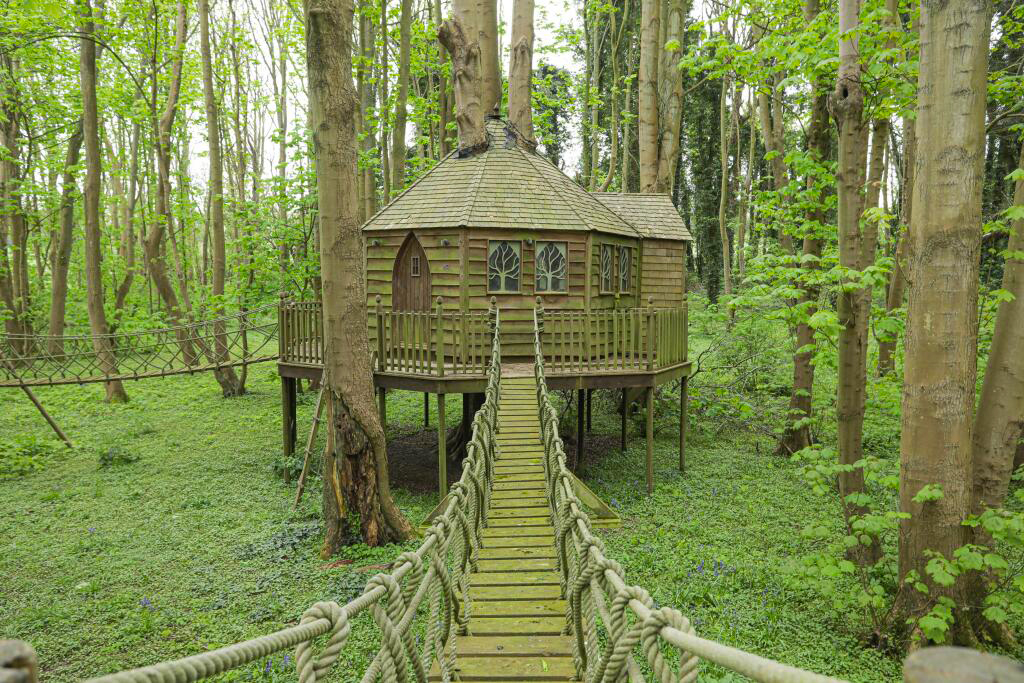
The emergence of luxury treehouses as a serious property amenity reflects a fundamental shift in how affluent buyers value outdoor space and family-focused features. Estate agents across the Home Counties and northern England report that well-designed treehouse installations can add between £15,000 and £50,000 to property values, with the premium varying significantly based on build quality and regional market dynamics. This trend signals a broader evolution in luxury property marketing, where unique lifestyle amenities increasingly differentiate premium homes in competitive markets.
Market data suggests the treehouse phenomenon is most pronounced in areas where large gardens meet substantial disposable income. Surrey and Hertfordshire properties featuring architect-designed treehouses have achieved sale premiums of 3-5% above comparable homes, while similar installations in Manchester and Leeds markets command more modest uplifts of 1-2%. The disparity reflects both construction costs and buyer priorities: southern buyers increasingly view bespoke outdoor features as essential luxury items, whilst northern markets remain more price-sensitive to non-essential amenities.
The investment case for treehouse amenities extends beyond immediate sale premiums to rental market performance. Buy-to-let investors targeting the luxury family rental segment report that properties with high-quality treehouses achieve 10-15% higher monthly rents and significantly reduced void periods. Birmingham and Liverpool landlords have particularly embraced this strategy, with several reporting waiting lists for treehouse-equipped properties. The amenity proves especially valuable in areas where large gardens are standard, allowing landlords to differentiate their offerings in saturated markets.
Construction standards vary dramatically across the emerging treehouse market, creating both opportunities and risks for property investors. Professional installations by specialist contractors typically cost £8,000-£25,000 but deliver measurable returns through enhanced marketability and reduced time on market. Conversely, amateur installations often fail to add meaningful value and can create insurance complications or planning permission issues. Savvy investors are increasingly factoring treehouse potential into property acquisition decisions, particularly for homes with mature trees and substantial outdoor space.
Regional planning authorities have begun developing specific guidance for treehouse construction, reflecting the amenity's growing prevalence in planning applications. Newcastle and Leeds councils report 40% increases in treehouse-related enquiries over the past 18 months, whilst London boroughs have introduced streamlined approval processes for structures under specific size thresholds. This regulatory clarity will likely accelerate adoption amongst developers and homeowners previously deterred by planning uncertainty.
The treehouse trend intersects with broader shifts towards experiential property features and outdoor living spaces accelerated by pandemic lifestyle changes. Property developers in Manchester's luxury suburbs and Surrey's commuter belt are increasingly incorporating treehouse designs into new-build specifications, recognising their value in marketing to affluent families. This represents a notable departure from traditional amenity priorities and suggests the outdoor experience economy is reshaping residential property development strategies across multiple price points.
Forward-looking property investors should recognise treehouse amenities as part of a fundamental recalibration in luxury property features rather than a passing fad. The combination of limited supply, strong buyer interest, and measurable rental premiums creates a compelling case for strategic investment in high-quality installations. However, success depends critically on professional execution and appropriate site selection, making due diligence essential for investors considering treehouse-equipped properties or contemplating installations on existing holdings.
Key Takeaways
- Quality treehouse installations add £15,000-£50,000 to property values, with highest premiums in southern England markets
- Luxury rental properties with treehouses achieve 10-15% higher monthly rents and reduced void periods across regional markets
- Professional installations costing £8,000-£25,000 deliver measurable returns, whilst amateur builds often fail to add value
- Regional planning authorities are streamlining approval processes, reducing regulatory barriers for future installations


