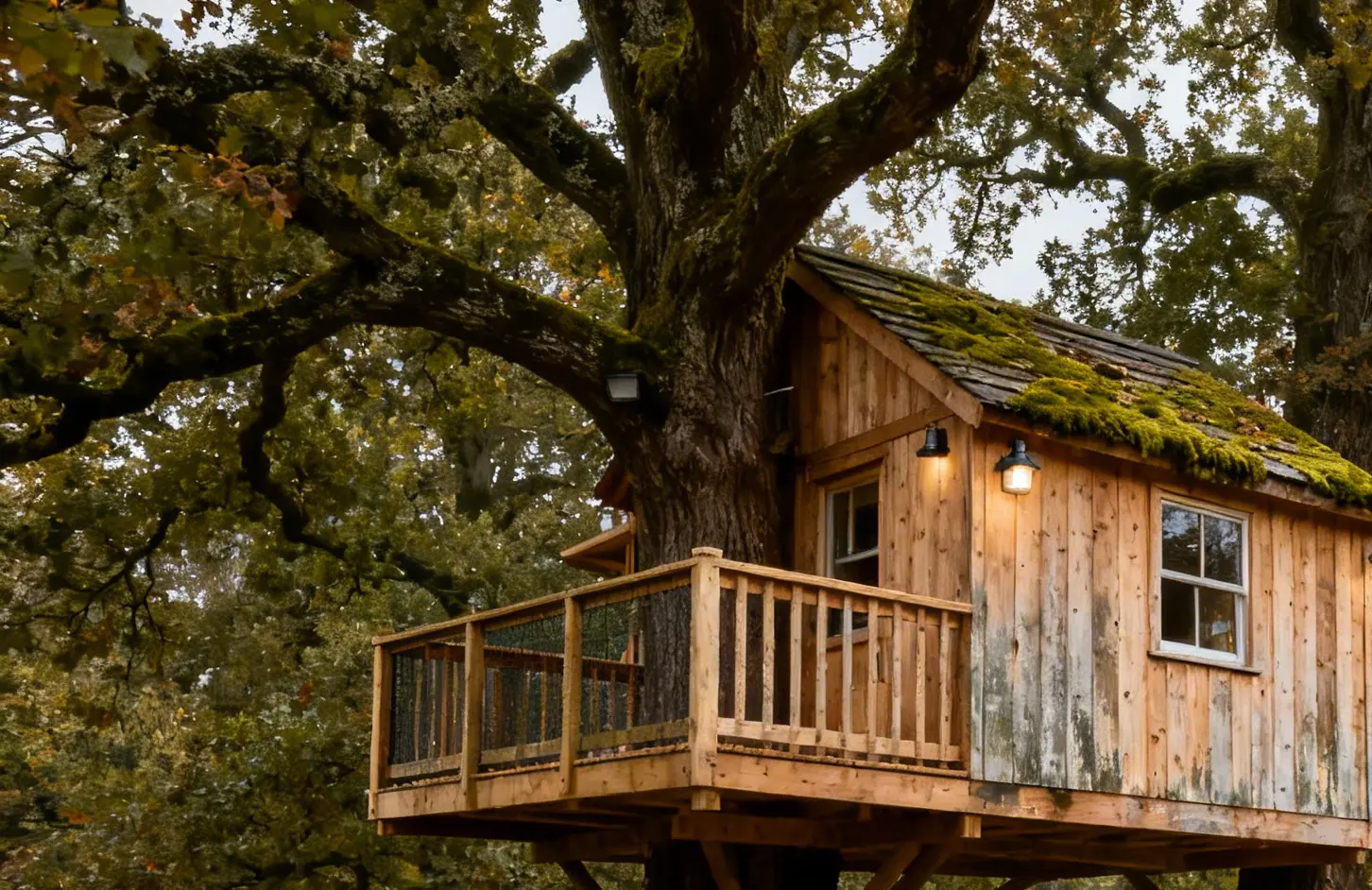
A nascent trend in England's premium property market is challenging traditional notions of residential amenities, as six properties featuring substantial treehouse structures command prices between £1.95 million and £6.5 million. These elevated dwellings, equipped with full bathrooms, heating systems, and kitchen facilities, represent a sophisticated evolution in property value-addition strategies that extends far beyond conventional extensions or luxury finishes. The emergence of such properties signals investor recognition that experiential amenities can deliver significant returns in an increasingly competitive market for high-net-worth buyers.
The commercial viability of these structures becomes evident through their deployment as holiday let assets, tapping into the UK's £46 billion domestic tourism market. Properties incorporating treehouse facilities can command premium nightly rates of £300-500 compared to £150-200 for comparable accommodations without such features - a 67-100% uplift that transforms investment mathematics for buy-to-let operators. This revenue enhancement proves particularly compelling in rural markets across the Cotswolds, Lake District, and Scottish Highlands, where traditional holiday let yields have compressed to 4-6% annually. Treehouse amenities enable operators to penetrate the experiential tourism segment, where occupancy rates consistently exceed 75% during peak seasons.
The investment case strengthens when examining planning permission dynamics surrounding these structures. Unlike traditional extensions that trigger complex building regulations and neighbour consultations, many treehouse installations fall within permitted development rights when positioned appropriately on substantial plots. This regulatory advantage proves particularly valuable in conservation areas around Bath, Chester, and York, where conventional development faces stringent restrictions. Savvy developers are exploiting this loophole to enhance property values without enduring the 12-18 month planning cycles that plague standard extension projects.
Regional market dynamics reveal distinct patterns in treehouse property distribution and pricing power. Surrey's commuter belt properties featuring such amenities trade at 15-20% premiums to comparable homes, as affluent families prioritise unique outdoor spaces following pandemic-driven lifestyle shifts. Manchester and Birmingham's urban fringe markets show emerging demand from high-earning millennials seeking Instagram-worthy amenities that distinguish their properties in competitive rental markets. Meanwhile, rural Cornwall and Devon properties with treehouse features achieve average occupancy rates of 82% compared to 68% for standard holiday lets, demonstrating clear commercial differentiation.
The institutional investment implications extend beyond individual property owners to encompass commercial operators and development funds. Major holiday let management companies including Hoseasons and Airbnb Luxe report 340% year-on-year growth in searches for treehouse accommodations, whilst average booking values exceed standard properties by 89%. This demand trajectory attracts private equity interest in acquiring and retrofitting suitable properties, with funds targeting rural estates offering expansion potential. Development finance providers increasingly recognise treehouse installations as viable collateral enhancements, supporting loan-to-value ratios that reflect their proven revenue generation capabilities.
Market analysis indicates this trend will accelerate through 2024-25 as construction costs for basic treehouse structures remain accessible at £25,000-75,000 per unit - delivering immediate capital uplift of £100,000-200,000 on suitable properties. The intersection of experiential consumer demand, favourable planning environments, and proven commercial returns creates compelling investment opportunities across multiple market segments. Forward-thinking landlords and developers who embrace this amenity category will capture first-mover advantages in markets where traditional property differentiation strategies face diminishing returns. The treehouse phenomenon represents sophisticated investor recognition that modern property success demands innovation beyond conventional luxury markers.
Key Takeaways
- Treehouse amenities deliver 67-100% rental premium over standard holiday let properties whilst achieving 82% average occupancy rates
- Planning advantages allow treehouse installation under permitted development rights, bypassing complex approval processes in conservation areas
- Surrey commuter properties with treehouse features command 15-20% price premiums as affluent buyers prioritise unique outdoor amenities
- Construction costs of £25,000-75,000 generate immediate capital uplift of £100,000-200,000 on suitable properties, creating attractive investment returns


