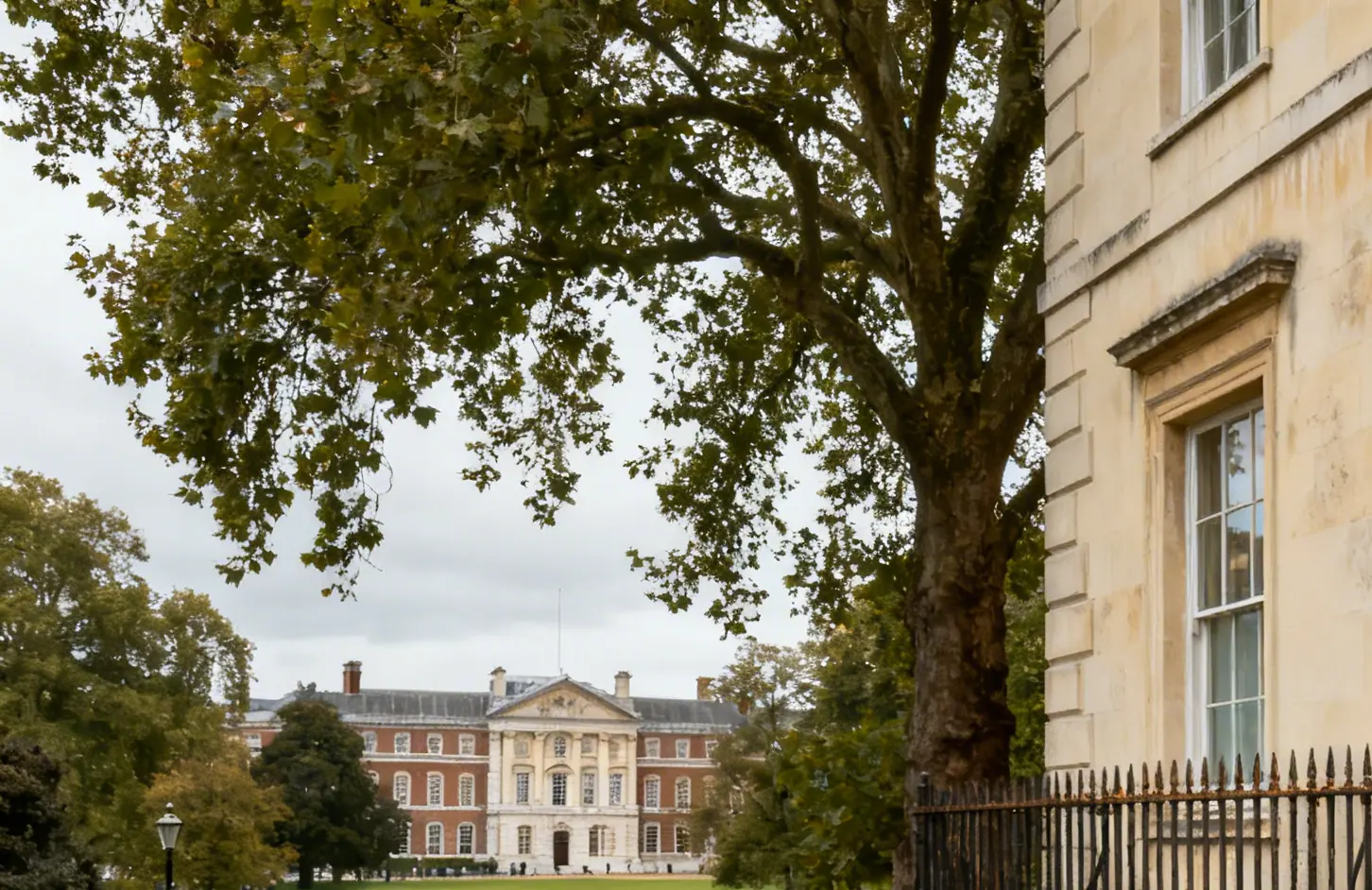
Nick Candy's record-breaking £275 million sale of Providence House in Chelsea marks a decisive inflection point for London's ultra-prime residential market, demonstrating that international capital remains undeterred by recent stamp duty increases and economic volatility. The transaction, conducted away from public view with an undisclosed buyer, represents approximately 15% growth on previous London residential records and signals that the top tier of the capital's property market operates under entirely different dynamics from the mainstream housing sector.
The sale's significance extends far beyond its headline figure, reflecting the structural resilience of London's premier residential assets amid geopolitical uncertainty. While average London house prices have shown modest growth of 2.8% annually, ultra-prime properties - those exceeding £20 million - have demonstrated remarkable price stability, with Knight Frank reporting sustained demand from Middle Eastern sovereign wealth funds and American technology entrepreneurs. Providence House, a Grade II-listed mansion within the grounds of Royal Chelsea Hospital, exemplifies the type of irreplaceable heritage asset that commands premium valuations regardless of broader market conditions.
For professional property investors, this transaction underscores the growing bifurcation within London's residential market. Prime central London boroughs - Chelsea, Kensington, Mayfair, and Belgravia - continue attracting institutional-scale capital, while secondary locations face mounting pressure from mortgage rate increases and affordability constraints. Buy-to-let investors focusing on high-value London properties can expect this transaction to establish new pricing benchmarks, particularly for Grade II-listed properties with unique historical provenance and irreplaceable locations.
The implications ripple across regional markets, where developers and investors are recalibrating their understanding of wealth concentration dynamics. Manchester's prime residential developments in areas like Spinningfields and Birmingham's Jewellery Quarter luxury conversions pale in comparison to London's ultra-prime sector, yet they benefit from the capital flight effect as investors seek alternative opportunities. Liverpool's Baltic Triangle and Newcastle's Grainger Town are experiencing increased interest from developers who recognise that while regional markets cannot command London premiums, they offer superior yield opportunities for capital displaced from the capital's saturated prime market.
Commercial implications extend to development financing and planning policy. Candy's ability to achieve such valuations validates the premium development model that prioritises architectural distinction and heritage preservation over volume delivery. This approach directly contradicts government housing policy emphasising quantity over quality, suggesting that private capital will continue flowing toward prestige projects rather than addressing broader housing supply challenges. Planning authorities across London boroughs will interpret this sale as validation for approving high-value, low-density developments that maximise per-unit values.
Looking forward, this transaction establishes a new ceiling for London residential valuations that will influence pricing across the prime market through 2024. International investors, particularly from regions experiencing currency devaluation or political instability, will view London's ultra-prime market as increasingly attractive relative to alternatives in New York, Hong Kong, or Dubai. The anonymity surrounding the buyer suggests continued appetite from sovereign wealth funds and family offices seeking discrete UK property exposure, indicating that demand at this market tier remains structurally robust despite headline economic uncertainty.
Candy's record sale ultimately demonstrates that London's position as a global wealth repository remains unchallenged, with ultra-prime residential property serving as the ultimate store of value for international capital. While mainstream housing markets grapple with affordability crises and mortgage constraints, the upper echelons continue operating as a parallel economy where scarcity, heritage, and location command valuations that dwarf conventional property metrics.
Key Takeaways
- Ultra-prime London residential (£20m+) operates independently from mainstream housing market dynamics, showing continued price strength despite broader economic headwinds
- The transaction establishes new pricing benchmarks for heritage properties in prime central London, with Grade II-listed assets commanding significant premiums
- Regional markets benefit indirectly as investors seek alternative opportunities, with Manchester, Birmingham, and Liverpool experiencing increased development interest
- Anonymous international buyers continue viewing London prime property as a secure wealth repository, suggesting sustained demand through 2024 despite geopolitical uncertainty


