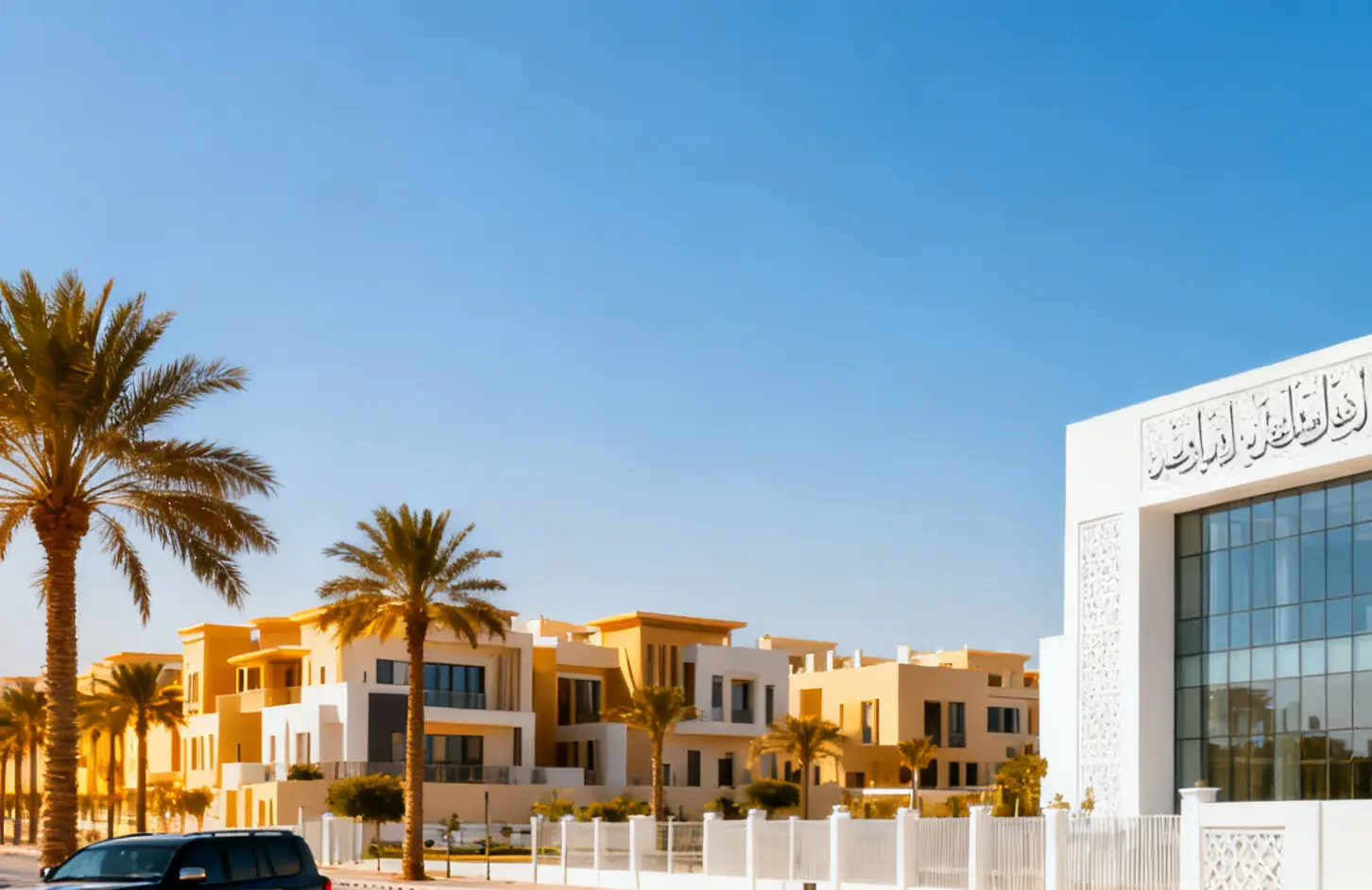
The proliferation of British curriculum schools across Riyadh represents more than an educational trend - it signals the emergence of a sophisticated property investment landscape that UK developers and institutional investors cannot afford to ignore. As Saudi Arabia's Vision 2030 programme accelerates its economic diversification agenda, the concentration of international schools following UK educational standards is creating distinct residential micro-markets that mirror the catchment-driven property dynamics long established in London's prime zones and Dubai's expatriate enclaves.
This educational infrastructure development carries profound implications for UK property professionals with international portfolios or ambitions. The pattern is strikingly familiar: premium schools attract high-earning expatriate families, who in turn drive demand for quality residential accommodation within reasonable proximity to these institutions. In Dubai's Jumeirah and Abu Dhabi's Khalifa City, similar dynamics have generated sustained rental yields of 6-8% annually for properties within established school catchments - figures that significantly outperform London's current 3-4% yields in comparable prime locations.
For UK-based investors and developers, Saudi Arabia's transformation presents a compelling arbitrage opportunity. The Kingdom's expatriate community, heavily weighted towards finance, technology, and energy professionals, demonstrates spending power that rivals London's international workforce. Properties within a 15-minute commute of established British curriculum schools in Riyadh's Diplomatic Quarter and King Abdullah Financial District are commanding rental premiums of 25-30% above comparable units in non-educational zones. This premium structure closely parallels the pricing dynamics observed in Surrey's international school corridor around Cobham and Weybridge, where proximity to institutions like ACS International School has sustained property values even during broader market downturns.
The scale of opportunity extends beyond individual property transactions to encompass large-scale residential development projects. Saudi Arabia's Public Investment Fund has allocated substantial capital to attract 500 multinational corporations by 2030, with headquarters requirements mandating local operational bases. This corporate influx will generate demand for an estimated 150,000 additional housing units specifically designed for international professionals - a market segment that UK developers possess considerable expertise in serving, having honed these skills across projects from Manchester's Spinningfields to Birmingham's Snowhill district.
Regional UK markets stand to benefit indirectly from this Middle Eastern expansion through institutional capital flows and partnership opportunities. Several London-based property investment trusts have already established Saudi subsidiaries, channelling capital that subsequently supports UK acquisition strategies and development finance. Manchester-based residential developer Urban Splash and Birmingham's Calthorpe Estates have both secured advisory contracts for Saudi residential projects, generating fee income that bolsters their domestic development capacity.
The investment thesis strengthens when considering Saudi Arabia's demographic trajectory and fiscal position. Unlike the UK's constrained public finances and aging population, the Kingdom benefits from substantial sovereign wealth reserves and a young, increasingly educated workforce. British curriculum schools serve as cultural bridges, facilitating knowledge transfer that enhances local human capital while creating sustainable demand for international-standard residential accommodation. This dynamic positions Saudi Arabia as a growth market that complements rather than competes with established UK property investment strategies.
UK property investors should recognise this development as validation of a proven investment formula rather than an exotic opportunity requiring specialist expertise. The fundamental drivers - quality education creating residential demand clusters - remain constant whether applied to Saudi Arabia's emerging markets or the UK's established school catchment areas. The Saudi opportunity offers superior yield potential with demographic and fiscal fundamentals that support sustained growth, presenting a compelling case for portfolio diversification beyond traditional UK and European markets.
Key Takeaways
- British curriculum schools in Riyadh are generating 25-30% rental premiums for nearby properties, significantly outperforming UK yields
- Saudi Arabia's Vision 2030 will require 150,000 international-standard housing units, creating substantial opportunities for UK developers
- The educational infrastructure model mirrors successful UK catchment dynamics from Surrey to Manchester, providing familiar investment frameworks
- UK property firms are securing lucrative advisory contracts in Saudi Arabia, generating fee income that supports domestic development strategies


