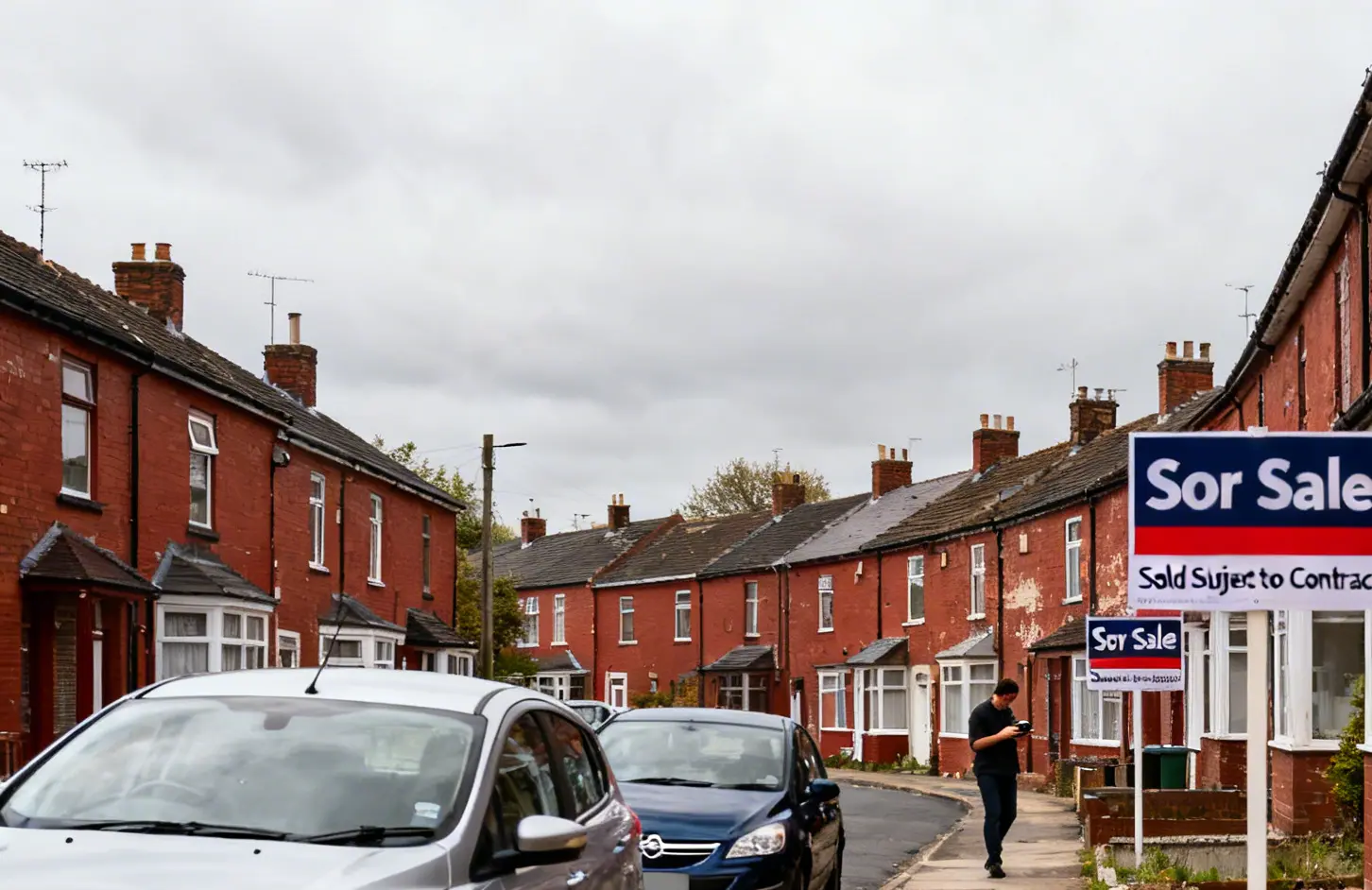
The residential property market's chronic transparency deficit faces a direct technological challenge with the launch of a pioneering anonymous bidding platform covering England and Wales. The Stamford-based system represents the most significant attempt yet to digitise what remains one of the least efficient major asset classes, targeting the estimated £25 billion annual cost of failed transactions that plague investors, developers and homebuyers alike. With property sales fall-through rates hovering around 25% nationally - and reaching 30% in competitive markets like Surrey and southwest London - the platform addresses a structural weakness that has persisted despite decades of market evolution.
The technology's core proposition centres on real-time bid transparency without revealing participant identities, potentially eliminating the information asymmetries that enable gazumping and strategic gaming by vendors. Current market dynamics favour sellers disproportionately, particularly in high-demand areas where multiple cash buyers compete for limited stock. Manchester and Birmingham have witnessed gazumping incidents increase by 40% since 2022, according to conveyancing data, whilst Leeds and Newcastle markets show similar patterns as southern investors migrate northward seeking yield. The anonymous system could fundamentally alter these power dynamics by ensuring all bidders operate with identical information sets.
For buy-to-let investors, the platform promises to reduce transaction costs that typically add 3-5% to acquisition expenses through aborted purchases. Professional landlords expanding portfolios across multiple regions have reported losing an average of £8,000 per failed transaction in survey fees, legal costs and opportunity costs. The North West market, where institutional investors compete intensely for rental stock, could see particularly pronounced benefits given the current 15-20 bid averages on attractive properties. Liverpool's regeneration zones, where developers and landlords vie for the same opportunities, represent prime testing grounds for anonymous bidding efficacy.
Commercial implications extend beyond individual transactions to reshape market maker strategies and institutional investment approaches. Property developers operating across England's growth corridors - from the Oxford-Cambridge Arc to the Northern Powerhouse regions - face mounting pressure to secure sites rapidly whilst maintaining cost discipline. Anonymous bidding eliminates the reputational signalling that often drives prices beyond fundamental values when major developers enter public bidding wars. Fund managers allocating capital to UK residential development will find enhanced price discovery mechanisms particularly valuable given current margin pressures and construction cost inflation running at 8% annually.
The platform's success will largely depend on achieving critical mass adoption, requiring estate agents to embrace technology that potentially reduces their information advantages and negotiation leverage. Regional markets with high institutional activity - including Manchester's city centre regeneration areas and Birmingham's expanding student accommodation zones - offer the most promising early adoption prospects. London's prime markets may prove more resistant given established relationships and the personal nature of high-value transactions, though secondary markets across the capital's growth boroughs could provide breakthrough opportunities.
Market structure changes of this magnitude typically require 18-24 months to demonstrate measurable impact, but early indicators suggest strong institutional appetite for transparent bidding mechanisms. The platform addresses genuine inefficiencies that cost the industry billions annually whilst providing measurable benefits to all participant categories. Professional investors will monitor adoption rates closely, particularly in target acquisition areas where bidding wars have become counterproductive to portfolio returns.
This technological intervention arrives as the property market seeks efficiency gains to offset rising transaction costs and regulatory compliance burdens. Anonymous bidding represents evolution rather than revolution, digitising processes that remain stubbornly analogue whilst preserving competitive dynamics that drive price discovery. Success will transform how professional investors approach acquisitions across England and Wales, establishing new standards for market transparency that could eventually extend to commercial property transactions.
Key Takeaways
- Anonymous bidding platform could eliminate £25bn annual costs from failed property transactions
- Buy-to-let investors stand to save average £8,000 per avoided gazumping incident
- Northern markets with high institutional activity likely to see fastest adoption rates
- Technology requires 18-24 months to achieve critical mass but addresses genuine market inefficiencies


