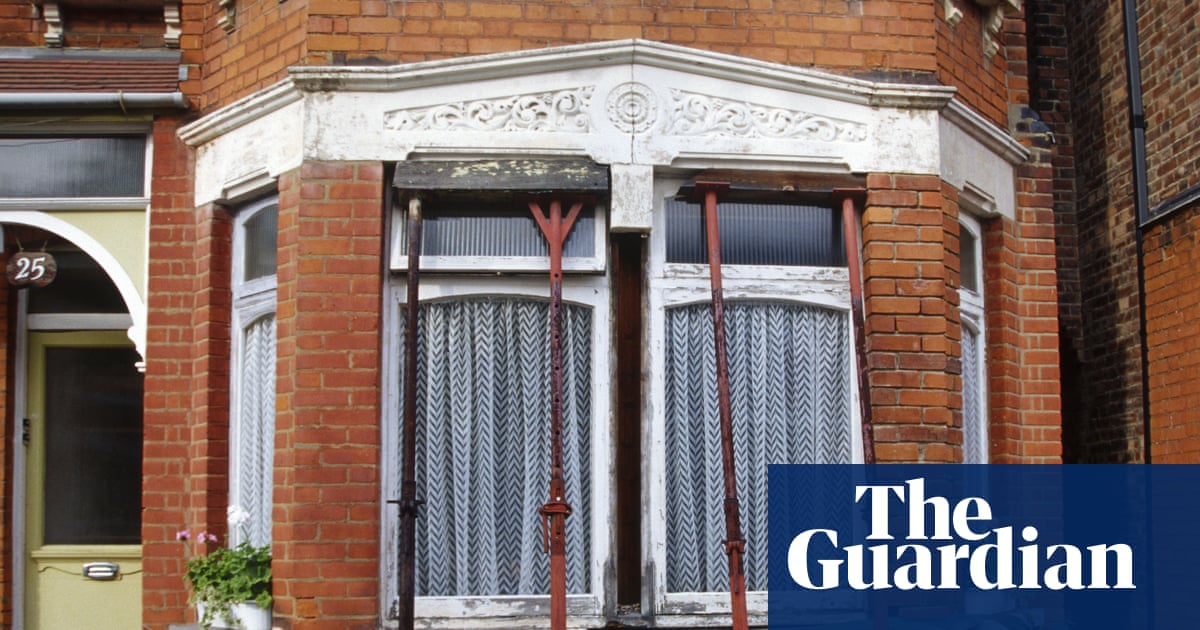
Aviva, the UK's largest insurer, has confirmed it has been hit by a sharp rise in subsidence claims following an extremely hot summer, as reported by The Guardian. The insurer said the increase came amid an industry-wide surge in households filing claims to cover repairs typically needed to address cracks, sloping floors, and off-kilter doors and windows. Hastings Direct told the same publication that subsidence claims were up 140% in August, while Axa described it as a "surge year" for the problem.
For property investors and homeowners, this is not a niche insurance story. Subsidence is one of the most feared structural issues in the UK housing market because it directly affects a property's mortgageability, insurability and resale value. When ground beneath a building shrinks, typically because clay soils dry out and contract during prolonged heat and drought, foundations can shift unevenly, producing the cracking and distortion that insurers are now processing in unusually high volumes. A property with a history of subsidence often becomes harder to insure, harder to mortgage on standard terms, and harder to sell at full market value, regardless of whether remedial work has already been carried out.
The timing matters. The claims surge follows what the source describes as a record hot summer, underscoring how the physical risks of a warming climate are now translating into tangible financial exposure for the insurance sector and, by extension, for property owners. This is a trend PropertyNews expects to recur with greater frequency as extreme summer heat becomes a more regular feature of the UK climate. Landlords and homeowners in areas with clay-rich soils, including large parts of London, the South East and Surrey, are typically more exposed to subsidence risk than those in regions with more stable ground conditions, and should expect this exposure to be increasingly reflected in insurance pricing and underwriting decisions.
The implications ripple across different corners of the property market. Buy-to-let landlords holding older housing stock, particularly period properties with shallow foundations, may face steeper premiums or more stringent policy conditions at renewal, squeezing yields already under pressure from other cost increases. First-time buyers searching in areas with known subsidence histories could find mortgage approvals slower or conditional on structural surveys, adding friction to transactions in an already cautious lending environment. Developers and commercial investors, meanwhile, should take note that insurers tightening their approach to subsidence risk may demand more robust structural specifications and drainage considerations on new builds, particularly in regions prone to clay shrinkage.
Regionally, the effects are unlikely to be uniform. Cities built predominantly on stable bedrock, such as parts of Newcastle, Liverpool and Leeds, are generally associated with lower subsidence risk than London and the South East, where clay soils are more prevalent. This divergence could, over time, feed into subtle regional pricing dynamics, with insurers and surveyors factoring soil composition more explicitly into their risk models. Manchester and Birmingham, with their mixed geology and dense pockets of older housing, sit somewhere in between, and owners there should not assume immunity simply because the current claims surge has been framed as a national story rather than a localised one.
Looking ahead six to twelve months, PropertyNews expects insurers to reassess subsidence risk pricing more aggressively at renewal cycles, particularly for properties in higher-risk postcodes. Surveyors and conveyancers are likely to place greater emphasis on structural history checks during transactions, and buyers should budget time and cost for subsidence-related due diligence where relevant. For landlords, this is a moment to review buildings insurance terms proactively rather than waiting for a claim to force the issue, since insurers facing what Axa called a "surge year" are unlikely to absorb elevated claims costs without passing some of that burden onto policyholders.
The clearest takeaway from this episode is that climate-linked structural risk has moved from an abstract long-term concern to an immediate underwriting reality. Property owners, landlords and developers who treat subsidence as a legacy issue confined to a handful of notoriously clay-heavy postcodes are underestimating how quickly insurers are recalibrating their risk appetite in response to genuinely extreme weather patterns. Those who get ahead of the issue, through better drainage management, timely structural surveys and proactive insurance reviews, will be better placed to protect both asset value and ongoing affordability as this trend continues to build.
Key Takeaways
- Aviva, Hastings Direct and Axa have all reported a marked rise in subsidence claims following a record hot summer, with Hastings Direct citing a 140% August increase.
- Subsidence directly affects mortgageability, insurability and resale value, making this an immediate concern for owners, not just insurers.
- Properties on clay-rich soils, notably in London, the South East and Surrey, carry higher exposure than cities on more stable bedrock such as Newcastle or Liverpool.
- Landlords and buyers should proactively review insurance terms and structural history, as insurers facing a "surge year" are likely to tighten pricing and underwriting conditions at renewal.


