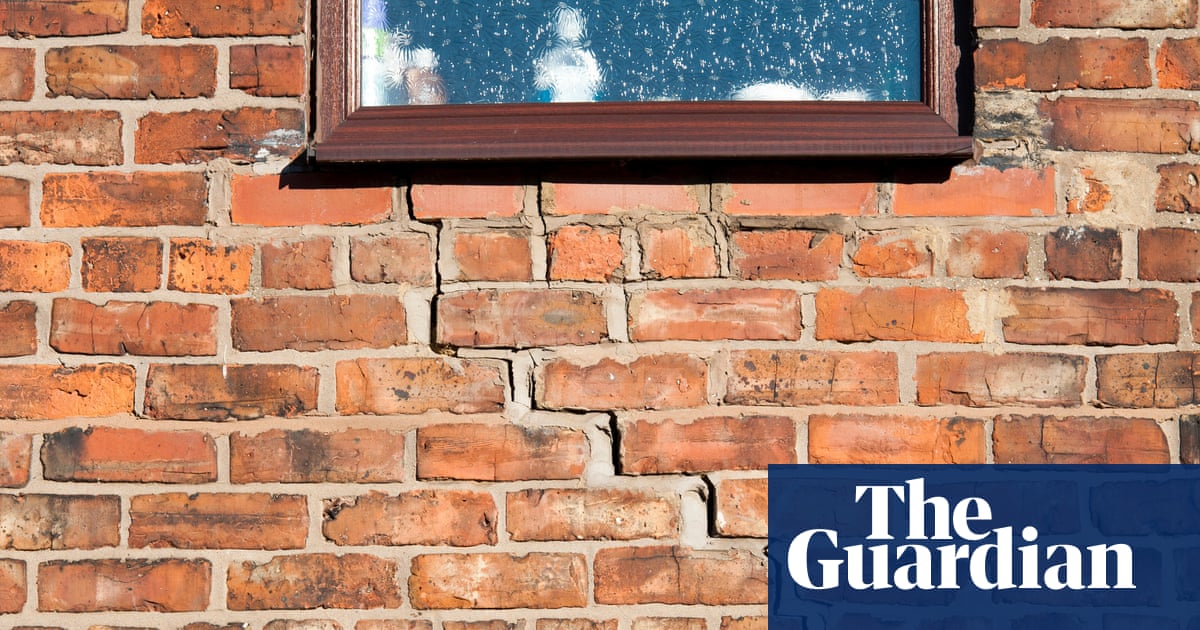
The Guardian's call for homeowners to come forward with heat-related property damage is more than a human-interest story - it is an early warning signal for a subsidence crisis that could cost the UK property market hundreds of millions of pounds over the next year. With 2026 provisionally confirmed by the Met Office as the hottest summer on record, and successive heatwaves baking clay-rich soils across large swathes of southern and eastern England, insurers, surveyors and landlords should brace for a repeat - and potentially an escalation - of the subsidence spikes seen after previous extreme summers.
The mechanics are well understood but chronically underappreciated by property investors. Clay soil, prevalent across London, the South East, and parts of East Anglia, contracts as trees and vegetation draw out moisture during prolonged dry spells. This shrinkage causes uneven settlement beneath foundations, particularly in Victorian and Edwardian terraces built before modern engineering standards accounted for soil movement. The Association of British Insurers recorded subsidence claims costs of roughly £219 million in 2022 - the year of the 40°C heatwave - up from around £54 million the year before, a fourfold increase that illustrates how quickly this risk can materialise once a genuine drought sets in. Given that 2026 has now surpassed 2022 in terms of recorded heat, industry analysts should expect claims data for this year to exceed that benchmark once loss adjusters complete their assessments through autumn and winter.
For buy-to-let landlords, particularly those holding older stock in London boroughs such as Croydon, Bromley and parts of Surrey - historically the UK's subsidence hotspots owing to London clay geology - this represents a direct and immediate balance-sheet risk. Subsidence repairs routinely run into five-figure sums, and underwriting terms for affected properties often tighten sharply after a claim, with some insurers imposing excesses of £1,000 or more specifically for subsidence, or declining renewal altogether. Landlords who have not reviewed buildings insurance policies since before this summer's heatwaves should do so immediately, as several insurers have quietly repriced subsidence cover in response to climate modelling that anticipates more frequent extreme dry spells.
The regional picture is uneven, and that matters enormously for portfolio strategy. London, Surrey and much of the South East sit on shrinkable clay and will bear the brunt of this year's damage. By contrast, Manchester, Liverpool and Newcastle sit predominantly on more stable sandstone and glacial till, giving northern investors a structural - if underappreciated - advantage when it comes to climate-related building risk. Birmingham and Leeds occupy a middle ground, with pockets of clay geology creating localised risk that savvy investors should map at postcode level rather than assume applies uniformly across a city. This geological divide is likely to become an increasingly explicit factor in insurance pricing and, eventually, in property valuations, as insurers and lenders incorporate climate risk data more rigorously into their models.
First-time buyers face a subtler but real exposure: pre-purchase surveys must now treat historic subsidence disclosure and vegetation proximity as material issues rather than boilerplate caveats, particularly for period properties in the affected clay belt. Conveyancers report that subsidence history, even where fully repaired, can depress a property's value by 10 to 20 per cent and complicate mortgage approval, since several major lenders apply stricter loan-to-value criteria or require specialist indemnity insurance for previously affected homes. Developers, meanwhile, should treat this summer's damage pattern as a live case study for site selection and foundation design in new-build schemes across the South East, where NHBC guidance already mandates deeper foundations near mature trees but where enforcement and buyer awareness remain patchy.
Looking ahead six to twelve months, expect three concrete developments. First, insurers will likely announce revised subsidence underwriting criteria and premium adjustments during winter renewal cycles, disproportionately affecting clay-belt properties in London and the Home Counties. Second, subsidence-related disputes between buyers, sellers and surveyors will rise through the conveyancing pipeline, potentially slowing transaction times in affected postcodes during the traditionally busy spring 2027 market. Third, and most significantly for long-term portfolio strategy, climate risk will move from a peripheral due-diligence item to a core underwriting and valuation variable - meaning investors who fail to factor geology and tree proximity into acquisition decisions will find themselves increasingly exposed both financially and reputationally as extreme summers become the norm rather than the exception.
Key Takeaways
- 2026's record heat is likely to push subsidence claims costs above the £219 million recorded after the 2022 heatwave, based on historical claims patterns.
- London, Surrey and the South East face the highest exposure due to clay-rich soil, while Manchester, Liverpool and Newcastle sit on more stable geology.
- Buy-to-let landlords should review buildings insurance now, as several insurers have already tightened subsidence terms and excesses following recent extreme summers.
- Subsidence history can cut property values by 10–20% and complicate mortgage approval, making it a critical due-diligence issue for first-time buyers and developers alike.


