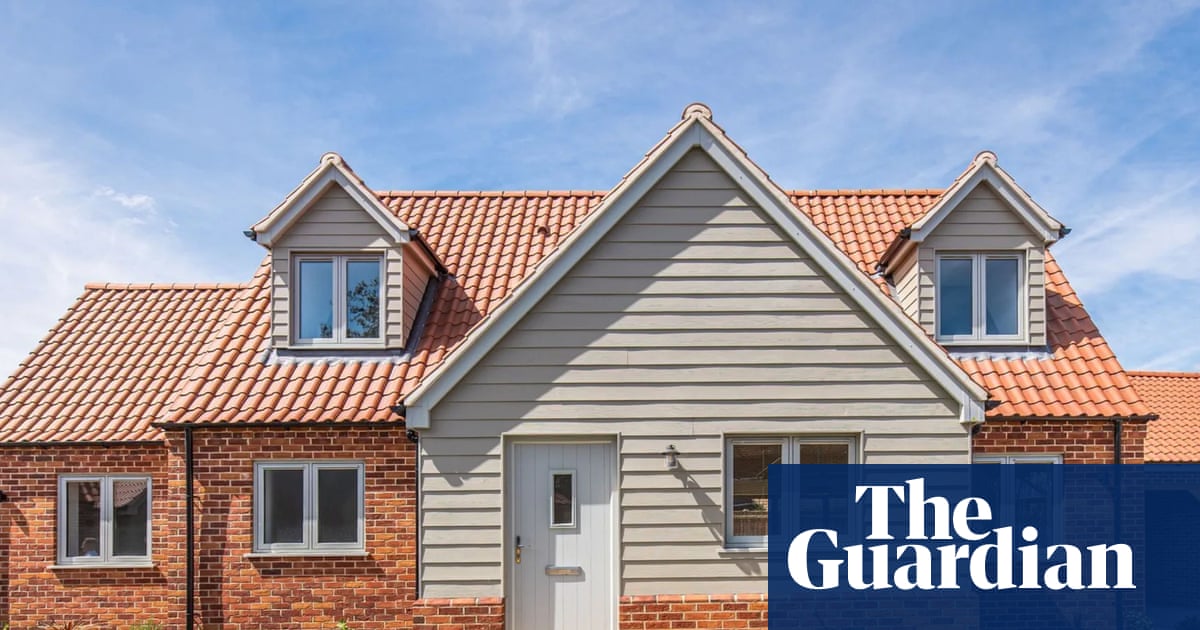
A newly built two-bedroom apartment in Morpeth has come to market at £725,000, a price point that would raise eyebrows in most of Northumberland but which reflects a broader recalibration of what 'prime' means outside London and the South East. At roughly £600-£650 per square foot depending on the exact specification, this listing sits closer to pricing seen in parts of Edinburgh's New Town or Leeds' premium city-centre schemes than the historic market town norms of a county where the average property price hovers around £220,000, according to recent Land Registry data. For investors and developers watching regional dispersion trends, this is not an isolated curiosity - it is a data point in a wider story about how affluent buyers are redistributing demand away from oversaturated southern markets.
Morpeth's appeal has been building steadily for a decade. Its commuter links into Newcastle, roughly 15 miles south, combined with excellent schooling and a genuinely attractive historic centre, have made it one of the North East's most resilient property markets. But £725,000 for a flat - as opposed to a substantial period house - marks new territory. It suggests developers are betting that a cohort of downsizers, professional couples and second-home buyers exist who will pay London-adjacent prices for apartment living in a town that, until recently, was defined by its family housing stock rather than luxury flats.
This matters for UK property investors because it challenges the assumption that meaningful yield and capital growth opportunities are confined to the obvious regional cities - Manchester, Birmingham, Leeds and Liverpool - where institutional capital has already driven up entry prices and compressed yields to the 4-5% range in many prime city-centre schemes. Northumberland and similar market towns across the North East have historically offered gross yields above 6% precisely because capital values remained low. A £725,000 listing at the top of the local market signals that this yield advantage may be starting to erode in the premium segment, even if it persists in mainstream family housing stock.
The regional context is instructive. Newcastle city centre has seen apartment values rise around 4.2% annually over the past three years, driven by build-to-rent investment and university-linked demand, yet has struggled to produce genuinely premium stock above £500,000 outside a handful of riverside developments. Morpeth's positioning as a satellite luxury market, rather than an urban core, mirrors what has already happened around Surrey commuter towns relative to London, and increasingly around Wilmslow and Alderley Edge relative to Manchester. Developers are effectively exporting prime pricing models into smaller, high-amenity towns where planning constraints and heritage protections limit new supply, creating scarcity value that supports premium asking prices.
For different market participants, the implications diverge sharply. Buy-to-let landlords eyeing the North East should treat this listing as an outlier rather than a benchmark - mainstream terraced and semi-detached stock in Morpeth and surrounding villages remains considerably more attractively priced relative to rental demand from Newcastle-bound commuters. First-time buyers are essentially priced out of this particular product, reinforcing the North East's growing bifurcation between an increasingly unaffordable premium tier and a still-accessible mainstream market. Commercial and residential developers, however, should read this as validation that appetite exists for high-specification apartment schemes in well-connected market towns, provided the build quality and amenity offering genuinely justify metropolitan pricing rather than simply borrowing the label.
Over the next six to twelve months, expect more developers to test similar pricing in comparable towns - Hexham, Ponteland and parts of North Yorkshire are obvious candidates given similar commuter profiles and heritage appeal. Whether this Morpeth apartment sells at or near asking price will be a genuine bellwether: a quick sale signals that North East prime demand has real depth beyond Newcastle's core, while a prolonged period on the market would suggest developers have overreached relative to local purchasing power. Given that mortgage rates remain elevated compared to the ultra-low environment of 2021, and that discretionary purchases at this price point are more sensitive to borrowing costs, I expect this listing to require a realistic pricing adjustment within four to six months unless it attracts a cash buyer specifically seeking Morpeth's lifestyle credentials over pure investment logic.