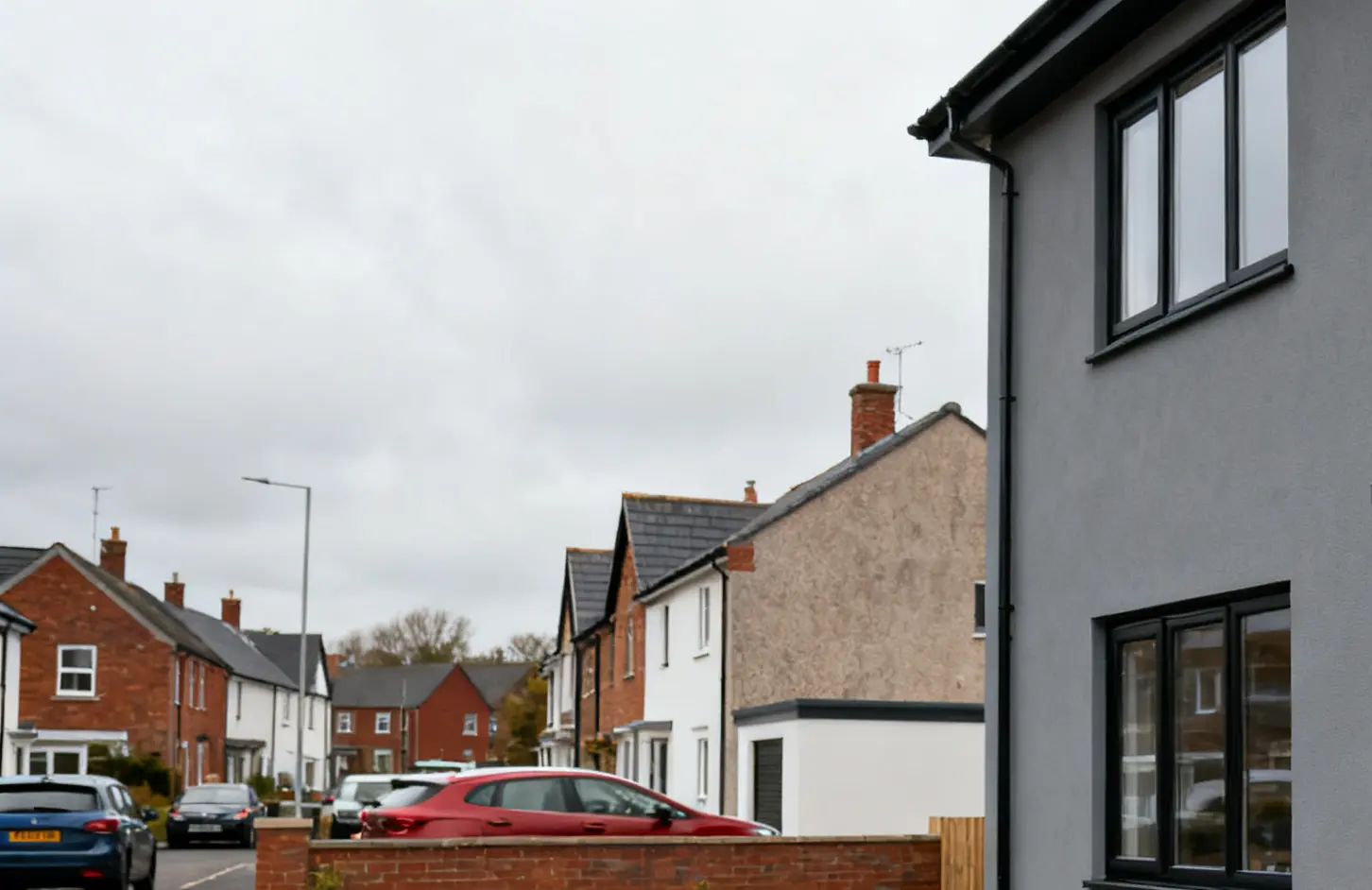
First-time buyer demand across Britain fell to 32.9% in the second quarter of 2026, down from 34.8% in the previous three months, according to new research from estate agency Yopa. The more striking figure sits beneath the headline: properties genuinely suitable for first-time buyers now account for just 1.7% of all homes listed for sale, a scarcity that is fundamentally distorting the lower rungs of the housing ladder. This is not a story about waning appetite among younger buyers - it is a story about a market that has quietly stopped building the homes they can actually afford to buy.
For professional investors and landlords, this matters more than the quarterly wobble suggests. A shrinking pool of entry-level stock has a compounding effect through the entire market. When first-time buyers cannot find suitable one- and two-bedroom flats or modest terraces, they either delay purchasing altogether or compete more aggressively for the limited stock that does exist, pushing prices up disproportionately at the bottom of the market. That, in turn, keeps a larger cohort renting for longer, sustaining tenant demand in city-centre and commuter-belt lettings markets even as mortgage affordability improves elsewhere. Landlords in Manchester, Leeds and Birmingham - all cities that have seen strong first-time buyer activity historically - are likely to see this play out as extended tenancies and firmer rental yields rather than a rush of stock sales to owner-occupiers.
The regional picture is uneven. Manchester and Liverpool, where new-build apartment schemes have historically supplied a steady stream of entry-level stock, are now seeing that pipeline thin considerably as developers pivot towards build-to-rent and larger family homes with fatter margins. Birmingham's first-time buyer segment remains under pressure from the same dynamic, compounded by HS2-linked regeneration schemes that have shifted planning priorities towards higher-value units. Newcastle continues to offer relatively better value and stock availability, making it one of the few major markets where first-time buyer transactions have held up reasonably well. London and Surrey sit at the opposite extreme: suitable first-time buyer stock in the capital and its commuter belt is now so scarce and expensive that many buyers are being forced further out, fuelling demand in secondary towns across the South East and East Anglia.
The causes are structural rather than cyclical. Housebuilders have increasingly concentrated output on three- and four-bedroom family homes, which carry stronger margins per plot, at the expense of the compact one- and two-bedroom units that first-time buyers typically target. Permitted development conversions, once a reliable source of small, affordable urban flats, have slowed as councils tighten space and quality standards. Meanwhile, existing owners of smaller properties - many of whom bought a decade ago on low fixed rates - have limited incentive to sell into a market where moving up means swapping a cheap mortgage for a considerably more expensive one. The result is a bottleneck that no amount of Help to Buy-style demand-side intervention can resolve, because the constraint sits squarely on the supply side.
Looking ahead six to twelve months, expect this stock shortage to intensify rather than ease. Interest rate cuts anticipated later in the year will likely improve affordability calculations for first-time buyers on paper, but if suitable stock remains capped at under 2% of listings, that improved affordability will simply translate into faster price growth for the properties that do exist rather than a genuine expansion in transaction volumes. Estate agents are already reporting sealed-bid scenarios re-emerging for well-presented starter homes in northern cities, a dynamic not seen consistently since 2021–22. Developers who can pivot planning applications towards smaller, first-time buyer-suitable units - particularly in regeneration zones across Leeds, Sheffield and the Midlands - stand to capture disproportionate demand and pricing power over the next year.
The implications ripple across every category of market participant. Buy-to-let landlords holding entry-level stock in city centres are sitting on an increasingly valuable asset class, with rental demand likely to stay firm as first-time buyers remain locked out longer. First-time buyers themselves face a genuine strategic choice: compromise on location or property type now, or wait for a supply response that shows no sign of materialising quickly. Commercial investors should note the knock-on effect on build-to-rent, where institutional capital is already flowing towards schemes explicitly designed to capture displaced first-time buyer demand. Developers, meanwhile, have a clear market signal - those willing to build smaller and cheaper, rather than chase the margins on executive homes, will find a hungry and underserved buyer pool waiting.
Key Takeaways
- First-time buyer demand fell to 32.9% in Q2 2026, but the real constraint is supply: only 1.7% of listed homes are suitable for entry-level buyers.
- Northern cities including Manchester, Leeds and Birmingham face thinning first-time buyer pipelines as developers favour larger, higher-margin homes.
- Landlords holding entry-level urban stock should expect sustained rental demand as buyers are priced out or delayed for longer.
- Developers who prioritise smaller, affordable units over family homes are best positioned to capture underserved demand over the next 12 months.


