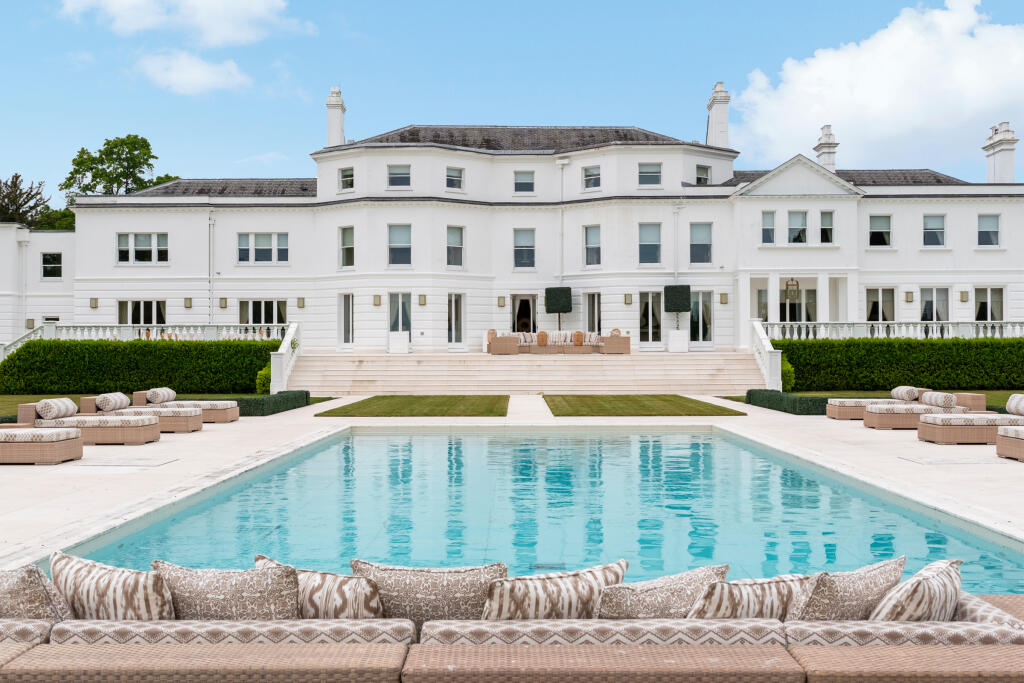
A fresh crop of listings featuring private swimming pools has hit the UK market this month, spanning everything from converted Surrey manor houses to contemporary new-builds on the fringes of Manchester and Leeds. While a poolside home might sound like a lifestyle indulgence rather than hard news, the resurgence of pool-equipped properties on the market is a useful barometer of where confidence - and capital - is concentrating in the prime and upper-mid residential sectors.
The pandemic permanently recalibrated buyer priorities, and five years on the data still bears this out. Rightmove's search analytics have consistently shown "swimming pool" among the top ten most-searched property features since 2021, and agents report that homes with pools in the £750,000-plus bracket are commanding asking-price premiums of 8–12% over comparable properties without them. In Surrey and the wider commuter belt - traditionally the epicentre of the UK's private pool stock - this premium is even more pronounced given proximity to London and access to excellent schools, with some Wentworth and Virginia Water properties fetching seven-figure sums partly on the strength of leisure facilities alone.
Regionally, the picture diverges sharply. In London and the South East, pools remain the preserve of genuine prime property - think Holland Park basements with subterranean leisure complexes, or Surrey estates with heated outdoor pools set in several acres. Further north, the story is different but arguably more interesting for investors: Manchester, Leeds and Newcastle have all seen a rise in new-build developments incorporating shared or private pool amenities as part of premium apartment schemes, reflecting developers' efforts to differentiate stock in an increasingly competitive build-to-rent and build-to-sell landscape. Birmingham's regeneration zones, particularly around Edgbaston and the Jewellery Quarter, are seeing similar amenity-led positioning aimed at professional tenants and owner-occupiers alike.
For buy-to-let landlords, the calculus around pool-equipped properties is nuanced. Private pools add ongoing maintenance costs - typically £2,000 to £4,000 annually for heating, chemicals and upkeep - that erode net yields unless the asset commands a rental premium sufficient to offset them. Landlords targeting the executive lettings market, particularly in Surrey and prime London postcodes, can often justify this outlay, with rents on pool-equipped executive homes running 15–20% above equivalent stock. However, in mainstream regional markets, a private pool is frequently a liability rather than an asset when it comes to resale, narrowing the buyer pool and adding void-period risk. This is a critical distinction for investors chasing yield versus those chasing capital appreciation through lifestyle-led prime assets.
First-time buyers are, unsurprisingly, largely priced out of this segment, but the trend is not irrelevant to them. As affluent movers trade up into pool-equipped homes, they release a tranche of well-specified three- and four-bedroom family houses back into the market - a filtering effect that eases supply pressure in the £400,000–£600,000 bracket across commuter towns in Surrey, Berkshire and Cheshire. Developers, meanwhile, are increasingly building amenity-rich schemes with shared pools, gyms and co-working spaces rather than private pools per se, recognising that shared leisure infrastructure delivers similar marketing cachet at a fraction of the per-unit cost - a trend likely to accelerate across Manchester, Leeds and Liverpool city-centre schemes through 2025 and into 2026.
Looking ahead, expect the premium commanded by pool-equipped and amenity-rich homes to hold steady or grow modestly over the next 6–12 months, particularly as mortgage rates stabilise and discretionary movers re-enter the market with renewed confidence. The Bank of England's gradual rate-cutting trajectory should support transaction volumes in the £750,000-plus bracket specifically, a segment less sensitive to affordability constraints than mainstream housing. Commercial investors and developers eyeing the build-to-rent sector should treat wellness and leisure amenities not as optional extras but as core differentiators in an increasingly saturated new-build market, particularly in regional cities where competing schemes are numerous.
Ultimately, the pool-home trend is less about swimming and more about signalling: it marks where discretionary wealth is being deployed, which regions are attracting lifestyle-driven relocation, and how developers are repositioning stock to justify premium pricing in a market where buyers increasingly demand more than four walls and a roof. Investors who read these signals correctly - distinguishing genuine yield-enhancing amenities from cosmetic luxury - will be better positioned to capitalise on the prime and upper-mid market's continued resilience through 2025.
Key Takeaways
- Homes with private pools in the £750,000-plus bracket command an 8–12% asking-price premium, strongest in Surrey and prime London postcodes.
- Buy-to-let landlords should weigh £2,000–£4,000 annual upkeep costs against achievable rental premiums before acquiring pool-equipped stock.
- Developers in Manchester, Leeds, Liverpool and Birmingham are favouring shared leisure amenities over private pools to maximise marketing appeal at lower per-unit cost.
- Trade-up activity among affluent buyers is releasing well-specified family homes in the £400,000–£600,000 range back into commuter-belt markets, benefiting move-up buyers.
- Expect continued resilience in the prime amenity-led segment through 2025 as interest rates ease, with wellness features becoming a core differentiator in new-build schemes.


