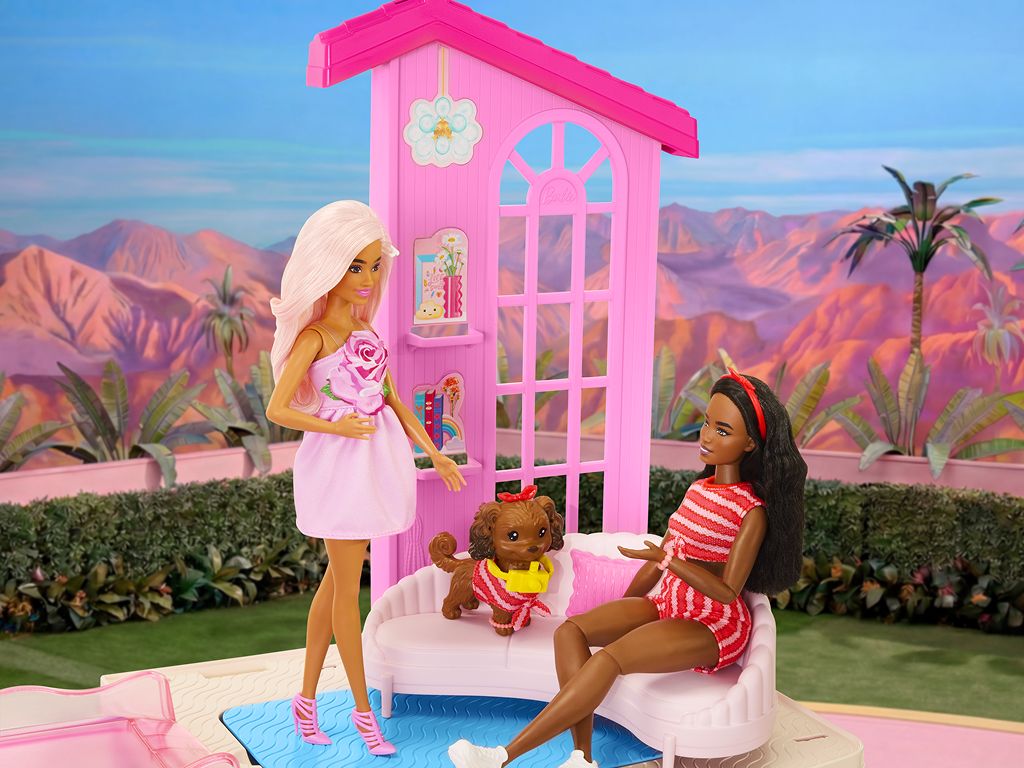
Rightmove's decision to list a life-size Barbie DreamHouse might read as harmless brand fluff, but it lands at a telling moment for the UK property industry. With transaction volumes still running roughly 15-18% below the pre-2022 average and mortgage approvals only gradually recovering, portals and agents are under intense pressure to generate engagement in a market where genuine buyer appetite remains fragile. A pink-clad publicity stunt that pulls in millions of impressions is not a distraction from the serious business of property marketing - it is now central to it.
Rightmove commands roughly 86% of UK property portal traffic, according to its own investor disclosures, and that dominance gives it enormous influence over how homes are discovered, priced psychologically, and ultimately sold. Novelty listings such as the Barbie DreamHouse function as top-of-funnel marketing: they drive traffic spikes that agents and developers increasingly rely on to offset the cooling effect of higher-for-longer interest rates. For an industry that spent much of 2023 and 2024 watching enquiry volumes fall by double digits year-on-year in several regional markets, a viral moment that briefly reasserts the primacy of visual appeal over yield calculations is commercially valuable, even if the underlying property itself never transacts.
There is also a genuine market signal buried beneath the marketing gloss. Colour and aesthetic trends do move property values, particularly in the premium and lifestyle segments. Estate agents in Brighton, Notting Hill and parts of coastal Cornwall have long reported a measurable premium - often cited at 5-8% - for pastel-fronted terraces and period homes with distinctive kerb appeal, precisely because such properties photograph well on portals and generate disproportionate click-through rates. The Barbiecore aesthetic that dominated retail and interiors in 2023 has filtered into home staging services, with agents in London and Surrey increasingly advising vendors to introduce warm pinks, curved furniture and maximalist styling to appeal to younger, image-conscious buyers browsing on mobile devices.
That generational shift matters more than sceptics might assume. First-time buyers under 35, who now account for around 30% of mortgaged purchases according to UK Finance data, spend considerably more time browsing portals before ever contacting an agent, and they are demonstrably more responsive to lifestyle-led marketing than previous cohorts. For developers in Manchester, Leeds and Birmingham building build-to-rent and shared-ownership schemes aimed squarely at this demographic, the lesson from stunts like the Barbie listing is not to chase novelty for its own sake, but to recognise that emotional, visually driven marketing converts browsers into leads far more effectively than a dry schedule of floor areas and service charges.
For buy-to-let landlords and commercial investors, the implications are more indirect but still relevant. Portal engagement data increasingly feeds into how agents price and market rental stock, particularly in competitive city-centre markets such as Liverpool and Newcastle, where voids have narrowed to under three weeks on average for well-presented properties. Landlords who invest modestly in staging and photography - the unglamorous cousin of a Barbie DreamHouse campaign - continue to see faster lettings and, in some cases, rental premiums of 3-5% over comparable unstaged units. The stunt is a reminder that presentation is not cosmetic indulgence but a quantifiable driver of yield.
Looking ahead six to twelve months, expect portals and larger agency networks to lean further into experiential and pop-culture-adjacent marketing as they compete for a limited pool of serious buyers amid subdued transaction activity. Rightmove's forthcoming reporting season will be watched closely for evidence that such campaigns translate into sustained traffic growth rather than one-off spikes, particularly as it faces intensifying competition from Zoopla and newer entrants offering cheaper listing models. Developers marketing new-build schemes in regional growth corridors - the Manchester-Leeds arc, greater Birmingham, and outer London commuter towns - should take note that aesthetic storytelling, not just price and location data, is becoming a genuine differentiator in a market where buyers have more choice and less urgency than at any point since 2019.
Key Takeaways
- Viral portal marketing, however lighthearted, reflects genuine pressure on Rightmove and agents to generate engagement amid transaction volumes still 15-18% below pre-2022 levels.
- Kerb appeal and aesthetic staging carry a measurable market premium - 5-8% in lifestyle-driven markets such as Brighton and Notting Hill, and 3-5% rental uplift for well-presented lettings.
- Younger, image-led buyers now make up roughly 30% of mortgaged purchases, making emotionally driven marketing increasingly important for developers in Manchester, Leeds and Birmingham.
- Landlords and vendors should treat professional staging and photography as a quantifiable investment in yield and sale speed, not a discretionary cost.


