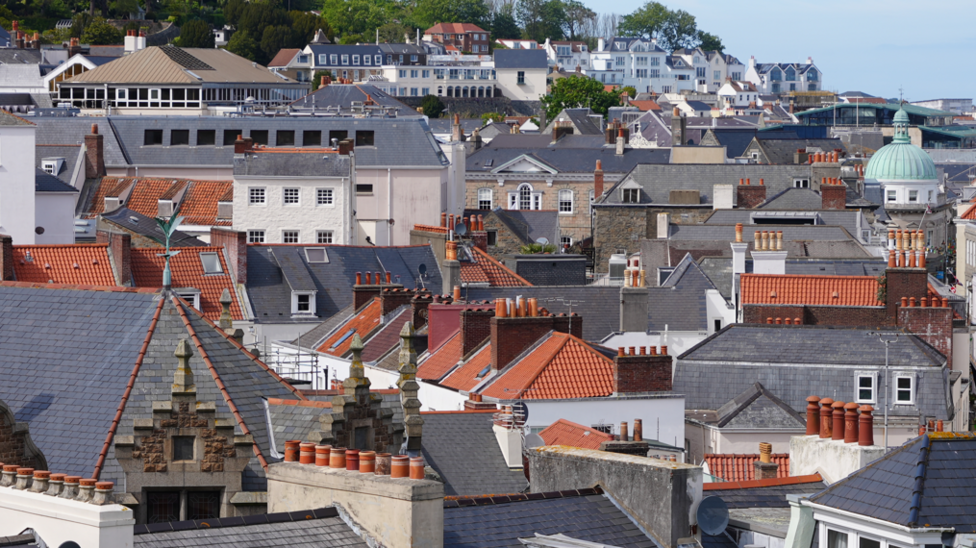
The average price of a house on Guernsey reached just under £609,000 in the second quarter of 2026, marking a 20% increase since 2021 and underscoring the resilience of the Channel Islands property market even as mainland UK growth has cooled sharply. To put that figure in perspective, it sits more than double the current UK national average of roughly £290,000, and comfortably above even London's premium boroughs in percentage terms of local income. For a jurisdiction with a population of under 65,000 and a land area of just 24 square miles, this is a striking demonstration of how constrained supply, favourable tax treatment and international capital flows can combine to produce sustained price inflation regardless of wider macroeconomic headwinds.
Guernsey's housing market operates on a dual structure that UK investors often misunderstand: the 'Local Market', reserved for residents with island housing licences, and the much smaller 'Open Market', accessible to non-residents and international buyers, which behaves more like a prime international asset class than a conventional housing market. It is largely the Open Market segment—along with high-net-worth relocations attracted by Guernsey's 20% income tax cap, absence of capital gains tax, and no inheritance tax—that has driven headline averages upward. This mirrors dynamics seen in Surrey's premium commuter belt and parts of prime central London, where finite supply and wealthy buyer pools decouple pricing from broader affordability metrics tied to local wages.
For UK-based buy-to-let landlords and portfolio investors, the Guernsey figures serve as a useful counterpoint to the softer conditions seen across Manchester, Birmingham, Leeds and Liverpool, where price growth has moderated to low single digits amid higher mortgage rates and tighter lending criteria. Guernsey's insulation from UK stamp duty land tax—replaced locally by document duty—and its independent monetary and fiscal framework mean it does not experience the same immediate transmission of Bank of England rate decisions, giving it a distinct risk profile. Investors seeking geographic diversification away from mainland volatility have increasingly looked to the island, though liquidity remains a genuine constraint: transaction volumes are a fraction of even a mid-sized English city, meaning price discovery can be lumpy and unrepresentative from quarter to quarter.
The 20% five-year uplift also raises pointed questions about affordability for Guernsey's own resident workforce, a tension increasingly familiar to policymakers in Newcastle and other UK regional centres grappling with investor-driven price inflation outpacing local wage growth. With housing licence allocations tightly controlled and new-build land essentially fixed, the Local Market faces its own version of Britain's supply crisis, but without the option of large-scale greenfield development that has, however imperfectly, helped ease pressure in commuter towns around Manchester and Leeds. This structural inflexibility suggests Guernsey's price growth is unlikely to reverse meaningfully even if UK mainland conditions soften further.
Looking ahead six to twelve months, expect the gap between Guernsey's Open Market pricing and UK regional averages to widen further, particularly if the Bank of England holds rates higher for longer and mainland transaction volumes stay subdued. Developers eyeing the island's tightly regulated Open Market should anticipate continued demand from relocating professionals in finance and fintech, sectors Guernsey has actively courted, alongside UK-based wealth seeking tax-efficient second homes. Commercial investors should note that residential strength on the island typically correlates with renewed appetite for prime retail and office space in St Peter Port, though absolute deal volumes will remain modest by UK city standards.
The broader lesson for UK property professionals is that Guernsey functions less as a barometer for national housing trends and more as a specialist, tax-driven asset class operating on its own cycle. Investors treating it as a diversification play rather than a growth proxy for the UK market will find the current data supportive; those expecting correlation with mainland affordability pressures will be disappointed. With supply structurally capped and demand underpinned by fiscal advantages unavailable anywhere in mainland Britain, Guernsey's average house price is more likely to test £650,000 within eighteen months than to correct meaningfully downward.
Key Takeaways
- Guernsey's average house price hit £609,000 in Q2 2026, up 20% since 2021 and more than double the UK national average.
- The island's dual Local/Open Market structure means headline growth is heavily influenced by wealthy international buyers rather than resident demand.
- Guernsey's tax advantages—no capital gains tax, no inheritance tax, 20% income tax cap—insulate it from UK rate cycles, making it a diversification play rather than a UK market proxy.
- Structurally fixed land supply means affordability pressure for local residents is likely to intensify, echoing supply-constrained UK regional markets like Manchester and Leeds.
- Prices are more likely to approach £650,000 within 18 months than to correct, given sustained demand from relocating professionals and HNW buyers.

