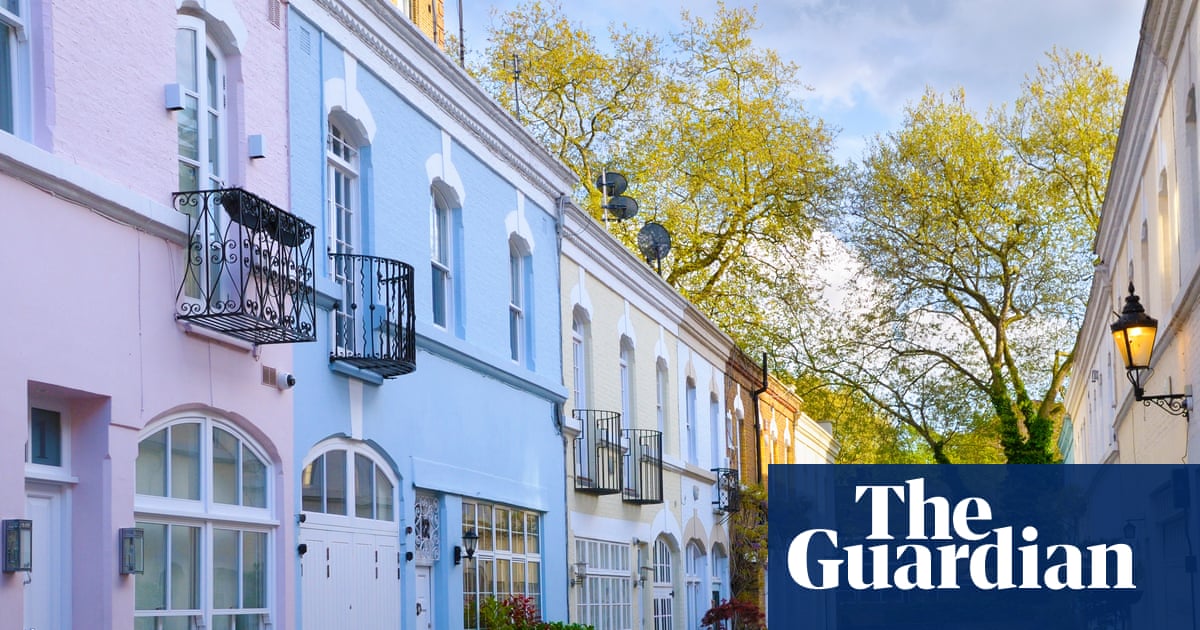
The average asking price for a newly listed home in Kensington and Chelsea has fallen by almost £100,000 in a single month, according to new Rightmove data, in one of the clearest signs yet that even Britain's most rarefied postcode is no longer immune to buyer resistance. Nationally, newly listed asking prices dropped 2% over the same period — the sharpest August fall in eight years — confirming that the correction in seller expectations is broadening well beyond prime central London into the mainstream market.
This matters enormously for UK property investors because asking price data is the earliest and most sensitive barometer of seller psychology. Unlike completed sales figures, which lag the market by two to three months, newly listed prices show what vendors believe they can achieve today. A £100,000 drop in Kensington and Chelsea — where average asking prices typically sit somewhere between £1.85 million and £1.95 million — signals that even ultra-high-net-worth sellers, who have historically been the most resistant to negotiating downward, are now recalibrating in real time. Estate agents in the borough report that landlord purchasers, in particular, are submitting aggressive lowball offers and, crucially, having them accepted, something that would have been unthinkable during the pandemic-era scramble for space.
The mechanics behind this shift are straightforward. Years of elevated mortgage rates, higher stamp duty surcharges on additional properties, and tighter lending criteria have thinned the pool of cash-rich buyers willing to pay top price, even in prime London. At the same time, an overhang of stock — driven partly by landlords exiting the sector amid tax changes to mortgage interest relief and the abolition of Section 21 — has tilted negotiating power firmly towards buyers. Sellers who priced ambitiously in spring, hoping for a rate cut to reignite demand, are now discounting sharply to secure a sale before the autumn market becomes even more crowded.
The regional picture is more nuanced but tells a consistent story. In Manchester and Birmingham, where investor demand has remained comparatively robust thanks to strong rental yields and city-centre regeneration, asking price growth has slowed rather than reversed, with vendors trimming expectations by low single digits rather than six figures. Leeds and Liverpool, both popular with buy-to-let landlords chasing yield over capital growth, are seeing similar moderation, with agents reporting longer time-to-sale rather than outright price collapses. Newcastle remains something of an outlier, with affordability still attracting first-time buyers priced out of the South, sustaining modest price resilience. Surrey and the wider commuter belt, by contrast, are beginning to mirror the London pattern, as family homes above £1 million face the same buyer pushback now evident in Kensington and Chelsea, only with a lag of a few months.
For buy-to-let landlords, this environment is double-edged. Acquisition costs are falling, particularly in London where yields have long been squeezed by high capital values, potentially improving the arithmetic for portfolio expansion. But landlords selling up — and many are, given the tax and regulatory burden introduced since 2016 — are absorbing losses on paper gains accumulated over the past decade. First-time buyers, meanwhile, stand to benefit most directly from softening asking prices, particularly if the Bank of England delivers further base rate cuts before year-end, improving mortgage affordability at precisely the moment sellers are becoming more negotiable. Developers face a trickier calculus: new-build pricing in prime London schemes will need to reflect the discounting seen in the secondhand market, squeezing margins on projects underwritten when land was acquired at higher values two or three years ago.
Looking ahead six to twelve months, expect the correction to deepen before it stabilises. Rightmove's data typically leads completed transaction prices by a quarter, meaning the true scale of the Kensington and Chelsea adjustment will not show up in Land Registry figures until early 2026. If mortgage rates continue easing gradually and the anticipated autumn Budget avoids further tax shocks to landlords, transaction volumes should recover modestly, but pricing power will remain firmly with buyers well into next spring. Commercial investors eyeing prime residential-linked assets, including serviced apartment blocks and build-to-rent schemes in London zones one and two, should treat current asking prices as negotiable starting points rather than fair value, given the clear evidence that vendors are now prepared to move substantially to secure a deal.
The broader lesson for the market is that even the most insulated segments of UK property are subject to the same supply-demand pressures affecting everywhere else. Kensington and Chelsea's £100,000 monthly price fall is not an isolated curiosity but the leading edge of a national recalibration, and investors who continue pricing assets on 2022-2023 assumptions risk being left holding stock nobody wants to buy at the number they've chosen.