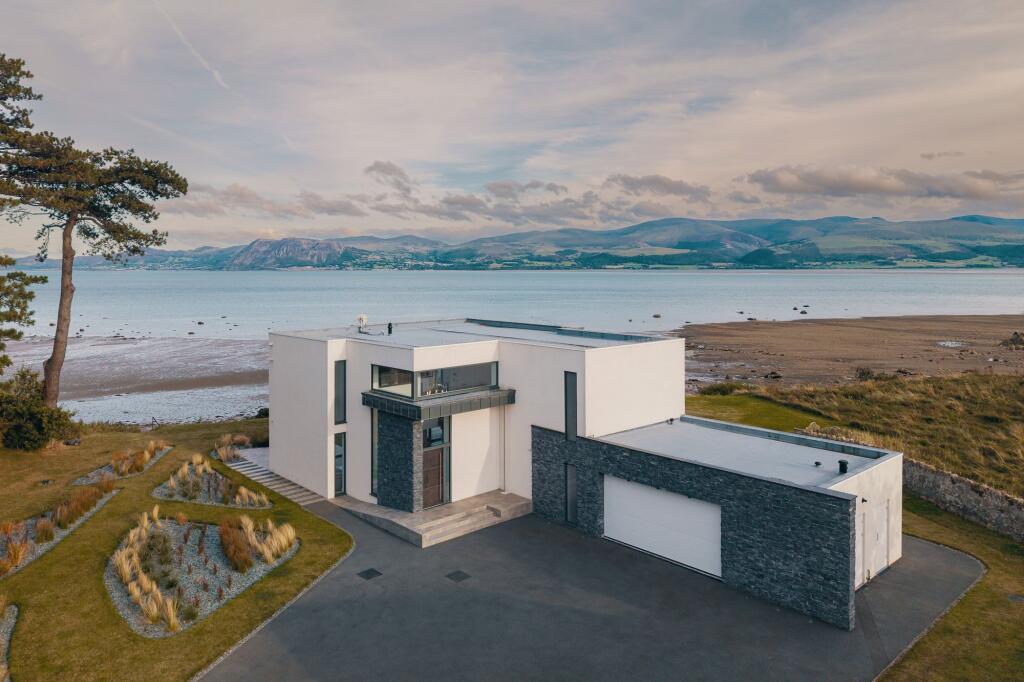
The latest batch of waterside properties to hit the market — spanning canal-side conversions, riverfront period homes and coastal apartments — is a timely reminder that not all corners of the UK housing market are behaving the same way. While the broader sales market has spent much of the past year navigating higher mortgage rates and cautious buyer sentiment, homes with a water view continue to command a premium that has proved remarkably sticky. Industry estimates suggest waterside properties typically sell for between 10% and 20% more than comparable inland homes, and in the most desirable stretches of the Thames Valley or the Norfolk Broads, that premium can climb well beyond 25%.
For UK property investors, this matters because it points to a segment of the market where scarcity value is doing the heavy lifting that broader economic conditions cannot. Waterside land is, by definition, finite. Planning restrictions around flood zones, conservation areas and riverbank access mean supply cannot simply expand to meet demand, even as buyer appetite for lifestyle-driven purchases has grown since 2020. That structural imbalance has kept prices firmer in this niche than in the wider market, where Rightmove and Halifax data have both pointed to average asking prices flattening or dipping modestly through parts of 2023 and 2024.
Regionally, the picture is varied and instructive. In London and Surrey, riverside apartments along the Thames — particularly around Richmond, Kingston and the emerging Nine Elms stretch — continue to attract both domestic downsizers and overseas capital, with agents reporting sustained interest despite stamp duty surcharges on additional properties. In Manchester, the regeneration of the Salford Quays and Castlefield canal basins has turned once-industrial waterways into some of the city's most sought-after rental postcodes, with buy-to-let yields on waterside apartments often outperforming the city average of around 6.5%. Liverpool's Albert Dock and the wider Baltic Triangle waterfront have followed a similar trajectory, while in Newcastle, the Quayside continues to draw young professionals priced out of comparable riverside stock in the South East. Birmingham's canal network, once overlooked, is now central to major regeneration schemes tied to HS2, lending waterside units there a speculative appeal for developers betting on infrastructure-led uplift.
For buy-to-let landlords, waterside stock presents a mixed but generally favourable case. Tenant demand for these properties tends to be resilient because the lifestyle appeal — outdoor space, views, walking routes — resonates strongly with the hybrid-working professional cohort that has become the dominant tenant profile in regional cities. However, landlords need to factor in higher insurance costs, particularly where flood risk assessments apply, and lenders have become notably more conservative in stress-testing mortgage applications on properties within flood zones since the Environment Agency updated its risk mapping in recent years. First-time buyers, by contrast, are largely being priced out of true waterside locations in the South East, but are finding realistic entry points in northern cities where regeneration has only recently begun to reprice canal and riverside stock.
Looking ahead six to twelve months, the direction of travel for this segment looks broadly positive relative to the mainstream market. With the Bank of England widely expected to continue easing interest rates gradually through 2025, mortgage affordability should improve marginally, and lifestyle-premium properties tend to benefit disproportionately when confidence returns, because they sit higher up the aspirational ladder. Commercial investors and developers are already positioning for this: waterside regeneration schemes in Leeds' South Bank and Birmingham's Digbeth canal corridor are attracting institutional capital precisely because the water frontage is seen as a durable differentiator in an otherwise crowded new-build market. Developers who can secure waterside or canal-adjacent land, even in secondary cities, are likely to enjoy pricing power that inland schemes simply cannot replicate.
The broader lesson for investors is that location-specific scarcity remains one of the few reliable hedges against a choppy national market. Waterside property will not insulate any portfolio entirely from rate cycles or regional demand shifts, but the consistent premium it commands — across London, Manchester, Liverpool and beyond — reflects a durable preference that has survived a pandemic, a rate-hiking cycle and a cost-of-living squeeze. Investors seeking resilience in the next phase of the cycle would do well to look at where water meets regeneration, rather than water alone.
Key Takeaways
- Waterside homes typically command a 10–20% price premium over comparable inland properties, rising above 25% in prime Thames Valley locations.
- Regeneration-linked waterfronts in Manchester, Liverpool, Newcastle and Birmingham offer stronger buy-to-let yields and growth potential than mature southern waterside markets.
- Landlords should budget for higher insurance and stricter mortgage stress-testing on properties in flood risk zones.
- Developers targeting canal or riverside land near regeneration schemes are best placed to capture pricing power as interest rates ease through 2025.


