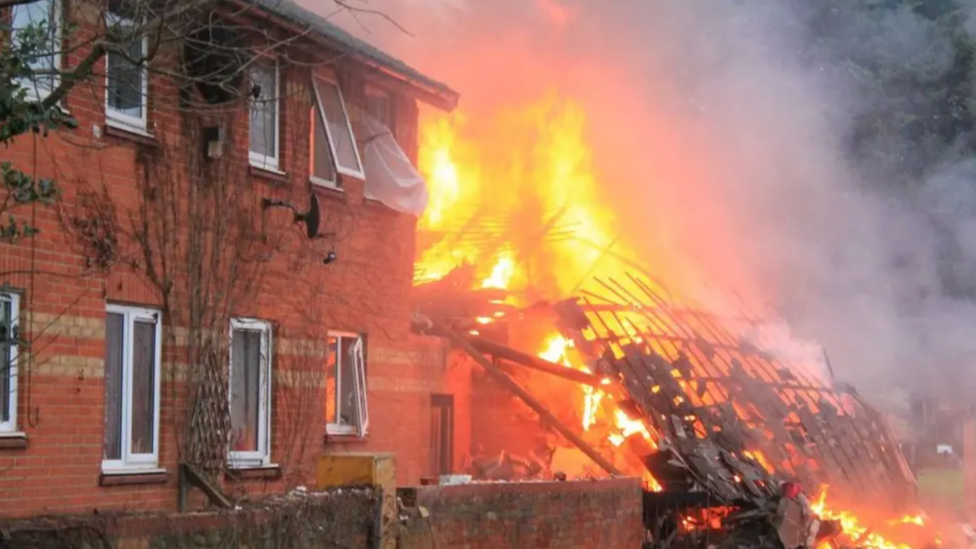
Work is set to resume on Gibb Crescent, the residential street where a gas explosion in 2017 killed one man and destroyed three flats, after nearly seven years in which the site has stood derelict. The blast, one of the most serious domestic gas incidents in recent memory, triggered a lengthy investigation, protracted insurance negotiations and a planning process that only concluded in the last eighteen months. For the wider property industry, the story is less about a single tragic incident than about what happens to an asset's value when redevelopment stalls indefinitely — and what that means for owners, insurers and neighbouring markets in the meantime.
The commercial reality of a seven-year hiatus is stark. Construction costs across the UK have risen by roughly 30–35% since 2017, according to Building Cost Information Service data, meaning any rebuild now carries a materially higher price tag than would have been the case had work started promptly after the incident. For the freeholder and any leaseholders awaiting compensation or reinstatement, that inflation has almost certainly eroded the real value of insurance settlements agreed years earlier, a problem increasingly common wherever major incident sites — fire, subsidence, structural failure — sit in limbo while liability and cover are contested. Landlords and investors holding damaged or blighted property should take note: prolonged insurance disputes are not merely an inconvenience but a direct hit to eventual reinstatement value.
There is also a planning dimension worth examining closely. Sites that suffer catastrophic damage frequently require entirely fresh consent rather than simple reinstatement, particularly where gas supply infrastructure, structural design or fire safety standards have changed in the interim. Since 2017, building regulations have tightened considerably following the Grenfell Tower inquiry, meaning any rebuild on Gibb Crescent will need to meet standards — around means of escape, compartmentation and gas safety isolation — that did not exist when the original flats were constructed. This is not an isolated quirk. Developers across Greater Manchester, Merseyside and West Yorkshire report that post-incident or post-fire rebuilds now routinely cost 15–20% more than comparable new-build schemes precisely because of retrofitted safety compliance, even before labour and materials inflation is factored in.
The regional context matters too. Greater Manchester's residential market has been one of the strongest performers outside London over the past decade, with flat values in commuter towns around Oldham, Rochdale and Bury rising by an average of 4–6% annually even through periods of broader market softness. A derelict, boarded-off site sitting empty for seven years does more than represent a lost asset for its owner — it depresses confidence and, in some cases, values on the immediate street, an effect well documented by surveyors assessing comparable sales near long-term development blight. Contrast this with Manchester city centre, where institutional build-to-rent capital has poured into replacement stock at pace, or with Leeds and Birmingham, where similar high-density schemes rarely sit stalled for more than 18 months once insurance and planning are resolved. Gibb Crescent is therefore something of an outlier, and a cautionary one.
For buy-to-let landlords and small-scale investors, the episode is a reminder to scrutinise buildings insurance terms far more carefully than is typical, particularly around reinstatement cost cover versus indemnity value, and to understand how disputes over liability — in this case reportedly linked to gas supply infrastructure — can hold up payouts for years rather than months. First-time buyers considering ex-local-authority or older flatted stock in similar northern towns should likewise factor in the possibility, however remote, that structural or safety incidents can freeze an entire building's value chain long after the physical damage itself has been cleared. Commercial and institutional investors, meanwhile, will read this as further evidence that pre-acquisition due diligence on gas and electrical infrastructure in older residential blocks is not a box-ticking exercise but a genuine underwriting consideration, especially as insurers become more selective about covering ageing housing stock with legacy gas systems.
Looking ahead, the resumption of work at Gibb Crescent should be read as part of a broader normalisation across the UK's stalled-sites landscape. Local authorities, under pressure to meet housing delivery targets, are increasingly proactive in pushing owners of blighted or dormant sites toward resolution, using compulsory purchase powers or planning enforcement where necessary. Expect more of these long-frozen sites — in Newcastle's older terraced stock, in Liverpool's inner suburbs, even in parts of Surrey where legacy infrastructure disputes have held up smaller schemes — to reach resolution over the next 12 months as insurers settle outstanding claims and construction cost inflation, while still elevated, stabilises enough to make rebuild economics viable again. The lesson for the market is unambiguous: incidents of this kind are rare, but their financial aftershocks — in devalued sites, contested insurance and compliance-driven cost inflation — can outlast the physical damage by years, and investors ignoring that tail risk do so at their peril.
Key Takeaways
- Redevelopment following major incidents can stall for years due to insurance disputes and evolving building regulations, eroding reinstatement value in real terms.
- Construction cost inflation of 30–35% since 2017 means delayed rebuilds now cost significantly more than if work had started promptly.
- Post-incident rebuilds typically require compliance with post-Grenfell safety standards, adding 15–20% to costs versus standard new-build schemes.
- Investors and landlords should scrutinise buildings insurance reinstatement terms and gas infrastructure risk, particularly in older northern housing stock.
- Expect more long-stalled sites across Greater Manchester, Merseyside and the North East to reach resolution over the next 12 months as insurers and councils push for closure.


