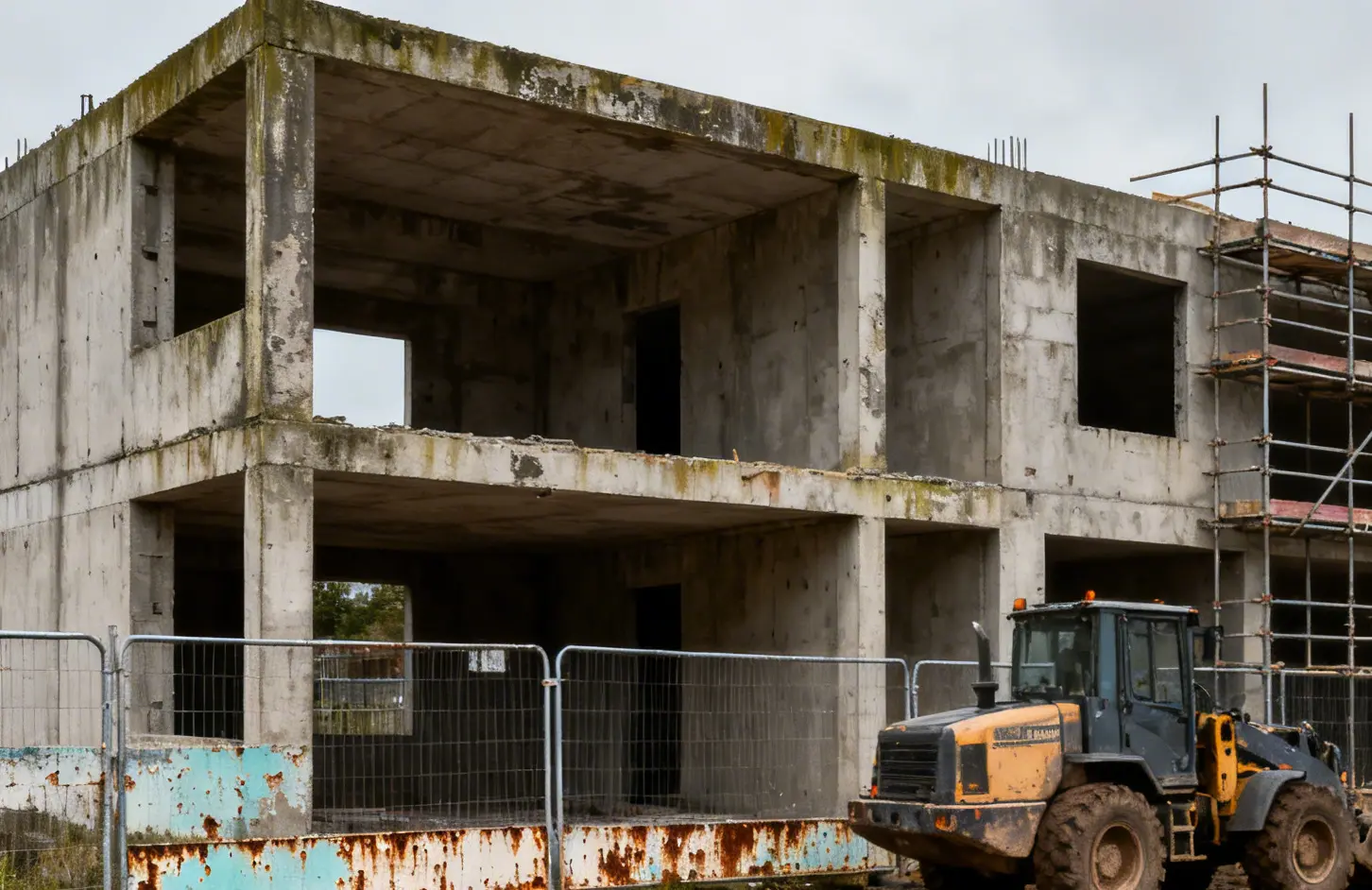
The UK property development sector has ground to a near-standstill, with new construction projects collapsing by 33% in the three months to February according to Glenigan data. This dramatic contraction, concentrated heavily among major schemes valued above £100 million, represents the sharpest quarterly decline since the 2008 financial crisis and signals profound supply constraints building across residential and commercial markets for 2024 and beyond.
The freeze in large-scale development activity carries immediate implications for Britain's regional property markets, where major schemes typically anchor broader regeneration efforts. Cities like Manchester, Birmingham, and Leeds - which have relied on substantial mixed-use developments to drive their property market momentum - now face significant gaps in their forward supply pipelines. In Manchester's city centre alone, three major residential towers totalling over 1,200 units have been shelved since January, whilst Birmingham's commercial development pipeline has contracted by an estimated 40% as institutional investors retreat from speculative office schemes.
Buy-to-let investors should prepare for a supply-constrained market that will likely drive rental yields higher across key regional centres over the next 12-18 months. The collapse in new residential construction starts, combined with continued population growth in major cities, creates a fundamental supply-demand imbalance that historically translates into rental growth of 8-12% annually. Northern powerhouse cities like Liverpool and Newcastle, where development margins were already tight, will see the most pronounced effects as smaller developers abandon marginal schemes entirely.
The commercial property sector faces even steeper challenges, with office and retail developments bearing the brunt of the construction slowdown. Institutional investors have withdrawn from speculative development across multiple asset classes, creating a two-tier market where only pre-let schemes with blue-chip tenants can secure funding. This selectivity will reshape Britain's commercial property landscape, particularly in secondary cities where speculative development has historically driven supply growth. The result will be acute shortages of Grade A office space by 2026, potentially driving prime rents up by 15-20% in markets like Manchester and Birmingham.
First-time buyers face a paradoxical situation where reduced construction activity may initially benefit existing homeowners through price stability, but will create severe affordability pressures by 2025-26. The housing delivery pipeline, already struggling to meet government targets of 300,000 new homes annually, will fall further behind as major housebuilders focus resources on land banking rather than active development. Regional markets outside London - which had begun showing signs of affordability improvement - will likely see this progress reversed as new supply dwindles.
Looking forward, the construction sector's retrenchment reflects broader structural changes in development finance rather than temporary market volatility. Rising construction costs, elevated borrowing rates, and reduced institutional appetite for development risk have created a funding environment that favours only the most robust schemes. Developers with strong balance sheets will emerge from this period with significant competitive advantages, having acquired sites at discounted prices whilst weaker competitors exited the market.
The implications extend well beyond immediate supply constraints. Britain's property market is entering a phase where development activity becomes increasingly concentrated among major players, potentially reducing competition and innovation in the sector. Regional authorities banking on private sector-led regeneration must now consider more direct intervention to maintain development momentum, whilst property investors should position for a market characterised by supply scarcity and rising asset values driven by fundamental shortage rather than speculative demand.
Key Takeaways
- Supply constraints will drive rental yields higher by 8-12% annually across regional cities as new residential construction stalls
- Commercial property faces acute Grade A office shortages by 2026, with prime rents set to rise 15-20% in Manchester and Birmingham
- First-time buyers will see affordability gains reversed by 2025-26 as housing delivery falls further behind 300,000 annual target
- Development market consolidation favours major players with strong balance sheets over smaller regional developers


