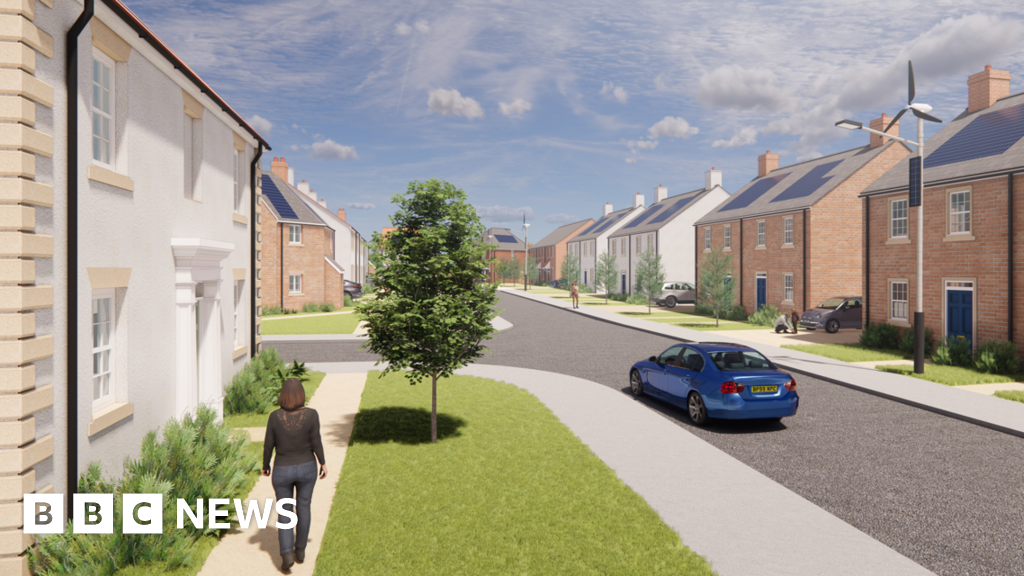
A Somerset housing development that has committed to delivering 100% affordable homes represents a watershed moment for the UK development sector, highlighting how deteriorating market conditions are compelling builders to abandon private sales entirely. This strategic pivot reflects the harsh arithmetic facing developers across England: with mortgage rates still elevated above 5% and house prices stagnating, the guaranteed income streams from registered providers and local authorities now offer more attractive returns than speculative private sales.
The Somerset scheme exemplifies a broader recalibration occurring throughout regional development markets, where builders are increasingly recognising that affordable housing delivers superior risk-adjusted returns. Registered providers typically offer upfront payments of 60-70% of market value, with the remainder secured through long-term management agreements. For developers facing construction cost inflation of 15-20% since 2022, this model provides crucial cash flow certainty that private sales cannot match in current conditions. The shift is particularly pronounced outside London, where house price growth has stalled in cities including Birmingham, Leeds, and Newcastle, making the affordable housing route increasingly compelling.
This transition carries profound implications for regional property investment strategies, particularly in secondary cities where buy-to-let investors have traditionally competed with owner-occupiers for new-build stock. Manchester and Liverpool have witnessed similar developments pivoting towards 100% affordable delivery, effectively removing entire schemes from the private investment market. The consequence is a tightening of available stock for portfolio landlords, who must now compete more intensively for existing properties or seek opportunities in markets where developers maintain mixed tenure approaches.
The regulatory framework surrounding affordable housing is simultaneously driving and enabling this shift, with local planning authorities increasingly willing to accept 100% affordable schemes that exceed their standard Section 106 requirements. Somerset County Council's planning committee approved this development with minimal debate, recognising that affordable housing delivery addresses acute local need whilst generating substantial council tax revenue. This regulatory acceptance is spreading to authorities across the South West, Midlands, and North, creating a pathway for developers to pursue affordable-focused strategies without planning complications.
For institutional investors and pension funds, this development model presents compelling opportunities that contrast sharply with the challenges facing traditional residential investment. Affordable housing offers index-linked rental growth, minimal void periods, and government-backed tenant security that private rental cannot match. Legal & General and Lloyds Banking Group have already committed over £2 billion to affordable housing investment vehicles, recognising that this sector delivers stable 4-5% yields with inflation protection. The Somerset approach suggests that entire development programmes could shift towards this institutional model, fundamentally altering the structure of regional housing supply.
The implications extend beyond individual developments to reshape entire local housing ecosystems, particularly in areas where affordability ratios exceed eight times median earnings. Surrey and parts of the South West face acute affordability challenges that make private sales increasingly unviable for local buyers, whilst affordable housing provides a viable homeownership route through shared ownership and rent-to-buy schemes. Developers pursuing 100% affordable approaches can deliver homes priced 30-40% below market rates whilst maintaining commercial viability through grant funding and cross-subsidy mechanisms.
This strategic realignment positions affordable housing as the primary growth engine for UK residential development over the next 18 months, driven by economic fundamentals that favour guaranteed returns over market speculation. The Somerset model will likely proliferate across regional markets where private sale values cannot support development costs, creating a parallel housing economy focused on social and intermediate tenures. Developers, investors, and local authorities that recognise and adapt to this shift will capture significant opportunities, whilst those clinging to traditional private sale models face increasing commercial pressure in deteriorating market conditions.
Key Takeaways
- 100% affordable housing developments offer superior risk-adjusted returns compared to private sales in current market conditions
- Regional markets including Birmingham, Leeds, and Newcastle are witnessing similar pivots away from private development
- Institutional investors can access 4-5% yields with inflation protection through affordable housing investment vehicles
- Planning authorities are actively supporting 100% affordable schemes, removing regulatory barriers for developers


