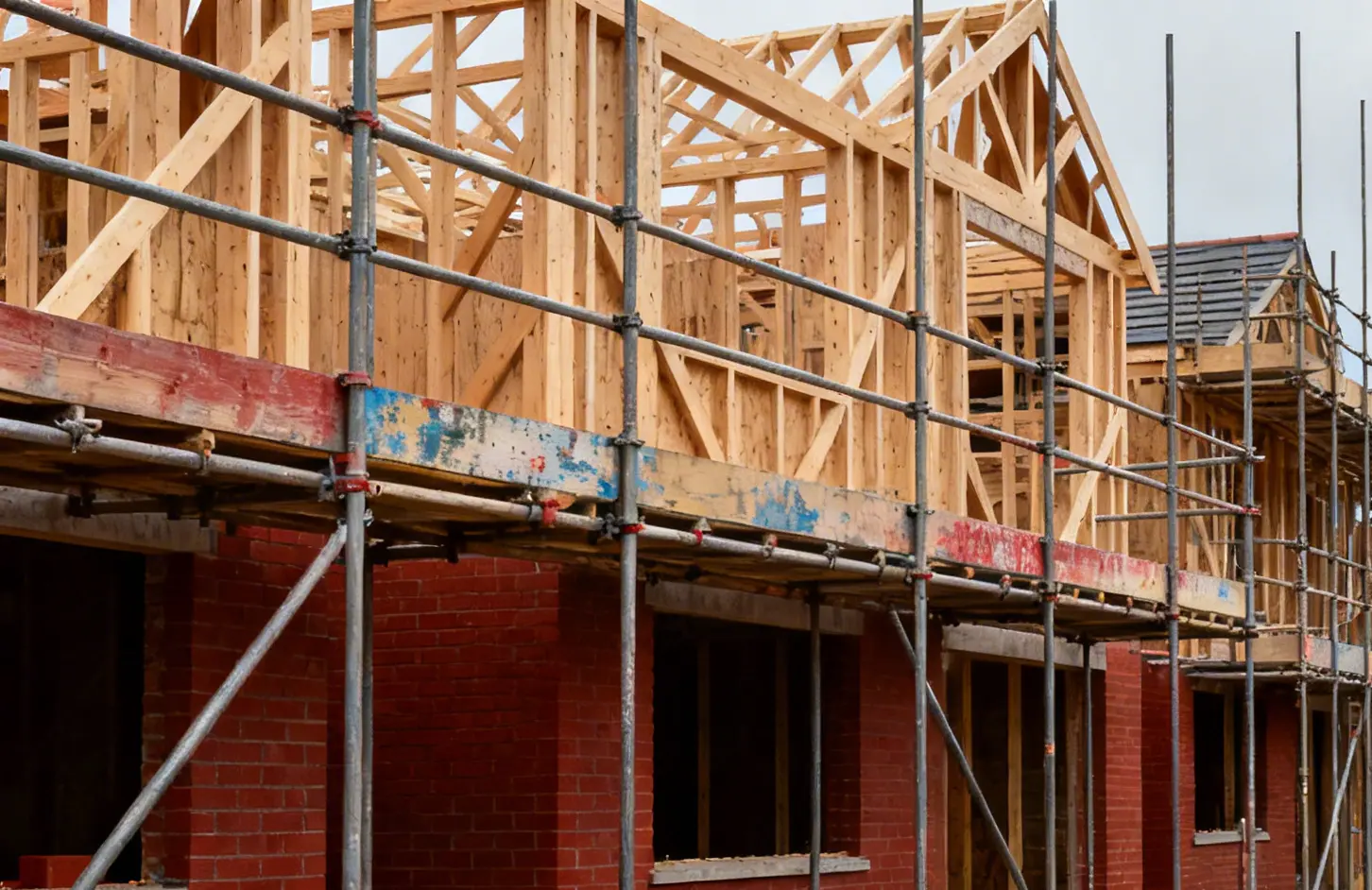
The UK property market faces a critical supply crunch as construction cost inflation exceeding 10 per cent annually threatens to derail both government housing targets and investor returns across residential development projects. Blick Rothenberg's warning highlights a fundamental shift in market dynamics that will force a recalibration of investment strategies and regional priorities. With the government's ambitious target of delivering 1.5 million new homes over the current parliamentary term, this cost inflation represents more than a temporary headwind - it signals a structural challenge that could reshape the housing landscape for years to come.
The mathematics of development viability have deteriorated sharply across key UK markets. In Manchester, where average house prices hover around £195,000, developers previously operated on build costs of approximately £1,200 per square metre. Current inflation rates push these figures toward £1,320 per square metre, compressing margins that were already under pressure from elevated land values and planning delays. Birmingham's residential development sector, traditionally more resilient due to lower land costs, now faces similar pressures with build costs approaching £1,400 per square metre for city centre projects. These increases fundamentally alter the risk-return equation for institutional investors and smaller developers alike.
Regional markets will experience divergent impacts based on their existing price-to-build-cost ratios. London developments, where average selling prices exceed £650,000, retain greater capacity to absorb cost increases through price adjustments. However, northern markets including Liverpool and Newcastle, where average prices remain below £180,000, face immediate viability challenges. Properties that previously delivered 15-20 per cent gross development value now struggle to achieve 8-10 per cent returns, pushing many schemes below institutional investment thresholds. This geographic divergence will accelerate the concentration of new supply in higher-value southern markets, exacerbating regional inequality in housing provision.
The implications extend beyond pure development plays into buy-to-let investment strategies. Reduced new supply in affordable markets strengthens the investment case for existing rental stock, particularly in university cities such as Leeds where rental demand remains robust. Landlords holding properties in areas where new development has become unviable will benefit from artificial scarcity, supporting rental growth and capital appreciation. Conversely, areas that can still support new development - primarily Surrey commuter towns and outer London boroughs - may see rental yield compression as supply continues to flow.
Government intervention appears increasingly necessary to prevent a supply crisis that would undermine housing affordability targets and economic growth objectives. The current trajectory suggests new home completions could fall 25-30 per cent below the required annual rate of approximately 300,000 units. Policy responses may include enhanced infrastructure funding, streamlined planning processes, or direct construction cost subsidies for affordable housing schemes. The Treasury's reluctance to provide fiscal support during a period of constrained public finances creates additional uncertainty for long-term investment planning.
Forward-looking analysis suggests the next twelve months will prove pivotal for UK residential development. Projects with existing planning consent and pre-agreed build contracts retain competitive advantages, while developers pursuing new sites face extended viability assessments. Commercial investors should expect increased selectivity from development partners and higher minimum return thresholds for new projects. The shift toward higher-density, higher-value schemes will favour developers with urban regeneration expertise over traditional volume housebuilders focused on suburban expansion.
The construction cost crisis represents a fundamental reset for UK housing delivery that demands strategic adaptation rather than tactical responses. Successful investors will pivot toward markets and property types that maintain viability despite elevated build costs, while recognising that government intervention - whether through policy reform or direct financial support - becomes essential to prevent long-term supply shortages. The current inflation trajectory is unsustainable for achieving national housing objectives, making decisive action over the coming months critical for market stability and investment confidence.
Key Takeaways
- Construction cost inflation above 10% threatens development viability in northern markets where house prices cannot absorb increased build costs
- London and Surrey developments retain greater resilience due to higher selling prices, creating geographic concentration of new supply
- Buy-to-let investors in areas where development becomes unviable will benefit from artificial scarcity supporting rental growth
- Government intervention through policy reform or direct financial support appears essential to prevent new home completions falling 25-30% below required levels


