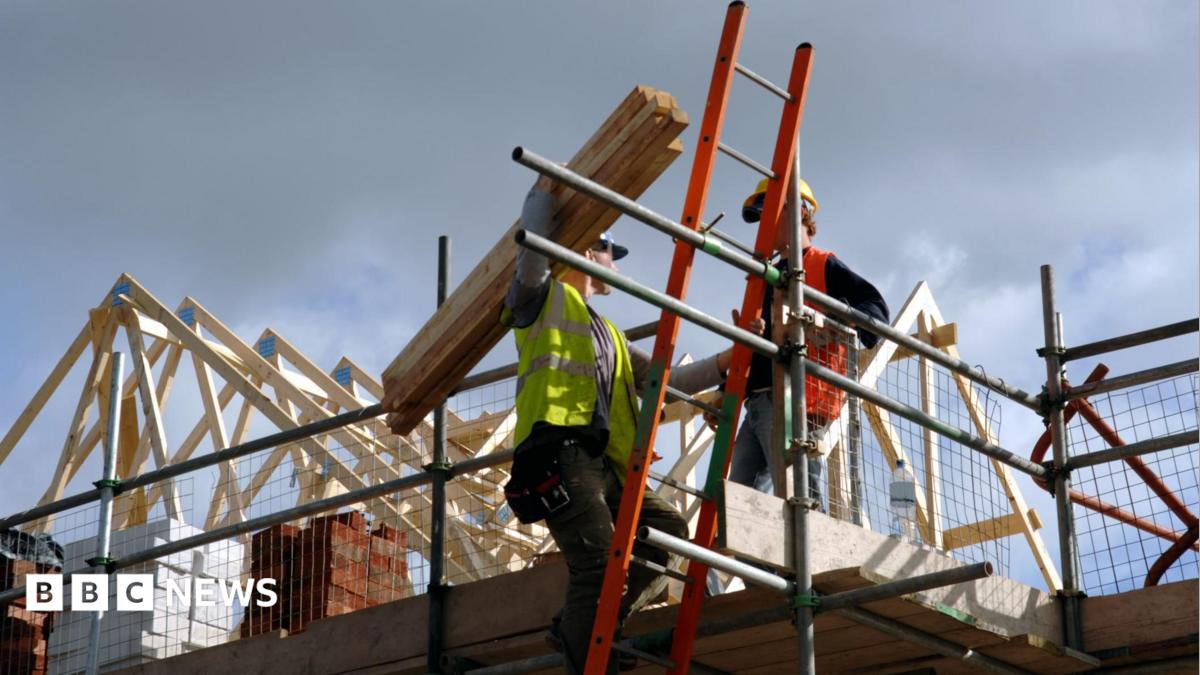
An outline planning application for 380 new homes on farmland at the edge of Yeovil has been lodged with local planners, marking the latest in a wave of large-scale residential proposals targeting Britain's market towns as developers look beyond saturated urban centres for viable land. The scheme, positioned on the border of the Somerset town, would represent one of the more significant single-site housing developments proposed in the area in recent years, and its progress through the planning system will be closely watched by both local residents and the wider development industry.
The significance of this application extends well beyond South Somerset's borders. With England's major cities increasingly constrained by land scarcity, brownfield remediation costs, and densification limits, housebuilders have been steadily shifting their attention towards greenfield sites on the periphery of smaller towns. Yeovil, with its relatively affordable land values compared to the South East and reasonable transport links via the A303 corridor, fits a pattern investors have seen replicated in comparable market towns across Wiltshire, Dorset, and Devon. For context, average house prices in Yeovil sit around £270,000, roughly 40% below the South West regional average for larger cities such as Bristol, making it an attractive proposition for volume housebuilders seeking to deliver at scale while maintaining margin.
For buy-to-let landlords and portfolio investors, developments of this size carry a dual-edged implication. On one hand, an influx of 380 new units — likely to include a mix of two, three and four-bedroom family homes alongside an affordable housing quota typically set at 25-30% under Section 106 obligations — will inevitably soften rental growth in the immediate catchment area over the medium term as supply expands. On the other, new-build stock in commuter-accessible towns has consistently demonstrated resilience in tenant demand, particularly among young families priced out of Bristol, Bath, and the Home Counties. Landlords holding existing stock in Yeovil should anticipate a period of price stabilisation rather than sharp appreciation over the next 18 months as the market absorbs additional supply, assuming the application clears reserved matters approval.
First-time buyers stand to benefit most directly, assuming the development proceeds with its affordable housing allocation intact. Somerset has struggled with a persistent shortage of entry-level stock, with the district's five-year land supply position under regular scrutiny from the Planning Inspectorate. A scheme of this magnitude, if granted consent, would materially improve South Somerset District Council's housing delivery test performance — a metric that has forced several local authorities into more permissive planning postures in recent years under the presumption in favour of sustainable development. Developers pursuing similar applications in Taunton, Bridgwater, and Chard will be watching the Yeovil decision closely as a bellwether for how receptive planning committees remain to large-scale greenfield proposals ahead of any tightening of national planning policy.
The broader commercial and infrastructure implications deserve attention too. A development of 380 homes typically necessitates supporting infrastructure — new road access points, drainage attenuation, potentially a primary school contribution, and local retail provision — all of which represent secondary investment opportunities for contractors, infrastructure funds, and local supply chains. Historically, schemes of this scale in comparable towns such as Yeovil have taken 18 to 24 months to progress from outline consent to first occupations, meaning any homes delivered here are unlikely to reach the market before 2027 at the earliest, even with an expedited reserved matters process. This lag matters for investors modelling cash flow projections, as the true market impact on rental yields and local house prices will not be felt for several years.
Looking ahead, this application is emblematic of a structural shift reshaping where UK housing delivery is concentrated. As land values in Manchester, Birmingham, Leeds, and Liverpool city centres continue to price out volume housebuilders in favour of build-to-rent and high-density schemes, market towns with available greenfield sites — Yeovil among them — are becoming the default delivery mechanism for traditional family housing. Investors should expect this trend to intensify over the coming year, particularly if the government's ongoing planning reforms succeed in streamlining outline-to-detailed consent timelines. Those with capital allocated to regional residential development or land banking strategies would do well to widen their geographic search beyond established growth corridors and towards precisely this category of edge-of-town farmland site.
Key Takeaways
- The 380-home Yeovil scheme reflects a broader shift of housebuilding activity from constrained cities towards market towns with available greenfield land.
- Existing landlords in Yeovil should expect rental growth to soften over the next 12-18 months as new supply enters the pipeline, though full market impact is unlikely before 2027.
- First-time buyers could benefit significantly if the affordable housing allocation (likely 25-30% under Section 106) survives negotiation through the planning process.
- Developers and land investors should monitor this application as a bellwether for planning committee appetite towards large-scale greenfield schemes across Somerset and the wider South West.


