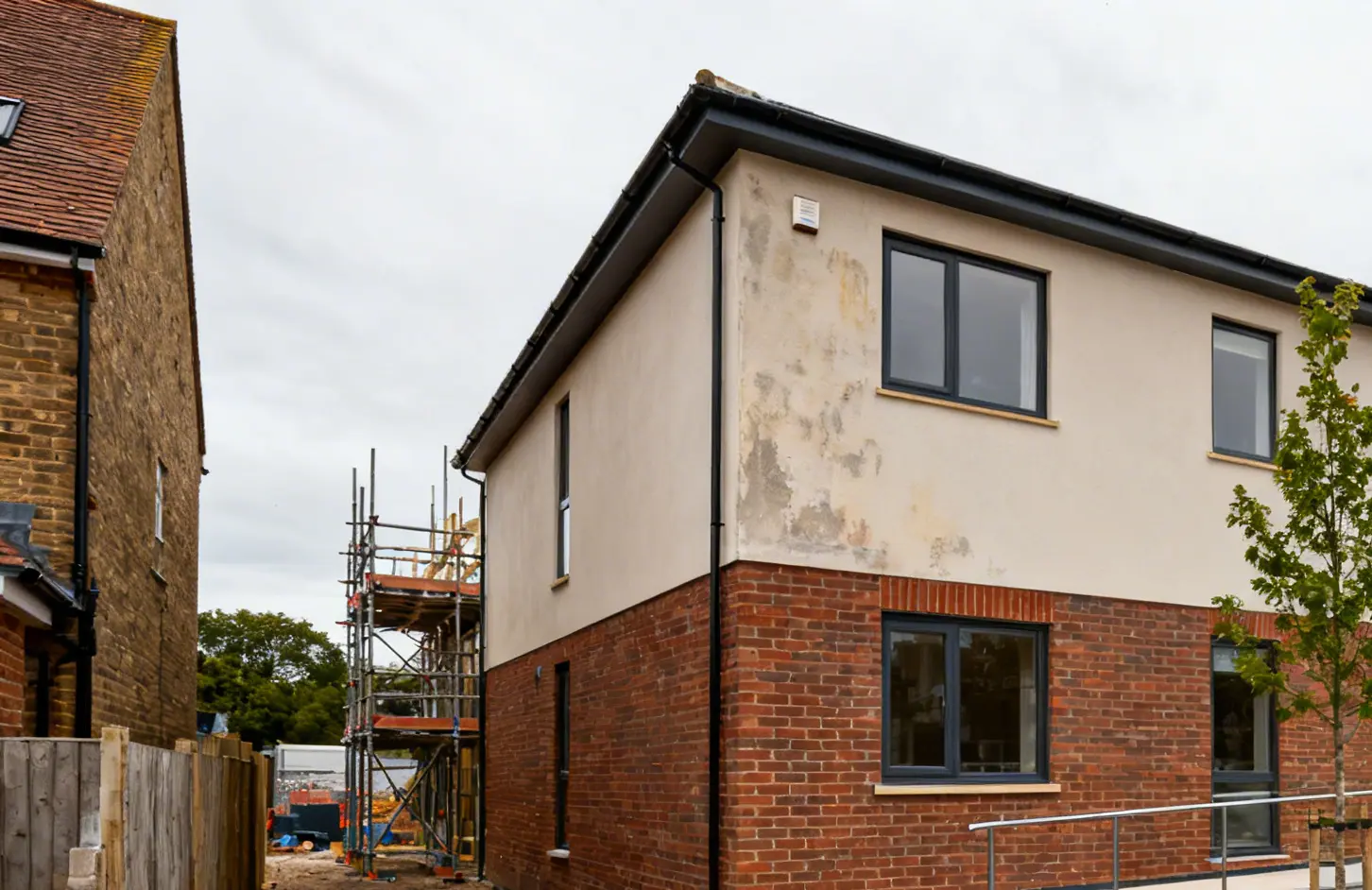
Pallas Capital's £2.02 million development facility for a 16-unit assisted living scheme in Wallington represents more than just another Surrey development deal - it signals a fundamental shift as established residential developers pivot into the UK's fastest-growing property sector. The 65% loan-to-gross development value arrangement highlights the increasing appetite from both lenders and developers for specialist accommodation targeting Britain's rapidly ageing population, where demand is projected to outstrip supply by 300,000 units within the next decade.
The borrower's transition from traditional residential development into assisted living reflects a broader market recalibration that has accelerated since 2022. Surrey's assisted living market commands premium pricing, with units typically selling for 15-20% above equivalent residential properties due to integrated care services and purpose-built facilities. The county's proximity to London, combined with house prices averaging £520,000, makes it particularly attractive for downsizing residents seeking care-enabled accommodation without sacrificing location or lifestyle quality.
Development finance for assisted living projects has become increasingly competitive, with specialist lenders like Pallas Capital offering terms that recognise the sector's lower risk profile compared to traditional residential schemes. The 16-month facility timeframe suggests pre-sales confidence, whilst the 65% LTGDV structure provides developers with sufficient leverage whilst maintaining conservative risk parameters that appeal to institutional investors increasingly targeting the sector for long-term income generation.
This financing trend extends beyond Surrey into Manchester, Birmingham, and Leeds, where assisted living developments are commanding similar premium financing terms. Manchester's Northern Quarter has seen three major schemes complete in 2024, whilst Birmingham's assisted living pipeline has doubled year-on-year. The demographic pressure is particularly acute in these regional centres, where local authority care provision faces mounting budget constraints and private sector solutions are filling critical gaps.
For property investors, the assisted living sector presents compelling fundamentals that traditional residential and commercial markets cannot match. Average yields of 6-8% significantly exceed buy-to-let returns, whilst occupancy rates consistently exceed 95% across established schemes. The sector's defensive characteristics proved particularly valuable during recent market volatility, with assisted living values demonstrating greater resilience than mainstream residential properties during 2022's correction.
The institutional investment appetite for completed assisted living schemes has intensified markedly, with pension funds and REITs actively acquiring portfolios at yields of 5.5-6.5%. This end-investor demand provides development finance lenders with confidence in exit strategies, explaining the increasingly competitive terms available to experienced developers entering the sector. Forward-funding arrangements are becoming standard for schemes exceeding 30 units, providing developers with enhanced cash flow certainty.
The Wallington deal exemplifies a sector undergoing rapid professionalisation as demographic pressures intensify. With over-75 population growth of 85% projected by 2040, developers entering assisted living now are positioning themselves within a market that will define the next generation of UK property investment. The combination of social necessity, defensive investment characteristics, and institutional backing creates a compelling proposition that will continue attracting development capital at attractive terms throughout 2024 and beyond.
Key Takeaways
- Assisted living development finance has become increasingly competitive, with 65% LTGDV terms reflecting sector confidence and lower risk profiles
- Surrey's assisted living market commands 15-20% premiums over equivalent residential properties, driven by integrated care services and demographic demand
- Institutional investors are actively acquiring completed schemes at 5.5-6.5% yields, providing clear exit strategies for developers
- Regional markets including Manchester, Birmingham and Leeds are experiencing significant assisted living development pipeline growth as demographic pressures intensify


