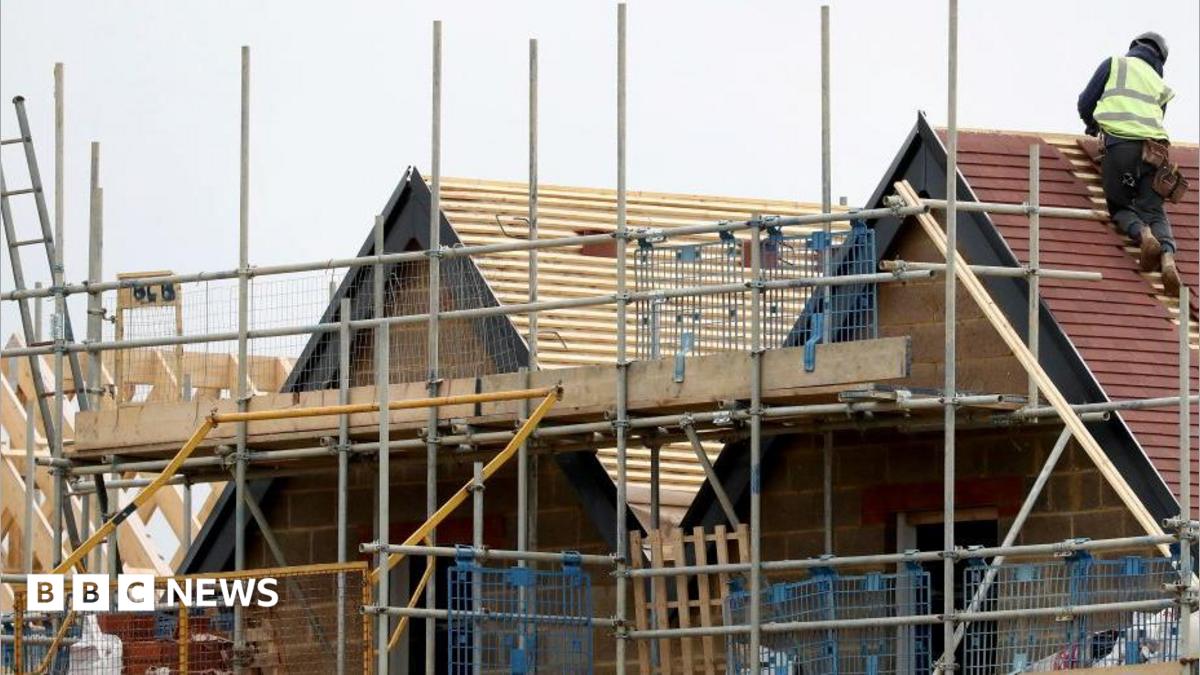
Planning approval has been granted for 120 new homes on the site of a former Lloyds Banking Group call centre in Farsley, a well-connected suburb between Leeds and Bradford. The scheme marks the latest in a growing wave of brownfield conversions across West Yorkshire, as developers race to convert redundant commercial floorspace into residential stock amid an acute regional housing shortage. On the surface, this is a modest local planning decision. Beneath it lies a much bigger story about how the UK's banking sector retreat from physical premises is quietly reshaping the housing supply pipeline.
The significance for investors extends well beyond Farsley's boundaries. Leeds has consistently ranked among the UK's top-performing regional markets over the past five years, with average house prices rising by roughly 18% since 2019 to around £245,000, according to Land Registry data, while rental growth across the wider Leeds City Region has outpaced the national average, running at approximately 6.2% year-on-year. Sites like the former Lloyds facility represent exactly the kind of underused commercial land that planning authorities are now prioritising to meet housing targets without encroaching on greenbelt land — a policy direction that is likely to intensify following recent government pressure on councils to accelerate brownfield delivery.
For buy-to-let landlords, a scheme of this scale in a commuter town like Farsley is a textbook opportunity. The village sits on the Leeds-Bradford rail corridor, offering journey times into Leeds city centre of under 15 minutes, which has made it increasingly attractive to young professionals priced out of inner-city Leeds but unwilling to sacrifice connectivity. Comparable new-build developments in similar West Yorkshire commuter locations — Pudsey, Guiseley, and Horsforth — have seen rental yields of 5.5% to 6.5%, comfortably above the UK average of roughly 5.2%, making this exactly the sort of stock that regional landlords have been actively pursuing since the mortgage rate volatility of 2022–23 pushed many investors away from London and the South East toward higher-yielding northern markets.
First-time buyers stand to benefit too, though perhaps less than headlines suggest. New-build units on former commercial sites typically carry a price premium of 10–15% over comparable second-hand stock, reflecting build quality, energy efficiency credentials, and developer margins. Even so, with Leeds' average first-time buyer deposit requirement sitting around £31,000 — considerably lower than the £62,000 typically needed in Surrey or the wider South East — schemes of this nature help sustain the affordability gap that continues to draw younger buyers northward. Developers will be watching closely whether Homes England or regional housing associations take up a proportion of the 120 units as affordable or shared ownership stock, which would materially affect the scheme's overall investment profile.
The wider implication for commercial property investors is arguably more consequential. Banking groups have shed enormous volumes of back-office and call centre space since 2015 as digital banking adoption accelerated, and Lloyds itself has closed or repurposed dozens of such facilities nationally. This creates a recurring opportunity for residential-led redevelopment specialists, particularly in secondary towns where land values don't support office-to-residential conversion economics seen in city centres like Manchester or Birmingham, but where low-density housing schemes pencil out comfortably. Expect similar announcements in towns surrounding Newcastle, Liverpool, and the wider Midlands over the next 12 to 18 months as banks continue rationalising their physical footprints.
Looking ahead, this scheme should be read as a bellwether rather than an isolated event. With the government's revised National Planning Policy Framework placing renewed emphasis on brownfield-first development and local authorities under pressure to demonstrate deliverable five-year housing land supplies, sites with prior commercial use and existing infrastructure connections will be fast-tracked ahead of greenfield alternatives. For developers, this means increased competition for redundant banking, retail, and office assets in commuter locations across the North — and for investors, it signals where the next wave of new-build rental and owner-occupier stock is likely to emerge. Farsley's 120 homes are a small development in absolute terms, but they capture precisely the structural shift now underway in how the UK converts obsolete commercial real estate into desperately needed housing.
Key Takeaways
- 120 homes approved on former Lloyds call centre site in Farsley, part of a growing brownfield redevelopment trend across West Yorkshire.
- Leeds commuter towns like Farsley offer rental yields of 5.5–6.5%, above the UK average, making them attractive to buy-to-let landlords relocating capital from the South East.
- Expect further banking sector site conversions nationally as digital banking reduces demand for physical call centre and office space.
- Revised NPPF brownfield-first policy will accelerate similar schemes in commuter towns near Manchester, Liverpool, Newcastle, and Birmingham over the next 12–18 months.


